
Peak Season 2026: Why Waiting Until October Is Too Late for Growing eCommerce Brands

Peak season doesn't start in November — it starts with the plan you build in August.
Peak season may feel like a November and December problem. Operationally, it starts much earlier.
For growing eCommerce brands, late summer is the point when carrier capacity, warehouse space, labor, and special projects begin filling up. By October, you may still be able to make changes: but your options are usually more expensive, more limited, and harder to execute smoothly.
That is why the brands that ship confidently in November are already planning in August.
You do not need a perfect forecast or a fully finished holiday strategy today. But you do need a clear view of your inventory, order volume, fulfillment capacity, shipping costs, and customer promises.
Peak season planning starts before peak season
Retail peak season typically runs from October through January, with major sales events and holiday shopping creating sustained pressure on fulfillment operations. Making preparations well before order volume reaches its highest point is mission critical.
Late summer is your practical planning window because:
Carriers are finalizing capacity expectations and peak pricing.
3PLs are allocating warehouse space and staffing resources.
Kitting, bundling, gift wrapping, and marketing projects are being scheduled.
Inventory needs time to move from suppliers into your fulfillment center.
Technology integrations and shipping rules need time to be tested.
Your team still has enough breathing room to correct problems.
By October, many of those resources are already committed.
The question is not whether you can wait until October. It is whether waiting gives you any advantage at all.
Usually, it does not.
What happens when you wait
Waiting can seem reasonable when you are still refining your forecasts or finalizing promotions. But fulfillment delays compound quickly during peak season.
1. Surcharges begin eating into your margins
Peak shipping costs often include more than a standard transportation rate. Depending on the package and destination, you may encounter:
Residential delivery surcharges
Demand or peak surcharges
Large-package fees
Oversize fees
Additional handling charges
Fuel and accessorial fees
A promotion that looks profitable in August may produce a much smaller contribution margin once peak fees, packaging, and expedited replacements are included.
Review carrier pricing before you finalize your offers. Late summer is an important period for securing capacity and reviewing surcharge exposure.
Know the cost of shipping each major product before you discount it.
2. 3PL onboarding takes longer
If your current fulfillment process cannot handle projected volume, moving to a new 3PL or adding services may be the right decision. But onboarding is not instant.
A typical transition may involve:
Contract review
Inventory intake and counting
SKU setup
Warehouse management system configuration
Store and marketplace integrations
Packaging specifications
Shipping rule setup
Test orders
Returns procedures
Team training
Starting this process in October leaves little room for integration issues or inventory discrepancies. It also asks your fulfillment partner to onboard you while serving every other brand preparing for the same holiday rush.
Starting in August or September gives both teams time to build a stable operating rhythm before orders accelerate.
3. Warehouse capacity becomes harder to secure
Fulfillment centers plan their available space and labor months ahead. If you wait until October to ask for additional storage, overflow space, or peak staffing, the answer may be:
“We have limited room.”
“We can receive your inventory, but not all at once.”
“Your promotional project will need to wait.”
“We cannot guarantee your requested turnaround time.”
That does not necessarily mean the warehouse is poorly managed. It means capacity is finite, especially when several brands are receiving seasonal inventory at the same time.
Talk to your 3PL now about projected units, pallets, cartons, inbound timing, and expected daily order volume. A useful partner should help you identify constraints before they become emergencies.

The brands that ship confidently in November are already talking to their 3PL in August.
Your August and September peak season checklist
The best preparation is practical. Focus on the decisions that affect inventory availability, order speed, shipping cost, and customer expectations.
1. Review your forecast and order projections
Start with last year’s peak performance, then adjust for current growth.
Review:
Total orders by month during the previous peak
Highest-volume SKUs
Average order value
Units per order
Sales by channel
Promotional lift
New products launching this year
Expected changes in traffic and conversion rate
Build at least three scenarios:
Base case: expected growth
Upside case: stronger-than-expected promotions or demand
Conservative case: slower sales or delayed inventory
Share these projections with your 3PL. A forecast is more useful when it is translated into receiving volume, storage requirements, pick-and-pack labor, and daily shipping volume.
2. Audit inventory before you promote it
Inventory problems are difficult to fix once a campaign is live.
Review each SKU for:
Sales velocity
Current stock levels
Reorder points
Supplier lead times
Manufacturing timelines
Freight transit times
Minimum order quantities
Supplier reliability
Packaging availability
Separate your inventory into clear groups:
Core products that drive regular sales
Seasonal products
Promotional or limited-edition items
Slow-moving inventory
Products at risk of stocking out
If a key supplier has missed deadlines before, build extra time into your plan. A few additional weeks of lead time can protect a major sales event.
3. Schedule bundles, kitting, and special packaging early
Promotional bundles do not assemble themselves.
If your holiday offer includes multiple products, custom inserts, gift wrapping, or special packaging, your 3PL needs time to plan:
Materials
Workstations
Labor
Quality checks
Finished-goods storage
Order-routing rules
Replenishment procedures
Kitting is especially important because it can turn several individual SKUs into one ready-to-ship product. It can also create bottlenecks if the work is left until the same week a promotion launches.
Schedule these projects through your 3PL’s kitting and assembly services early. You will have more flexibility around timing, labor, and quality control.

Bundles, gift wrap, and custom inserts need time to plan — schedule your kitting early.
4. Confirm carrier rates and peak surcharges
Do not rely on a single blended shipping estimate.
Ask your 3PL or carrier representative to explain:
Which peak surcharges apply to your products
How residential and oversize fees are calculated
Whether fuel charges are separate
How dimensional weight affects your packages
Which services have guaranteed or non-guaranteed delivery times
What happens if a carrier reaches a daily capacity limit
Whether backup carriers are available for important destinations
Model shipping costs by package size, service level, and destination zone. Then use that information to set promotional pricing and free-shipping thresholds.
A multi-carrier strategy may also help you avoid placing all your volume with one network. The goal is not to use every carrier. It is to have tested alternatives before you need them.
5. Stress-test your customer experience
Your shipping promise is part of your product experience.
Before October, confirm:
Order processing cutoffs
Standard and expedited delivery estimates
Holiday order deadlines
Tracking email timing
Out-of-stock messaging
Address correction procedures
Customer service escalation paths
Return eligibility and processing times
Replacement-order procedures
Make sure your website promise matches operational reality. If your warehouse can ship an order within 24 hours but the carrier needs five days to deliver it, customers should see a realistic delivery window: not a generic “three to five business days.”
Review your returns process before peak orders arrive. Returns often increase after the holidays, and slow processing can tie up inventory and delay refunds.
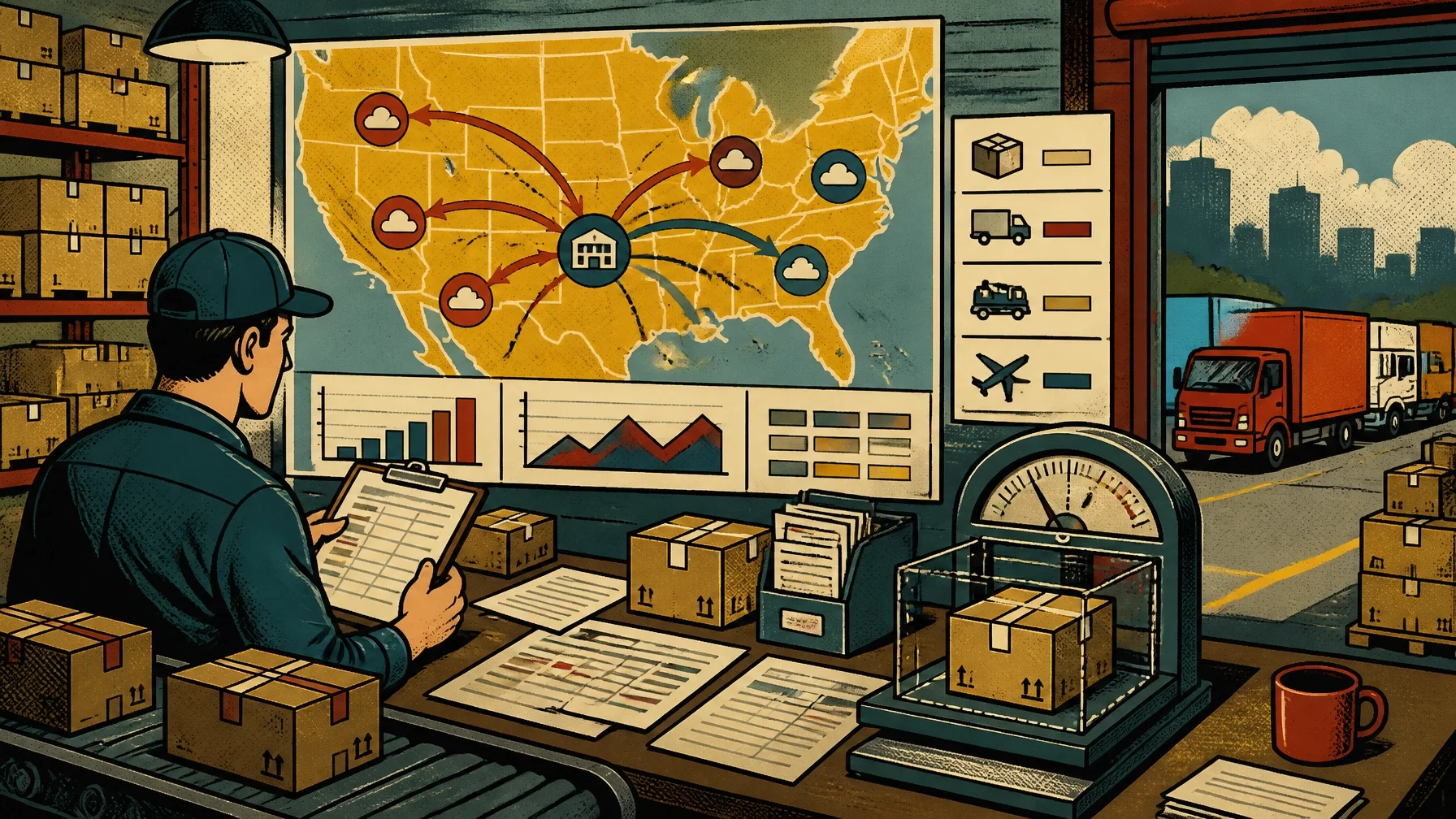
Know your surcharges before you set your discounts.
Why the right boutique 3PL makes preparation easier
A growing brand does not always need the largest warehouse. You need a fulfillment partner that understands your volume, your products, and the customer experience you are trying to protect.
A boutique 3PL can help you prepare by offering:
Direct account management: You work with a dedicated account manager who plans with you instead of routing every question through a ticket queue.
Flexible kitting and customization: Bundles, inserts, gift wrapping, influencer drops, and promotional packaging can be planned as part of normal operations.
Same-day inventory processing: New inventory can be received and made available faster, helping you respond to demand.
Reliable order accuracy: Rogue Fulfillment maintains a 99.84% order accuracy rate.
Fast order processing: 99% of orders ship within 24 hours.
Transparent data: You have 24/7 access to real-time fulfillment and inventory information.
Practical problem-solving: A smaller team can often adapt processes without forcing your brand into a rigid model.
Rogue’s warehouse services support storage, project management, marketing campaign fulfillment, customizations, and more. That matters during peak season because your operational needs are rarely limited to picking and packing.
You may need help preparing a product launch, assembling a gift set, sourcing custom packaging, or coordinating an influencer campaign. Planning those needs with your fulfillment partner early makes them manageable.
A simple conversation to have with your 3PL now
Schedule a peak planning meeting before September ends. Bring:
Your sales forecast
Your top-selling SKU list
Inventory arrival dates
Promotion and bundle details
Packaging requirements
Expected daily order volume
Shipping service expectations
Returns assumptions
Customer service concerns
Then ask your 3PL:
Do you have enough storage space for our projected inventory?
Can you support our kitting and promotional projects?
What staffing plan is in place for peak?
Which carrier rates and surcharges should we model?
What are the final dates for inbound inventory?
What happens if our order volume exceeds the forecast?
How will exceptions and delays be communicated?
What information will we be able to see in real time?
The quality of the answers will tell you a great deal about the strength of the partnership.

A smooth packing line starts with a clear plan — and a partner who has your back.
The bottom line: peak season is winnable, but you have to start now
Waiting until October leaves you competing for space, labor, carrier capacity, and project support at the same time everyone else is asking for it.
Starting in August gives you time to:
Improve your forecast
Secure warehouse capacity
Audit inventory and suppliers
Understand peak surcharges
Schedule kitting and packaging
Test integrations
Set realistic delivery promises
Build a backup plan
You do not need to solve every holiday detail today. But you do need to begin the conversation.
The brands that plan in August ship more confidently in November because they have already worked through the difficult questions. With the right 3PL partner, peak season becomes less about reacting to surprises and more about executing a clear plan.
Talk with Rogue Fulfillment about your peak season preparation.