
Returns Are Up 18–24% Year Over Year: The Growth Opportunity Hiding in Your Reverse Logistics
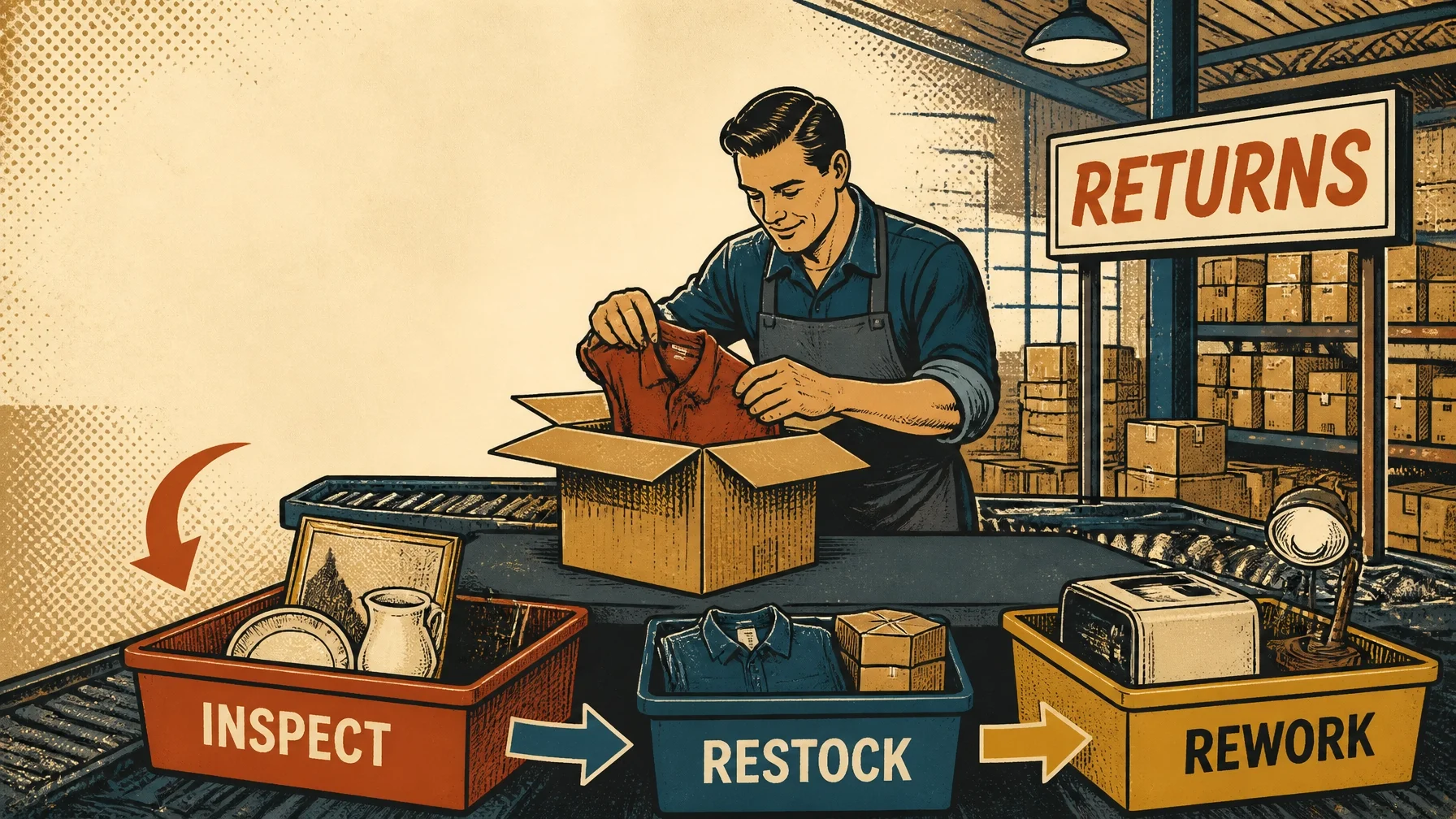
Returns are rising — but with the right returns management and kitting, growing eCommerce brands can recover inventory and protect margins.
Returns are no longer a side issue for eCommerce brands
They are a major operational channel.
Online return rates reached approximately 19.3% in 2025, compared with 17.6% in 2024. In some apparel and home goods segments, return rates reached as high as 22.4% in mid-2026. Across many growing brands, return volume is up 18–24% year over year.
That increase creates two very different outcomes.
If returns are slow, fragmented, and difficult to track, they become a drain on cash flow, labor, inventory, and customer trust.
If returns are structured and responsive, they can support:
More exchanges
Faster repeat purchases
Better inventory recovery
Stronger customer loyalty
More useful product insights
Higher long-term customer value
The difference usually comes down to reverse logistics: everything that happens after a product moves back from the customer to your business.
The returns problem is getting more expensive
Retailers expected to handle nearly $850 billion in returned merchandise in 2025, according to the National Retail Federation’s returns research.
That is a large number, but the day-to-day impact is easier to understand at the order level.
Processing a single return can cost between $20 and $30 once you account for:
Return transportation
Warehouse receiving
Inspection and quality control
Customer service time
Repackaging
Restocking
Refund processing
Inventory depreciation
Possible liquidation or disposal
Reverse logistics can also consume roughly 21% of order value, depending on the item, product category, return reason, and amount of rework required.
For a growing eCommerce brand, those costs add up quickly.
You may have sold an item for $80, but the return can create a series of additional expenses before that product is ready to sell again. If it sits in an unprocessed returns area for two weeks, the cost grows further because your inventory is technically present but commercially unavailable.
That is the central problem: returned inventory often becomes invisible inventory.
Why fulfillment networks are struggling with returns
Traditional fulfillment networks were designed primarily for forward movement:
Receive inventory
Store inventory
Pick orders
Pack orders
Ship orders
Returns reverse that flow.
Products arrive individually, often in different packaging and with different conditions. They may need to be opened, counted, tested, cleaned, reboxed, re-kitted, or routed to a separate sales channel.
As return volume rises, networks can become fractured across multiple locations and systems. A customer may see one status in your store platform, another in a carrier portal, and no clear update from the warehouse handling the physical product.
Common challenges include:
Returns arriving at the wrong facility
Returned inventory waiting for inspection
Products marked as unavailable even though they could be resold
Missing components discovered too late
Damaged packaging reducing resale value
Refunds issued before a product is properly verified
Customer service teams unable to answer basic status questions
Returned products routed to liquidation when a simple rework could recover value
This does not mean returns are inherently bad.
It means returns need their own operating model.
Returns can become a retention channel
A return often begins as a disappointing customer experience. The customer expected one outcome and received another.
But the return does not have to end the relationship.
A well-designed process can guide the customer toward a better next step:
An exchange for a different size or color
A replacement for a damaged product
Store credit
A related product
A bundle upgrade
A future-purchase incentive
This is why returns can support growth. The customer is already engaged with your brand. They are making a decision about whether to continue the relationship.
A smooth process reduces risk. When customers know they can return or exchange an item without unnecessary friction, they may feel more confident making future purchases.
A return can also reveal useful information:
Is the product description accurate?
Are customers confused by sizing or dimensions?
Is the packaging protecting the item properly?
Are certain SKUs frequently missing components?
Are customers ordering multiple variations and keeping only one?
Is a particular channel producing more avoidable returns?
Use that data to improve your products, packaging, merchandising, and customer communication.
The goal is not to celebrate returns. The goal is to recover as much value as possible while giving the customer a reason to stay.
Returns automation is becoming a priority
More brands are turning to returns automation platforms to manage the customer-facing and administrative parts of the process.
Loop Returns supports returns, exchanges, tracking, shipping, and related post-purchase workflows. Its returns tools are designed to guide customers toward exchanges or store credit instead of automatically defaulting to a refund.
That approach can help brands:
Offer instant exchanges
Encourage store credit
Present alternative products
Reduce manual customer service work
Improve return tracking
Connect returns data with eCommerce operations
Happy Returns focuses heavily on box-free, label-free drop-off through its Return Bar network. The company also promotes item verification, consolidated shipments, and faster restocking.
These tools address important parts of the returns experience:
Instant exchanges: Customers receive a replacement without waiting for the full refund cycle.
Box-free drop-off: Customers can return eligible products without finding packaging or printing a label.
Automated routing: Returns can be directed toward the right warehouse, resale channel, or disposition path.
Improved status visibility: Brands and customers receive clearer updates.
Faster restock: Returned products can move back into available inventory sooner.
Automation helps coordinate the process. It does not replace the physical work required when the product arrives at your warehouse.
That is where your fulfillment partner matters.
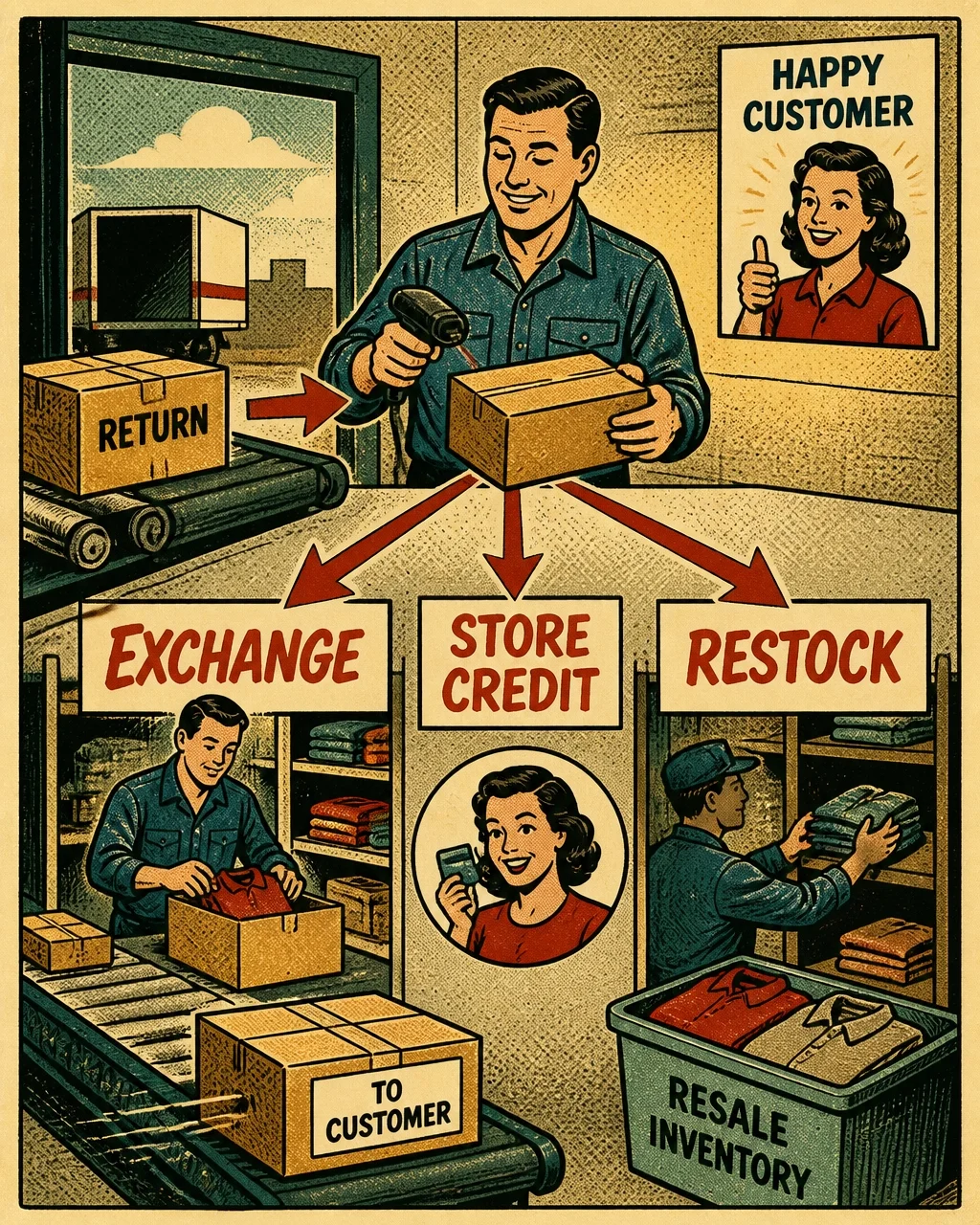
Platforms like Loop and Happy Returns automate routing and instant exchanges — but the physical inspection and restock still need expert 3PL fulfillment hands.
The physical return still needs expert handling
Even the best returns software cannot inspect a product, identify a missing insert, rebuild a kit, or decide whether the packaging is suitable for resale.
Your warehouse team still needs a clear process for each returned item.
At Rogue Fulfillment, our returns management workflow can include:
1. Receive and identify
We receive the returned item, match it to the original order, and update its status. This creates a clearer record of what arrived and when.
2. Inspect and grade
We inspect the product and assess its condition. Depending on your standards, an item may be:
Ready to sell as new
Sellable with new packaging
Suitable for rework
Missing components
Damaged
Better suited for liquidation or another disposition path
Grading gives you more control than treating every return as either “good” or “bad.”
3. Restock quickly
If the item is in sellable condition, we move it back into available inventory as quickly as the agreed workflow allows.
Faster restocking can improve inventory accuracy and reduce the number of products sitting in an operational gray area. It also gives you a better chance of selling the item again before its value declines.
4. Rework and repackage
Some items need minor work before they are ready for a customer.
We can help with tasks such as:
Replacing damaged packaging
Adding missing inserts
Replacing missing pieces
Rebuilding product bundles
Re-kitting returned items
Applying new labels
Preparing items for resale
Completing light product reconditioning where appropriate
A damaged outer box does not always mean the product is a total loss. A missing insert does not always require disposal. Practical rework can recover value while reducing unnecessary waste.
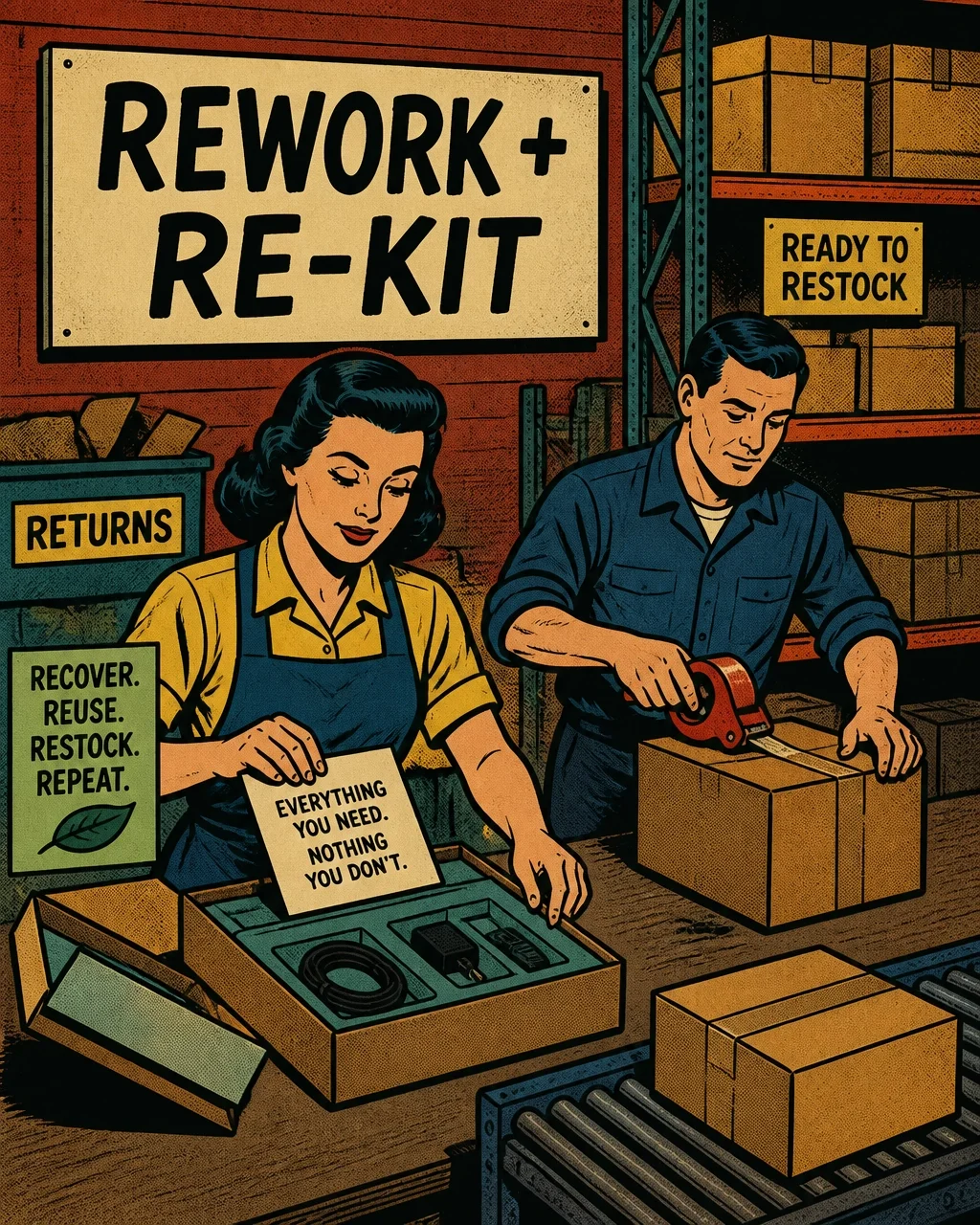
Re-kitting, repackaging, and light reconditioning turn returned products back into sellable inventory — a core value-add of Rogue Fulfillment's returns management.
Kitting turns returns into inventory recovery
Kitting is the process of combining separate components into one sellable package.
For returns, that may mean:
Rebuilding a returned bundle
Pairing a product with replacement accessories
Adding a new instruction card
Repackaging multiple items for a gift set
Creating a different product configuration
Separating incomplete kits for individual sale
This is especially useful when your products include multiple pieces or when customers return only part of a bundle.
Without a re-kitting process, incomplete sets can sit in storage or move directly to a lower-value disposition. With the right workflow, your team can determine whether the items can be rebuilt into a complete kit or repurposed for another sales channel.
Kitting also supports seasonal campaigns, promotional bundles, and gift-ready packaging. That makes it a value-add beyond returns alone.
Visibility is part of the customer experience
A customer does not want to hear that their return is “being processed” with no further detail.
Your internal team needs the same visibility.
A useful returns dashboard or reporting process should help you see:
Which returns have been received
Which are awaiting inspection
Which are approved for restock
Which need rework
Which are missing pieces
Which have been routed to another disposition
How long each return has been in process
Which products have the highest return rates
How much inventory value has been recovered
At Rogue, we provide real-time visibility into return status so you can make decisions with current information rather than waiting for a weekly update.
That helps customer service answer questions. It helps operations plan inventory. It helps finance understand recovery rates. Most importantly, it keeps returns from disappearing into a warehouse backlog.
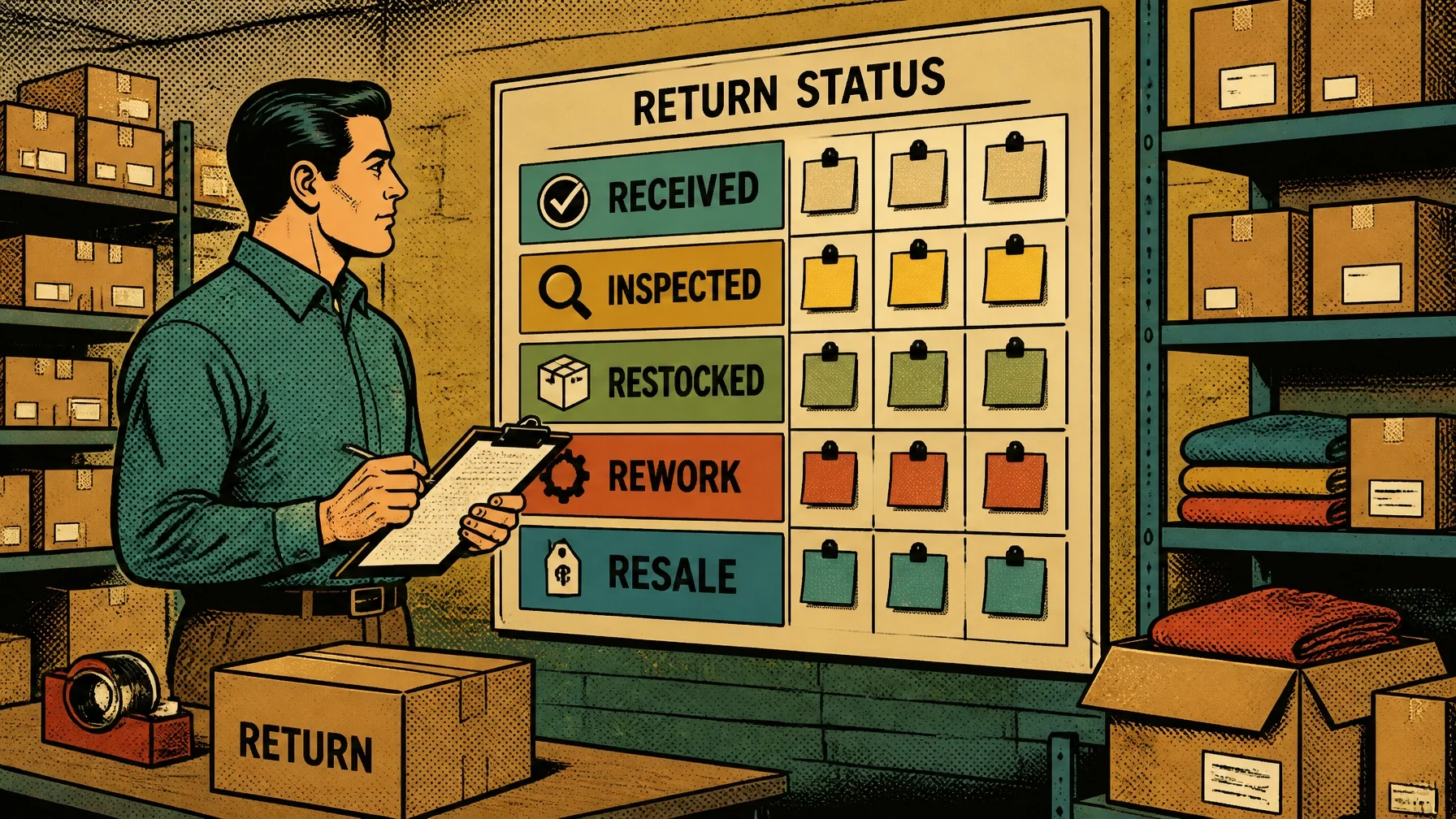
Real-time returns status keeps customer service, operations, and finance aligned — so every return has a clear path back to resale or recovery.
Build a returns process that supports growth
You do not need to treat every return as a failure.
You do need to understand its full cost and create a process that protects the customer relationship and the value of the inventory.
Start by reviewing:
Your return rate by product and sales channel
Average processing cost per return
Time from receipt to inspection
Time from inspection to restock
Exchange rate versus refund rate
Percentage of returned inventory recovered for resale
Number of products requiring rework or re-kitting
Most common return reasons
Customer service contacts related to returns
Then decide which parts should be automated and which require hands-on warehouse support.
Platforms such as Loop and Happy Returns can improve the customer-facing journey, routing, and data flow. A capable 3PL can complete the physical inspection, grading, restocking, re-packaging, and kitting that turns those workflows into recovered inventory and a better customer experience.
The bottom line
Returns are up 18–24% year over year for many eCommerce brands. The pressure on fulfillment networks is real, and the cost of processing each return can be significant.
But returns are also a point of customer contact, a source of product insight, and an opportunity to recover inventory value.
The strongest approach combines:
Clear return policies
Practical returns automation
Fast exchange options
Reliable reverse logistics
Detailed inspection and grading
Re-packaging and re-kitting
Real-time status visibility
A fulfillment partner that understands your brand
At Rogue Fulfillment, returns management and kitting are not treated as isolated extras. They are part of a broader fulfillment strategy designed to help growing eCommerce brands protect margins, reduce waste, and keep customers coming back.
If returns are becoming a larger part of your operation, review the process now. A thoughtful returns workflow can make growth easier to manage: and make every customer interaction more valuable.
Learn more about Rogue Fulfillment’s approach to returns management or contact us to explore a more personalized 3PL partnership.