
Why Growing Brands Win With a Boutique 3PL
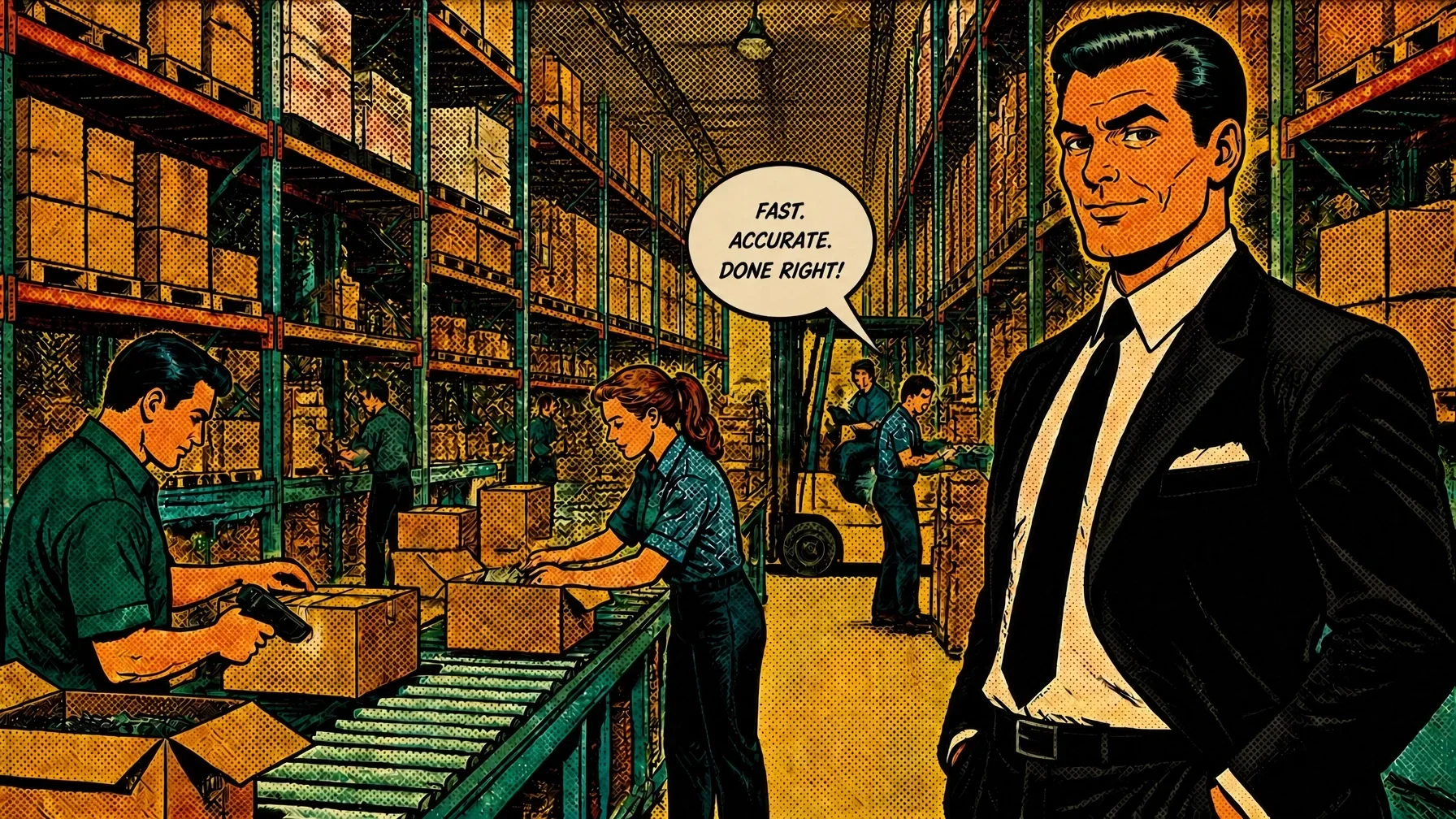
BIG NETWORKS. BOUTIQUE CARE.
The logistics industry is getting bigger, more consolidated, and more competitive.
Major shipping and supply chain companies are expanding beyond traditional freight and parcel delivery into warehousing, fulfillment, and direct-to-consumer logistics. Maersk has expanded its eCommerce logistics and DTC fulfillment capabilities. ShipBob continues serving small and mid-market eCommerce brands through its technology-enabled fulfillment network. Whiplash operates in the omnichannel fulfillment space. Flexport recently announced international fulfillment operations in Canada and the United Kingdom.
The larger trend is clear: major logistics players are competing aggressively for large, valuable accounts.
That creates opportunities for some brands. But it also raises an important question for growing Shopify, Amazon, Etsy, WooCommerce, and other eCommerce businesses:
When the biggest logistics companies are focused on the biggest accounts, who is making sure growing brands receive thoughtful, flexible service?
Increasingly, the answer is a boutique 3PL partner.
The Logistics Market Is Consolidating Around Scale
Large logistics providers can offer impressive networks, advanced technology, and broad transportation capabilities. For enterprise brands moving millions of units across multiple regions, those resources may be exactly what they need.
But scale does not automatically equal service fit.
As logistics companies compete for larger accounts, smaller and mid-market brands can sometimes experience:
One-size-fits-all fulfillment processes
Limited access to senior decision-makers
Generic customer service tickets instead of direct support
Opaque inventory and billing systems
Slow responses when something goes wrong
Value-added services treated as expensive extras
Less flexibility around special projects or packaging requirements
This is not necessarily a criticism of any one provider. It is a question of alignment.
A fulfillment model designed for a high-volume enterprise account may not be the best model for a growing brand that needs hands-on support, flexible workflows, or frequent collaboration.
Your brand may still be developing its product line, testing new sales channels, launching influencer campaigns, or adjusting packaging. You need a fulfillment partner that can work with those changes: not simply process your orders according to a fixed template.
Why Growing Brands Need More Than Pick, Pack, and Ship
Basic fulfillment is important. Your orders need to be picked correctly, packed securely, and shipped on time.
But for many eCommerce brands, fulfillment is also part of the customer experience.
The package your customer receives may include:
Custom packaging
Branded tissue paper
Product inserts
Handwritten notes
Promotional samples
Seasonal materials
Gift wrapping
Subscription components
Influencer campaign materials
These details can support personalized unboxing experiences that reinforce your brand after the online purchase is complete.
A large warehouse may be able to perform these tasks. The question is whether they are built into the relationship: or handled as complicated exceptions with additional fees, approvals, and delays.
For a growing brand, the difference matters.
Your fulfillment partner should understand why your packaging looks the way it does, which products belong together, and what your customer should experience when opening the box. That requires communication and context: not just scanning and shipping.
Boutique 3PL Partners Make Every Account Matter
A boutique 3PL is not simply a smaller version of a national logistics provider. The operating philosophy is different.
Large providers often win business through network size and volume efficiency. Boutique providers win by making every account feel important.
That means your partner has a reason to understand:
Your brand identity
Your product requirements
Your sales channels
Your seasonal patterns
Your packaging preferences
Your customer expectations
Your growth plans
At Rogue Fulfillment, we work with growing eCommerce brands that have outgrown home-based fulfillment but still want to protect their identity and customer experience.
Our services support brands selling through platforms such as Shopify, Amazon, Etsy, Squarespace, WooCommerce, and other channels. Alongside core 3PL fulfillment services, we provide warehousing, sourcing, packaging, kitting, project management, and special handling.
The goal is straightforward: help your business scale without making your operations feel impersonal.
Five Advantages of Choosing a Boutique 3PL
1. Personal attention and brand-level care
You should know who manages your account.
At Rogue, each customer receives a dedicated account manager and fulfillment support. That creates a direct line of communication with people who understand your inventory, orders, processes, and priorities.
You are not just submitting a ticket into a large queue. You are working with a team that knows your business.
That becomes especially valuable during:
Product launches
Inventory shortages
Seasonal volume increases
Packaging changes
Retail replenishment
Influencer campaigns
Urgent customer requests
2. Flexible solutions instead of fixed templates
Growing brands rarely operate in a perfectly predictable way.
You may need to assemble a limited-edition kit, prepare a marketing campaign, change a shipping insert, or support a new sales channel. A boutique partner can often adapt more quickly because the decision-making process is closer to the operation.
Rogue provides kitting and assembly, custom labeling, gift fulfillment, packaging support, quality control, and other services designed around the needs of each account.
3. Value-added services as part of the relationship
Kitting, custom packaging, gift wrapping, campaign support, and product customizations should not always feel like afterthoughts.
These services may help you:
Create a better unboxing experience
Reduce internal labor
Prepare products for promotions
Improve order consistency
Support new product launches
Present your brand more professionally
Rogue treats these capabilities as part of its standard boutique service model rather than limiting fulfillment to basic pick, pack, and ship.
4. Better visibility into daily operations
You should not have to guess how much inventory you have or whether an order has shipped.
Rogue provides 24/7 access to real-time information about inventory, orders, and shipment activity. That visibility can make it easier to plan replenishment, identify potential stockouts, review order status, and make decisions based on current information.
Transparent reporting also matters when reviewing costs. Clear, line-item billing helps you understand what you are paying for instead of discovering unexpected charges later.
5. Service standards backed by measurable targets
Rogue states a 99.84% order accuracy rate and that 99% of orders ship within 24 hours. These are Rogue’s stated performance standards, not universal guarantees for every fulfillment provider or every account.
The company also focuses on same-day inventory processing, rapid receiving, quality checks, and sustainable warehouse practices.
Its Iron Clad Guarantee outlines commitments related to accuracy, dedicated support, transparency, on-time shipping, rapid receipts, and reducing waste.
POW! FULFILLMENT YOU CAN COUNT ON!
Questions to Ask Before Choosing a 3PL
The right 3PL should welcome detailed questions. Before signing an agreement, ask:
Who is my actual account manager?
Find out whether you will have one consistent contact or be passed between departments. Ask how often you can expect communication and who supports your account when your primary contact is unavailable.
What happens when something goes wrong?
Ask about the escalation path for:
Mis-picks
Damaged orders
Inventory discrepancies
Missed shipping deadlines
System errors
Carrier delays
Returns issues
A strong partner should explain who investigates the problem, how quickly they respond, and how they communicate the resolution.
Are value-added services standard or separate line items?
Request a clear explanation of charges for kitting, custom packaging, inserts, gift wrapping, quality checks, returns, and project work. Additional services are not necessarily a problem, but the pricing and process should be transparent.
Can I see real-time inventory?
Ask to see the reporting portal before signing. Confirm that inventory, order status, tracking data, and receiving activity are accessible without manual spreadsheets or delayed updates.
What do the SLAs actually cover?
Service-level agreements, or SLAs, define measurable expectations between you and your 3PL. Review whether they address:
Order accuracy
Processing timelines
Receiving speed
Inventory accuracy
Returns handling
Customer support response times
Error resolution
Escalation procedures
Do not assume a performance claim automatically appears in your contract. Ask what is formally documented.
How does onboarding work?
A smooth transition requires more than sending inventory to a warehouse. Ask about:
Systems integrations
SKU setup
Packaging instructions
Barcode requirements
Inventory counts
Test orders
Returns workflows
Staff training
Launch timelines
Your partner should provide a practical onboarding plan with clear responsibilities on both sides.
How will the service scale?
Ask what happens if your order volume doubles, you add new SKUs, or you begin selling through another channel. A good 3PL should be able to support growth without forcing you into an entirely different service model.
The Bottom Line: Service Fit Matters More Than Size
The logistics landscape will continue to evolve. Maersk, FedEx, Flexport, ShipBob, Whiplash, and other major providers may continue expanding their fulfillment offerings, geographic coverage, and account strategies. Verify current capabilities and commercial terms directly, because these programs can change.
But the central decision for your brand remains practical:
Do you need the largest possible logistics network, or do you need a partner that understands your business and responds when you need help?
For many growing eCommerce brands, the answer is both operational reliability and personal attention.
A boutique 3PL can provide the fulfillment infrastructure you need while preserving the details that make your brand recognizable. With dedicated support, real-time visibility, flexible services, custom packaging, and room to scale, you can move beyond home-based fulfillment without losing the customer experience you worked hard to build.
Rogue Fulfillment also provides customers with free access to The Rogue Cooperative, a network designed to support business growth, shared expertise, and peer connections.
If your brand is ready for fulfillment that works around your business: not the other way around: talk with Rogue Fulfillment about building a more personal, scalable solution.