
How to Create a Personalized Unboxing Experience Your Customers Actually Post About : Even at 1,000 Orders a Day

POW! PERSONALIZATION AT SCALE!
You built your brand around details.
The tone of your thank-you emails. The colors on your website. The way your products are wrapped, presented, and delivered. At first, you may have packed every order yourself, adding a handwritten note or carefully folding tissue paper before sealing the box.
Then your order volume grew.
At 100 orders a day, personalization may still feel manageable. At 1,000 orders a day, it can seem like the first thing to disappear. Speed, accuracy, and inventory control become urgent priorities. Your carefully designed unboxing experience risks becoming a standard box with a shipping label.
That tradeoff is not inevitable.
The right 3PL for eCommerce brands can build personalization into everyday fulfillment procedures. With clear packaging rules, organized materials, kitting, and quality checks, you can protect your brand experience without slowing down your operation.
Personalization Works Best When It Is Operational, Not Occasional
A personalized unboxing experience should not depend on one employee remembering an extra step.
If the process lives only in your head, it becomes difficult to repeat. It may work during a quiet week but break down during a product launch, holiday rush, or influencer campaign.
Instead, treat packaging personalization as part of your fulfillment system.
That means documenting:
Which packaging each order should receive
Which inserts belong with each product or customer segment
When gift wrap should be added
How thank-you cards should be positioned
Which seasonal materials are currently active
What the final quality check must confirm
This turns a creative brand detail into a repeatable operating procedure.
A growing brand does not need every order to be completely different. It needs the right details to appear consistently for the right customers.
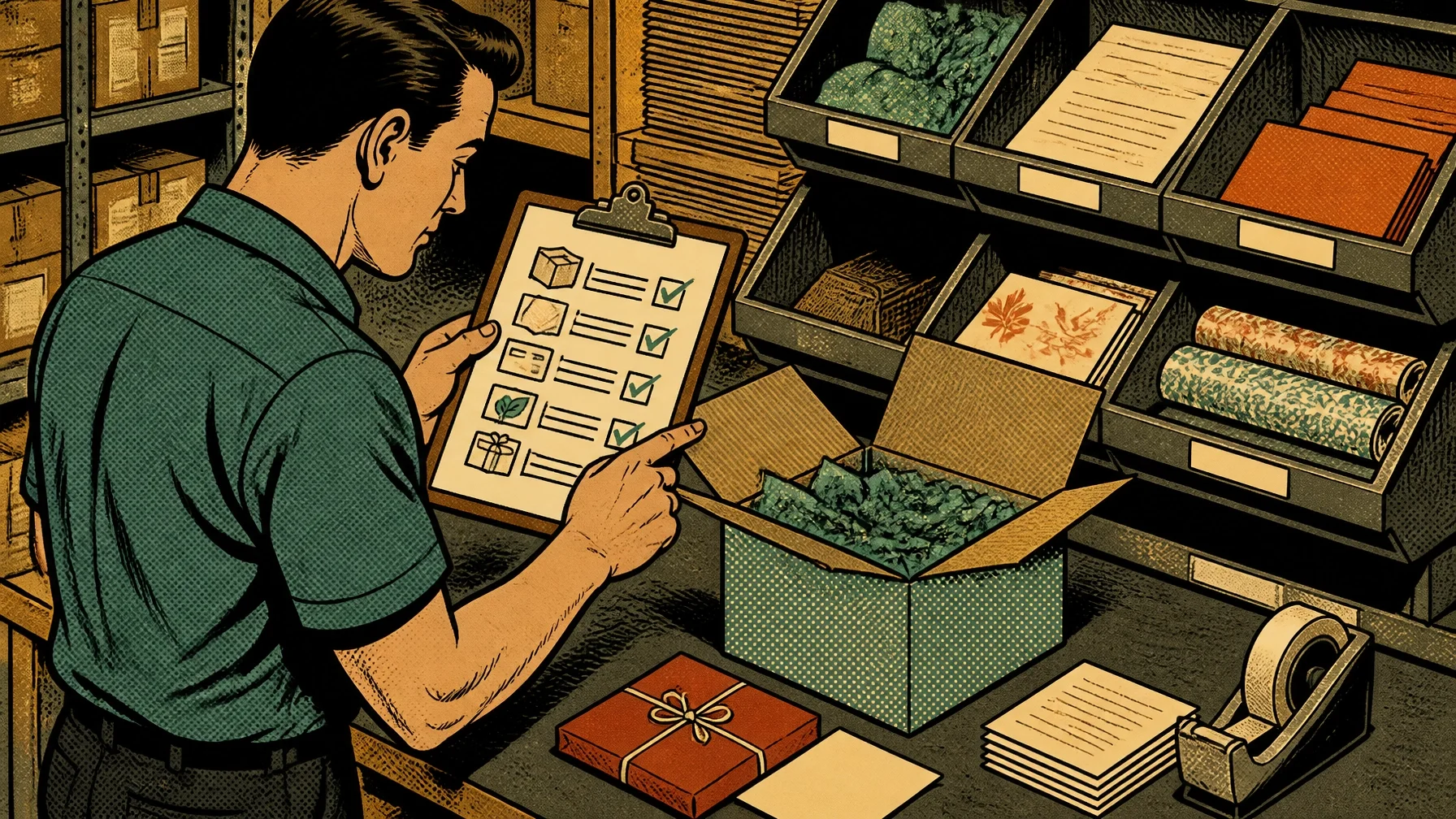
CHECKLISTS MAKE THE MAGIC REPEATABLE!
1. Create a Small Toolkit of Branded Packaging Elements
Start by identifying the packaging components that best represent your brand. You do not need to introduce every idea at once.
A practical toolkit might include:
Branded shipping boxes or mailers
Custom tissue paper
Stickers or seals
Thank-you cards
Product education cards
Loyalty or referral inserts
Seasonal postcards
Gift wrap, ribbon, or special tags
Samples or small branded extras
These elements can be mixed and matched according to the order.
For example, a standard order might receive branded tissue and a thank-you card. A first-time customer could receive a welcome insert and a product-care guide. A gift order might receive gift wrap and a recipient-friendly message instead of promotional material.
Your packaging should also make sense for your brand and products. A premium skincare company may use layered tissue and product-care instructions. A sustainable home goods company may prioritize recyclable materials and minimal packaging. A playful apparel brand may use bold stickers, colorful inserts, or seasonal artwork.
The goal is not to add unnecessary materials. It is to make the materials you already use feel intentional.
For help with packaging design and vendor coordination, explore Rogue Fulfillment’s sourcing and procurement services.
2. Use Handwritten Notes Without Creating a Bottleneck
Handwritten notes are one of the clearest ways to make an order feel personal. They can also be challenging to manage at high volume.
The solution is to use different levels of personalization.
Use templates for everyday orders
A printed card using a handwritten-style font can preserve a warm, personal look while keeping the packing process efficient. You can create several approved messages based on:
First-time purchases
Repeat orders
Product categories
Customer milestones
Seasonal campaigns
Loyalty or referral status
The message can still sound human. Keep it short, conversational, and relevant to the customer’s purchase.
Reserve true handwritten notes for specific moments
You may choose to add genuinely handwritten notes for:
VIP customers
High-value orders
Customer recovery situations
Influencer or press shipments
Special launches
Personal milestones or gifts
This makes real handwriting more meaningful while preventing it from becoming a daily production constraint.
A boutique 3PL can help define where handwritten notes fit into the workflow. The important point is to decide in advance rather than asking warehouse staff to make judgment calls order by order.
3. Build Customer-Specific Inserts Into the Order Flow
A custom insert can do more than say thank you. It can educate the customer, encourage a second purchase, or invite them to join your community.
Consider creating insert types for:
Product instructions
Care and maintenance
Cross-sell recommendations
Loyalty program invitations
Referral offers
Subscription information
Social media and user-generated content prompts
Seasonal promotions
You can also include a QR code linking to a tutorial, brand story, review page, or community channel.
The key is relevance. A customer who purchased a first product may need a welcome message and usage guide. A repeat customer may respond better to early access or a loyalty reward.
Your order data can help determine which insert goes into each package. Order tags, product SKUs, customer status, and campaign codes can all support simple packaging rules.
For example:
First order: Welcome card and product guide
Repeat order: Thank-you card and loyalty offer
Gift order: Gift wrap and recipient-friendly message
VIP order: Premium packaging and exclusive insert
Seasonal order: Campaign-specific card and packaging accent
This is one of the advantages of working with a 3PL that provides customizations and marketing campaign support.
4. Use Kitting to Make Complex Orders Faster
Kitting means grouping multiple items or packaging components together so they can be handled as one organized unit.
For a personalized unboxing experience, a kit might include:
A branded box
Tissue paper
A thank-you card
A product insert
A sample
A sticker
A seasonal tag
Instead of asking a packer to gather each item from separate locations, the components can be assembled ahead of time. When an eligible order arrives, the appropriate kit is ready to use.
This reduces decision-making at the packing station and makes the experience easier to repeat.
Kitting is especially useful for:
Subscription boxes
Product bundles
Gift sets
New customer welcome packages
Influencer shipments
Holiday campaigns
Limited-edition product launches
Learn more about Rogue Fulfillment’s kitting and assembly services.
A well-designed kit should save time, not add complexity. Review the kit regularly to remove outdated inserts, replace seasonal materials, and confirm that every component is still available.
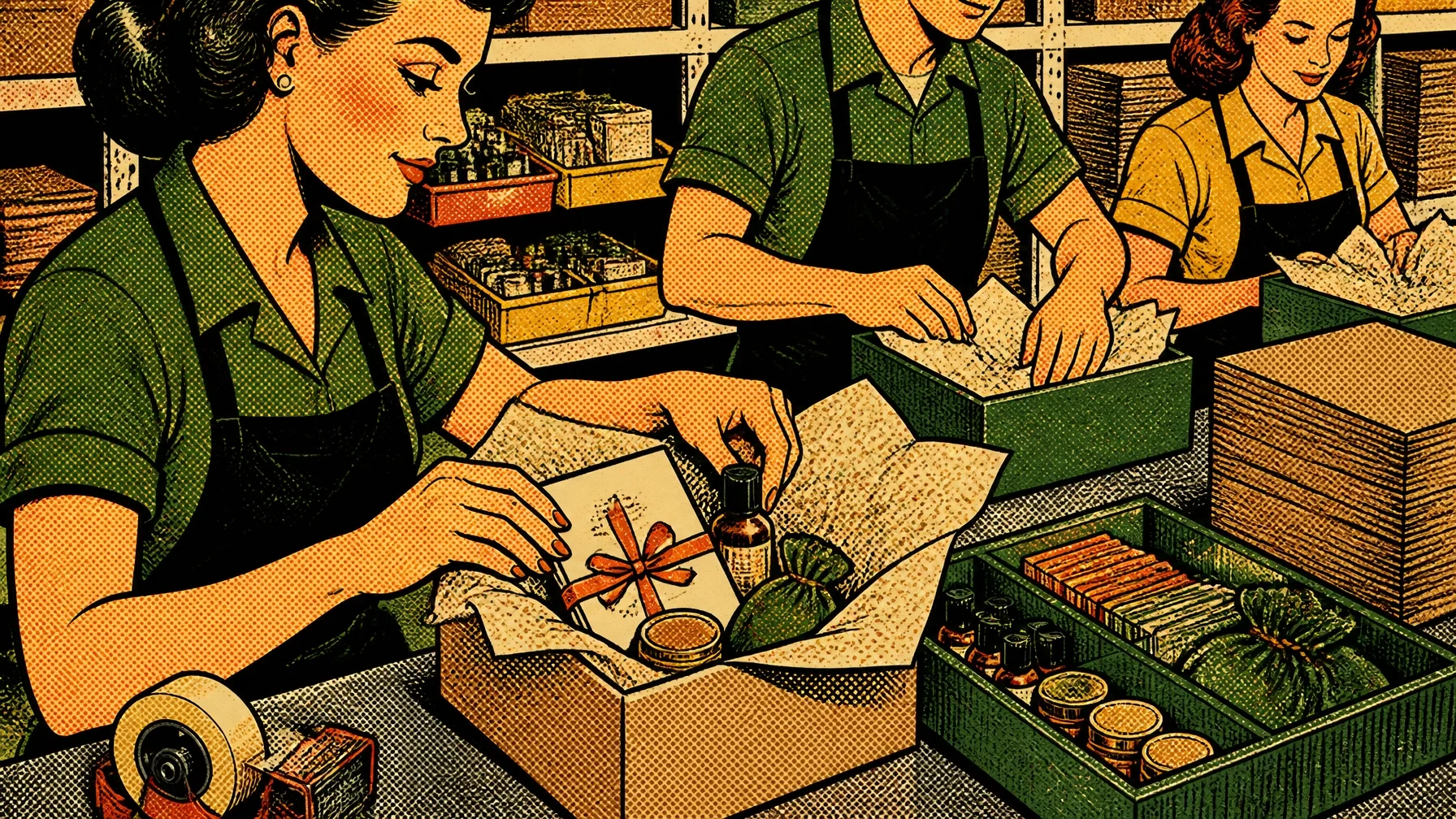
KIT IT. PACK IT. WOW THEM!
5. Add Gift Wrap and Seasonal Details With Clear Rules
Gift wrap is valuable because it changes a standard delivery into a more intentional presentation. It can also create avoidable errors if instructions are unclear.
Document details such as:
Which orders qualify for gift wrapping
Which materials to use
Whether the receipt should be removed
Where the gift message belongs
How the wrapped item should be protected
Which seasonal materials are active
Seasonal touches can be simple:
A holiday sticker
A seasonal thank-you card
A spring-colored tissue paper
A limited-edition insert
A birthday or anniversary message
A campaign-specific ribbon or tag
Create a start date and end date for every seasonal change. Store the materials in clearly labeled locations, and include photographs in the packing guide.
That prevents last year’s holiday insert from appearing in a summer order and reduces the chance of materials being used inconsistently.
6. Protect Speed and Accuracy With Quality Checks
Personalization should improve the customer experience without creating fulfillment errors.
At Rogue Fulfillment, operational performance matters alongside brand presentation. Our stated service standards include a 99.84% order accuracy rate and 99% of orders shipped within 24 hours. The point is not to choose between speed and personalization. It is to design a process that supports both.
A final quality check can confirm:
Correct product and quantity
Correct packaging type
Correct insert or thank-you card
Gift wrap, when required
Seasonal materials, when applicable
Product protection and presentation
Shipping label accuracy
Use a visual packing guide with photographs whenever possible. A new team member should be able to understand the intended finished package without relying on verbal instructions.
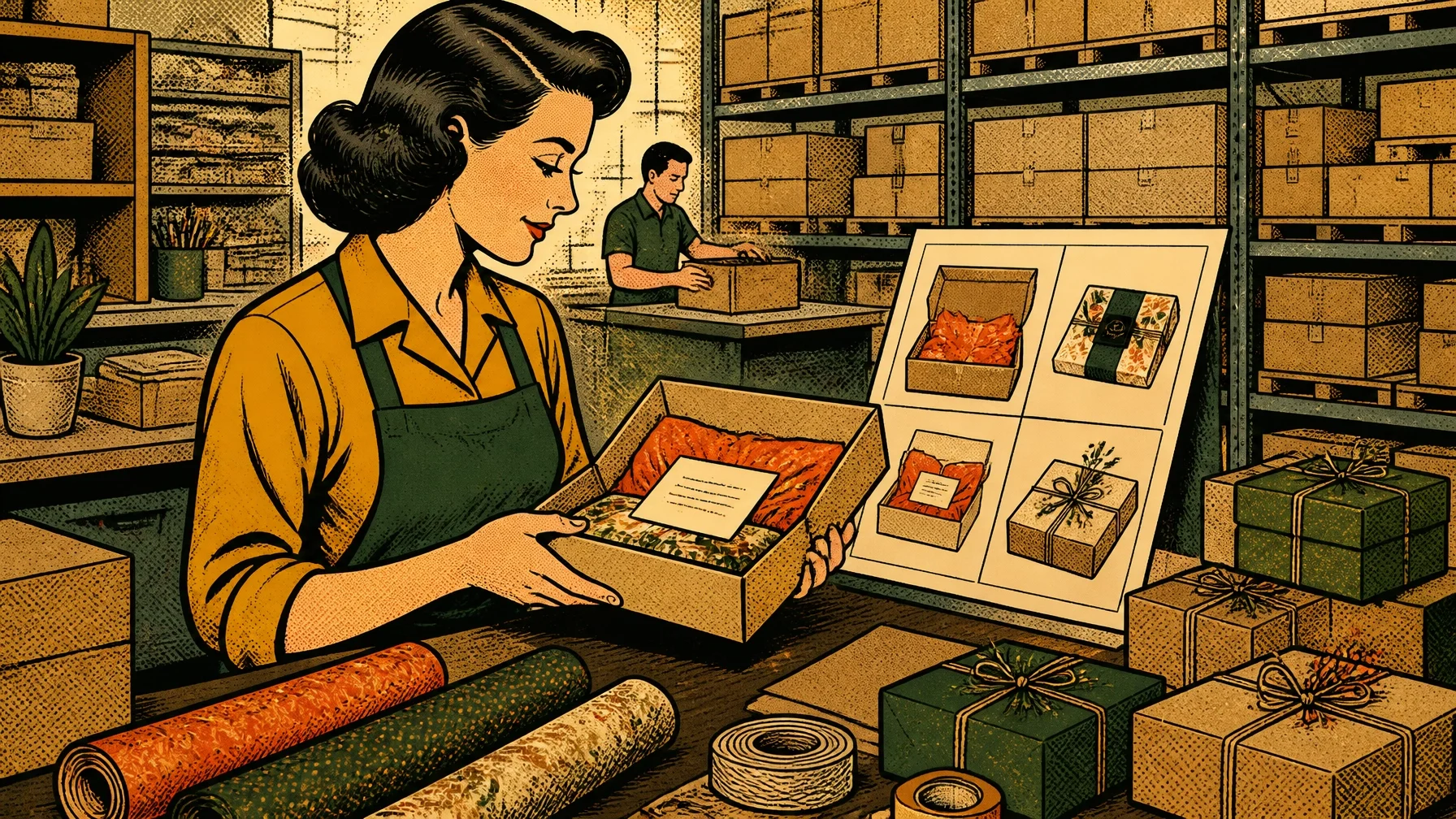
EVERY DETAIL COUNTS!
Why a Boutique 3PL Can Be a Better Fit for Brand-Led Fulfillment
Large warehouses are designed for scale, and that can be an advantage for straightforward, high-volume orders. However, one-size-fits-all processes may make it harder to accommodate frequent packaging changes, special projects, or customer-specific details.
A boutique 3PL is structured differently.
With a smaller, more collaborative partner, you can typically expect:
A dedicated account manager
Direct communication about changes
More flexibility for custom packaging
Support for kitting and gift wrapping
Easier coordination of marketing campaigns
More attention to brand-specific packing standards
Faster problem-solving when an exception occurs
That account-level care matters when your packaging is part of your marketing strategy.
Rogue Fulfillment works with growing brands that need more than basic pick, pack, and ship services. Our 3PL fulfillment services support platforms including Shopify, Amazon, Squarespace, WooCommerce, and Etsy, while our warehouse team can manage the added details that make your brand recognizable after checkout.
A Practical Starting Plan for Your Brand
You do not need to redesign your entire unboxing experience in one week. Start with a focused plan:
Choose one standard packaging upgrade.
Add branded tissue, a sticker, or a better thank-you card.Create two or three customer segments.
Start with first-time customers, repeat customers, and gift orders.Build simple packing rules.
Document exactly what each segment receives.Pre-kit complicated combinations.
Use kitting for bundles, campaigns, and premium experiences.Add a final quality check.
Confirm presentation as well as product accuracy.Measure the results.
Track repeat purchases, insert redemptions, loyalty signups, reviews, and unboxing posts.
Then improve based on what customers actually respond to.
The Bottom Line
Scaling does not have to remove the personal feel from your packages. It simply requires you to move personalization from memory into the process.
Branded packaging, handwritten-style notes, custom inserts, kitting, gift wrap, seasonal details, and quality checks can all become reliable parts of your fulfillment operation. With the right procedures and the right partner, your customers can receive the same thoughtful experience whether you ship 50 orders a day or 1,000.
If you are looking for a 3PL for eCommerce brands that treats packaging as part of your customer experience, contact Rogue Fulfillment. We would be happy to discuss how to create personalized unboxing experiences that scale with your brand.