
What to Offer, What to Charge and What to Call It: Shipping Strategy for New eCommerce Brands

Every shipping promise starts with a clear checkout decision.
Shipping is part of your customer experience, your margin structure, and your brand promise. If you are launching a store, you are probably asking whether to offer free shipping, whether a flat rate beats calculated rates, what "expedited" really means, and how much time to promise.
Your checkout does not need every possible service. Most new brands do well with two visible options, realistic delivery windows, and pricing backed by actual cost data.
1. Start With What You Actually Promise the Customer
Shipping is a brand decision before it is a carrier decision. A $25 accessory, a $200 skincare bundle, and a piece of home gym equipment all need different strategies. Start with:
Product price point: Customers may expect that shipping is included on higher-priced products.
Average order value: A higher AOV gives you more room to absorb part of the cost.
Contribution margin: What remains after direct selling costs. Shipping should not quietly consume the profit you need to grow.
Weight and fragility: Heavy, oversized, or fragile products cost more to pack and move.
Seasonality: Deadlines, launches, and weather shift customer expectations.
Expected delivery speed: Decide how fast customers genuinely need orders, not how fast a carrier can deliver.
Promising more speed than you can deliver creates support tickets, not conversions. If orders leave within one business day and arrive in three to five more, say exactly that instead of calling it "fast shipping."
2. Choose the Service Classes Worth Listing
Standard, expedited, and overnight shipping
Most brands should consider three broad service classes:
Standard or economy shipping is the everyday option and should usually be the default at checkout. Depending on the package and destination, this tier may use USPS Ground Advantage, UPS Ground, or FedEx Ground.
Expedited shipping is a paid upgrade for customers who need their order sooner. Options include USPS Priority Mail, UPS 2nd Day Air, UPS 3 Day Select, FedEx Express Saver, and FedEx 2Day.
Overnight shipping suits urgent orders but should not be shown to every shopper. Options include USPS Priority Mail Express, UPS Next Day Air, and FedEx Standard Overnight.
For most new brands, two visible checkout options are enough:
Standard Shipping
Express or Expedited Shipping
Overnight can stay hidden, available by request, or offered only when your products justify it. A third option often creates decision paralysis rather than more conversions. Customers do not want to compare shipping codes. They want to know when the order arrives and what it costs.
Behind the scenes, multi-carrier flexibility lets your fulfillment partner pick the best carrier and service per order while your checkout stays simple.
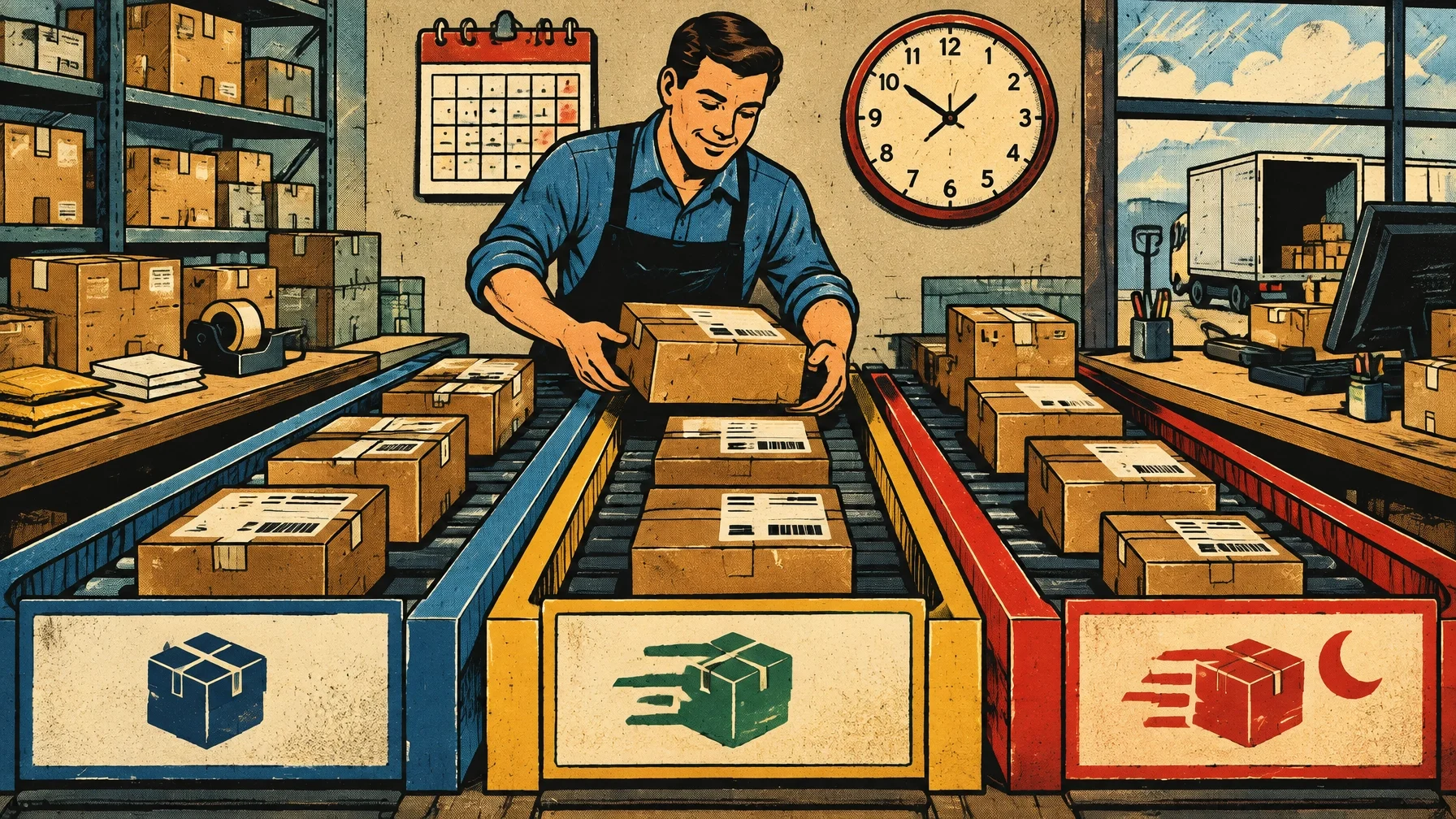
Simple service choices make the shipping decision easier for customers.
3. Decide Between Free Shipping, Flat Rates, and Calculated Rates
There is no single best model. The right choice depends on your product mix, margins, and order profile.
Free shipping above a threshold
Free shipping can grow the cart, but it still has to be funded. Set the threshold using your average order value, your average shipping and packaging cost, and your contribution margin.
If most customers already spend close to a certain value, setting the threshold just above it grows the basket without subsidizing every small order. Offer it on standard service only.
Flat-rate shipping
A flat rate gives customers predictable cost and works when your products are similar in size and weight. A common structure: free standard shipping above a defensible threshold, one flat rate below it, and a paid expedited upgrade.
Flat rates get risky when customers combine several heavy items or your catalog mixes small and oversized packages. A rate that works for one product can lose money on another.
Calculated carrier rates
Calculated rates use destination, weight, dimensions, and selected service to set cost. They work when products vary in size or weight, or when costs swing by destination. The downside is customer experience: a high rate appearing late in checkout drives abandonment.
Table rates or zone-based rates
Table rates use rules based on weight, order value, destination, or product type, giving you more control than one flat rate. Many growing brands settle on this combination:
Free standard shipping above a threshold
A flat standard rate below it
A paid expedited upgrade
Calculated rates for oversized, international, or unusually heavy orders
The goal: your shipping line should not surprise the customer, and it should not quietly erase your margin. Watch low-margin heavy products, where subsidizing shipping turns a completed order into a loss.
4. Use Customer-Friendly Names at Checkout
Customers do not shop by carrier service code. They shop by when the package arrives. Use labels like Standard Shipping, Express Shipping, and Overnight Shipping, then add a delivery window and a note about handling time.
Adjust these windows to your actual operation and destination mix.
Avoid labels like USPS Ground Advantage Cubic Soft Pack, UPS SurePost, or bare carrier abbreviations. They may mean something internally, but they tell a shopper nothing. If you name the carrier, pair it with the promise: UPS Ground, arrives in 3 to 6 business days beats a bare UPS Ground.
Above the options, state when orders ship, your daily cutoff, whether weekend orders go out Monday, and whether the estimate includes handling time.
5. Separate Handling Time From Transit Time
Handling time is the gap between the order and the carrier handoff. Transit time is what the carrier takes. The customer sees both:
Handling time + transit time = total customer delivery estimate
If your warehouse needs one business day to process an order and the carrier usually takes three to five business days, your customer should see a total estimate that reflects both parts.
Set your cutoff based on what your team or fulfillment partner can consistently hit. Your shipping origin matters too, since a package moving from St. Paul to Wisconsin arrives faster than one going to the West Coast on the same service.
Use a delivery range instead of an exact date. Estimated arrival: Thursday through Monday beats promising Friday when weather or carrier volume could shift it.
6. Watch the Costs That Quietly Wreck a Shipping Plan
Your checkout settings may look profitable until you account for what sits behind each shipment.
Dimensional weight
Carriers can bill on dimensional weight when a package takes up more space than its actual weight suggests, so a large box holding a light product can cost more than a compact box of the same weight. Use accurate measurements and packaging that fits closely.
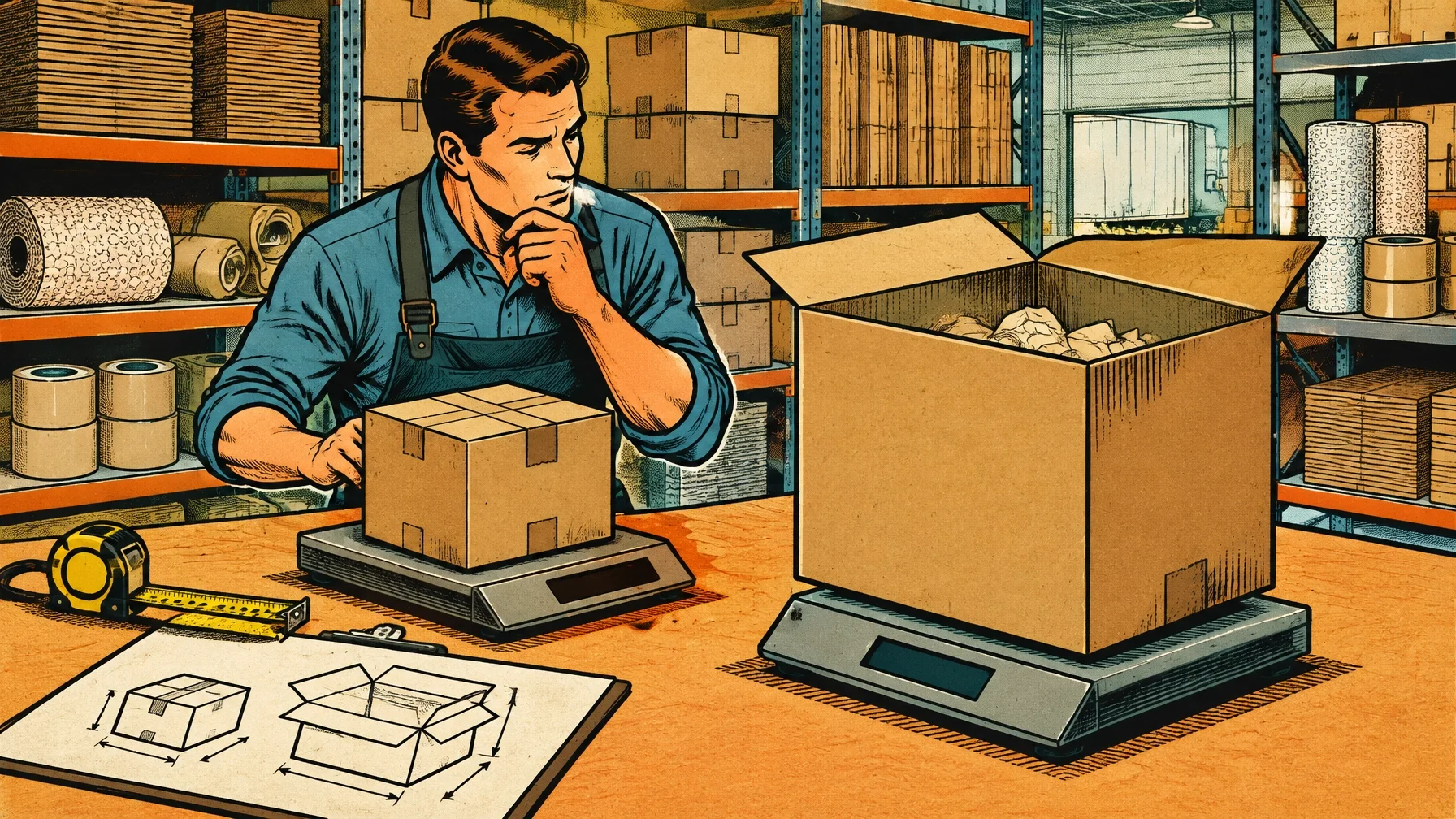
Right-sized packaging protects both the product and the shipping margin.
Oversized boxes, excess void fill, and unnecessary inserts raise dimensions, material cost, labor time, dimensional-weight charges, and damage risk, so right-sized packaging protects margin and supports better personalized unboxing experiences. Rogue's guide to sustainable right-sized packaging for eCommerce covers that in more detail.
Surcharges and special situations
Confirm current carrier terms for oversized or heavy shipments, non-standard packaging, residential delivery, fuel, peak season, and remote destinations. Surcharges change, so do not model costs on last year's assumptions.
Also decide what happens on multi-item orders, split shipments, and backorders. For cross-border orders, say clearly whether duties and taxes are paid on arrival or at checkout, because leaving it unexplained turns a finished order into an unexpected bill.
7. Follow a Simple Shipping Rollout Plan
You do not need a perfect shipping system on day one, just one that is understandable and financially defensible.
Model your real shipping cost per order. Use your actual packaging, labor, carrier invoices, product weights, and common destinations.
Choose two visible checkout options. Start with standard and expedited unless your product category requires something different.
Set a free shipping threshold. Defend the threshold with average order value and contribution margin math.
Write clear delivery expectations. Separate handling time from transit time and include the order cutoff.
Test checkout on mobile. Confirm the names, prices, and delivery windows are easy to read.
Monitor performance. Track cost per order, delivery performance, refund and reshipment rates, and shipping-related support questions.
Review quarterly. Volume, packaging, carrier rates, and product mix all change.
Treat your first setup as a starting point, not a permanent decision. Real order data will tell you what to change.
8. Keep Checkout Simple With the Right Fulfillment Support
A 3PL for eCommerce brands handles the operational work behind a simple customer-facing checkout.
Rogue provides multi-carrier flexibility and rate shopping behind the scenes, so your checkout stays clear while the right service is chosen per order. You get a dedicated account manager rather than a ticket queue, same-day inventory processing, and 24/7 access to real-time data. Value-added services come standard rather than as extras, including custom packaging design, kitting, gift wrapping, and campaign support, plus free access to The Rogue Cooperative network.
Rogue Fulfillment's company-stated figures are a 99.84% order accuracy rate and 99% of orders shipped within 24 hours. These are company-stated figures, not guarantees, and actual performance depends on the account and products.
A good checkout does not overwhelm customers with carrier codes. It shows a fair price, a clear delivery window, and a promise your operation can keep. If you want a second look at your setup, Rogue offers a free checkout shipping and cost-per-order review for growing brands.

The best shipping strategy is simple at checkout and thoughtful behind the scenes.