

The parcel can look right while the information behind its label is wrong.
A brand gets a charge weeks after its parcels shipped. The labels looked fine. The packages were packed and sent. But somewhere in the shipping data, a detail did not match what USPS expected or measured.
That is the shift to understand: USPS is pricing data quality, not just packaging. A label is connected to information about the shipment, and mistakes in that information can lead to noncompliance fees or postage adjustments.
If you ship hundreds or thousands of parcels a month, the practical question is not only whether the label printed correctly. It is whether the product and package records behind it are accurate, current, and understood by the people who use them.
This post is general information, not legal, regulatory, transportation, or customs advice. USPS fees and requirements can change. Confirm the rules for your specific products and shipments with USPS Notice 123, your carrier, and qualified advisors.
Three USPS fee mechanisms to understand
USPS has different processes for assessing barcode quality issues, hazmat information issues, and postage discrepancies. The fee amounts can change, so check the USPS Notice 123 Price List for current amounts.
Package Quality Noncompliance Fee
USPS’s Domestic Mail Manual says that failure to meet any compliance-quality threshold in DMM Exhibit 2.1.6 results in the Package Quality Noncompliance Fee. These thresholds relate to the quality of package information and barcodes used in the mailstream.
Barcode quality is a measured standard, not a formality. A barcode that is difficult to read or does not meet the applicable threshold can cause an issue even when the package itself is packed correctly.
Check the current requirements in the USPS DMM revision on hazmat handling and noncompliance fees.
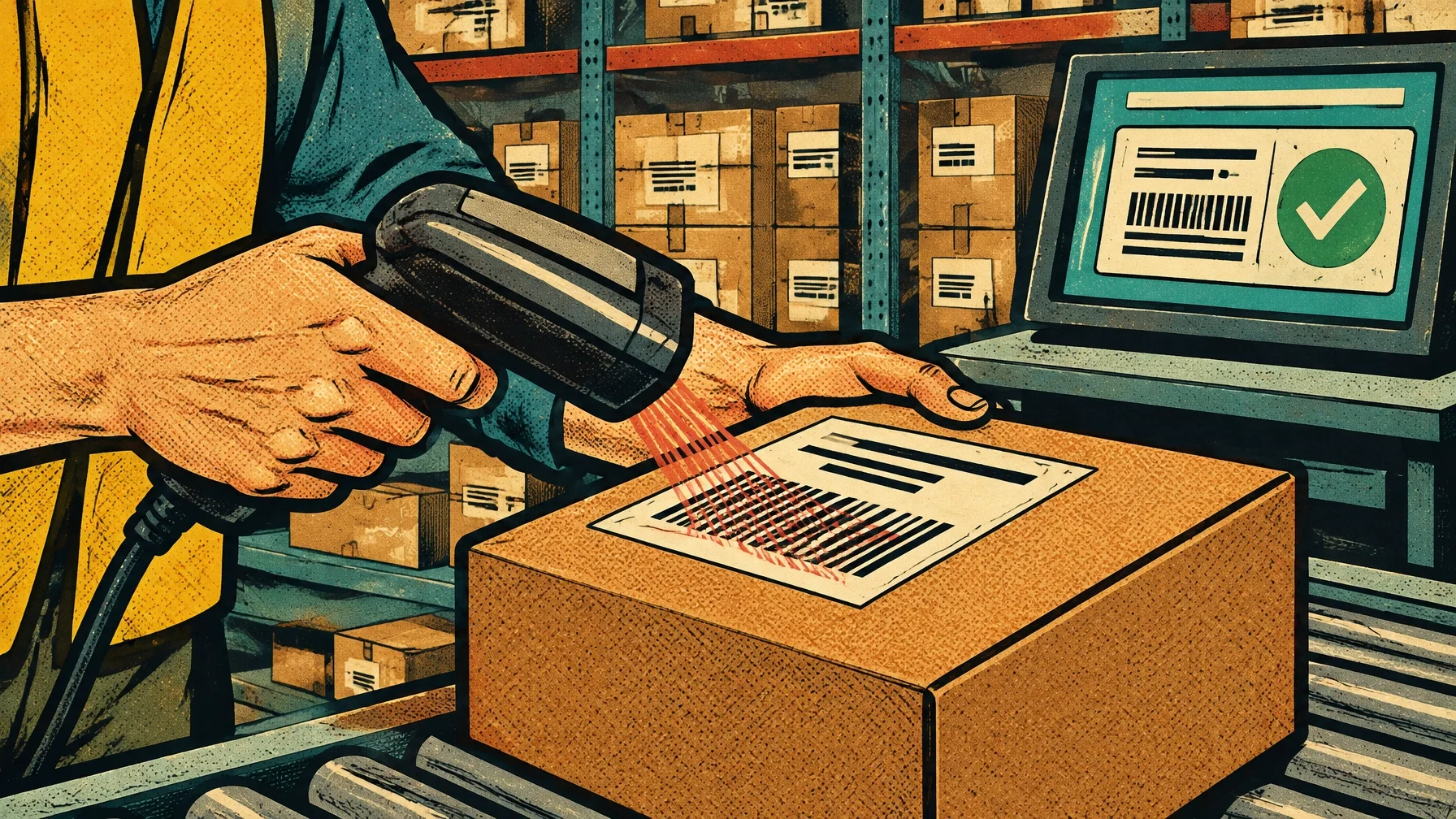
In the warehouse, a readable barcode is part of a good handoff.
Hazmat Noncompliance Fee
In a Domestic Mail Manual revision published November 2, 2026, USPS moved assessment of the Hazmat Noncompliance Fee to the Census and Automated Package Verification processes. USPS announced the change on July 6, 2026 and made it effective immediately. Under the revision, a mailpiece may be assessed this fee when it contains incorrect information such as:
The service type code
The service icon
The barcode banner text
U.S. Department of Transportation markings
The Hazmat Noncompliance Fee may be assessed in addition to the Hazmat Handling Fee. That makes it especially important to ensure that the information associated with a product and its shipping service is right before the parcel leaves your facility.
There is also a date worth noting if you handle returns: USPS announced that the Hazmat Handling Fee and Hazmat Noncompliance Fee will not be assessed on USPS Returns service mailpieces until February 1, 2027. Review the USPS revision and your carrier terms for details that apply to your shipments.
Shortpaid postage
USPS Automated Package Verification (APV) compares declared shipment data, such as weight, dimensions, and mail class, with what USPS measures or observes, and calculates a postage adjustment when they do not match. That is how shortpaid postage is charged.
The charge can appear after the parcel has shipped, sometimes weeks later. Adjustments typically flow through the shipping vendor or postage provider rather than arriving as a direct USPS invoice, which is part of why they can be hard to trace. Was the parcel heavier than its record? Did a different box get used? Was the package measured with a product that had been repackaged?
To understand current fees, consult USPS Notice 123. For shipment-specific questions, review your carrier terms and check the records attached to the affected packages.
Why this is a data problem, not just a packaging problem
A shipping label is a data record. It reflects information associated with the shipment, including its service, weight, dimensions, identifiers, and, where applicable, hazmat information. When the SKU record or shipping setup behind the label is wrong or stale, that error can carry through to the label.
Common causes include:
Measurements entered at launch and never checked again. The product or its packed configuration may have changed.
A reformulated or repackaged product. The item still has the same name, but the record no longer matches what ships.
A battery-containing product that was never flagged. The shipping information may not reflect what is inside the item.
A variant sharing a record with a differently sized sibling. Similar products do not always have identical packed dimensions or weights.
New packaging without updated shipment data. The box, insert, or protective material changes, but the record does not.
In eCommerce fulfillment, the warehouse prints labels based on the information available to it. A packer generally cannot know that a product changed or that its weight was recorded before a packaging update unless someone updates the system and makes that information visible.

When packaging changes, update the shipping record too.
The ownership gap: who maintains the data?
A fee may first appear on the account associated with the shipping label. But the cause can sit upstream with the brand’s product information. A 3PL printing labels from a brand’s records cannot correct product details it was never given.
That creates an easy-to-miss gap:
The brand may assume its fulfillment partner has absorbed or resolved the charge.
The fulfillment partner may assume the brand maintains the product data.
Neither side may connect an adjustment to the SKU or packaging change that caused it.
Avoid leaving ownership to assumption. Agree explicitly with your fulfillment partner on:
Who owns SKU data accuracy
Who enters or approves changes to product and package details
Who reviews shipping adjustments and noncompliance lines
How often the records are checked
How packaging changes, reformulations, and new product launches are communicated
A clear handoff helps both teams spot a problem and correct its cause instead of treating each charge as isolated noise.

Agree on who updates the record and who checks it.
What a clean SKU record includes
Use this checklist to review the information connected to the products you ship:
Accurate packed weight, not just the bare product’s weight
Accurate packed dimensions for the box or mailer actually used
Applicable hazmat information, including flags for battery-containing items where relevant
The correct service type and product code
The right barcode for the service
A review date, so someone can notice when the record may be stale
Packed weight and dimensions matter because USPS measures the parcel, not the product sitting on a shelf. If you use different packaging options, make sure the records and shipping workflow reflect which package is used for each order.
A practical fix you can start now
You do not need to audit every shipment before taking a useful first step. Start with a manageable review:
Pull invoices from the last few months. Look for noncompliance and postage adjustment lines.
Match charges to SKUs. Identify patterns instead of writing each charge off as noise.
Measure your top SKUs as packed. Check the actual parcel configuration used for shipping.
Update the records. Make sure the new information reaches the systems used to create labels.
Set a review cadence. Revisit data when packaging changes, products are reformulated, and new products launch.
Confirm ownership with your fulfillment partner. Decide who maintains the information and who audits it.
Keep the charge details and the shipment records together while you investigate. That makes it easier to compare what was declared with what was packed and identify which process needs attention.
How Rogue Fulfillment helps keep the handoff clear
For a growing brand, accurate shipment data is part of a dependable 3PL relationship. Rogue Fulfillment is a boutique 3PL for eCommerce brands in St. Paul, Minnesota. Our approach combines personal attention with practical fulfillment support, so brands can review records and operational questions with a dedicated account manager rather than a ticket queue.
Rogue offers same-day inventory processing, 24/7 access to real-time data, and multi-carrier rate shopping. Value-added services such as kitting and custom packaging design are part of the conversation, alongside sustainable practices. Brands also receive free access to The Rogue Cooperative, a network for business growth and peer support. Rogue can also manage a brand’s customer service mailbox alongside fulfillment.
Rogue’s company-stated figures, as of 2026, are a 99.84% order accuracy rate and 99% of orders shipped within 24 hours. They are not guarantees, and they describe Rogue’s reported performance rather than replacing a brand’s own review of SKU data, carrier terms, or shipment charges.
Learn more about Rogue’s 3PL fulfillment services or talk with the team about how your data and fulfillment workflow fit together.
The bottom line
A parcel can be packed correctly and still carry incorrect shipping information. USPS’s barcode quality, hazmat information, and postage verification processes make accurate shipment records worth reviewing before errors repeat.
Start by matching recent adjustments to the SKUs that shipped. Then confirm that your packed weights, dimensions, service details, and product information match what leaves the warehouse. A short conversation about your SKU data, packaging lineup, and who maintains each record can help close the ownership gap and make eCommerce fulfillment easier to manage.
This post is general information, not legal, regulatory, transportation, or customs advice. USPS fees and requirements can change. Confirm the rules for your specific products and shipments with USPS Notice 123, your carrier, and qualified advisors.