
Who Pays When a Package Goes Missing? A Plain-English Guide to Shipping Claims

THE HANDOFF MATTERS.
A missing package creates two separate questions:
Who should help the customer?
Who ultimately absorbs the financial loss?
Those answers are not always the same.
The customer may contact your Shopify, Amazon, Etsy, WooCommerce, or Squarespace store expecting a refund or replacement. You may then need to recover the value through a carrier claim, parcel insurance policy, package protection provider, or your fulfillment partner.
Responsibility is not automatically assigned to the carrier, the brand, or the 3PL. It depends on the shipping terms, the point where risk transfers, who purchased the label, the available insurance, carrier rules, proof of delivery, and the specific agreements between the parties.
This article provides general information, not legal advice. Review your contracts and consult qualified counsel about a specific dispute.
The short answer: the seller often responds first
From the customer’s perspective, the brand is usually the first point of contact when an order is missing.
That does not necessarily mean the brand is legally or contractually responsible for every loss. It means the customer relationship sits with the brand, not with the warehouse or shipping account.
Depending on your customer policy and sales channel, you may choose to:
Investigate the shipment
Request that the customer check with household members or neighbors
Contact the carrier
Offer a replacement
Issue a refund
File a carrier or insurance claim
Escalate a potential fraud or theft issue
The final cost may later shift to the carrier, insurer, 3PL, customer, or brand. That allocation depends on the facts and the contracts.
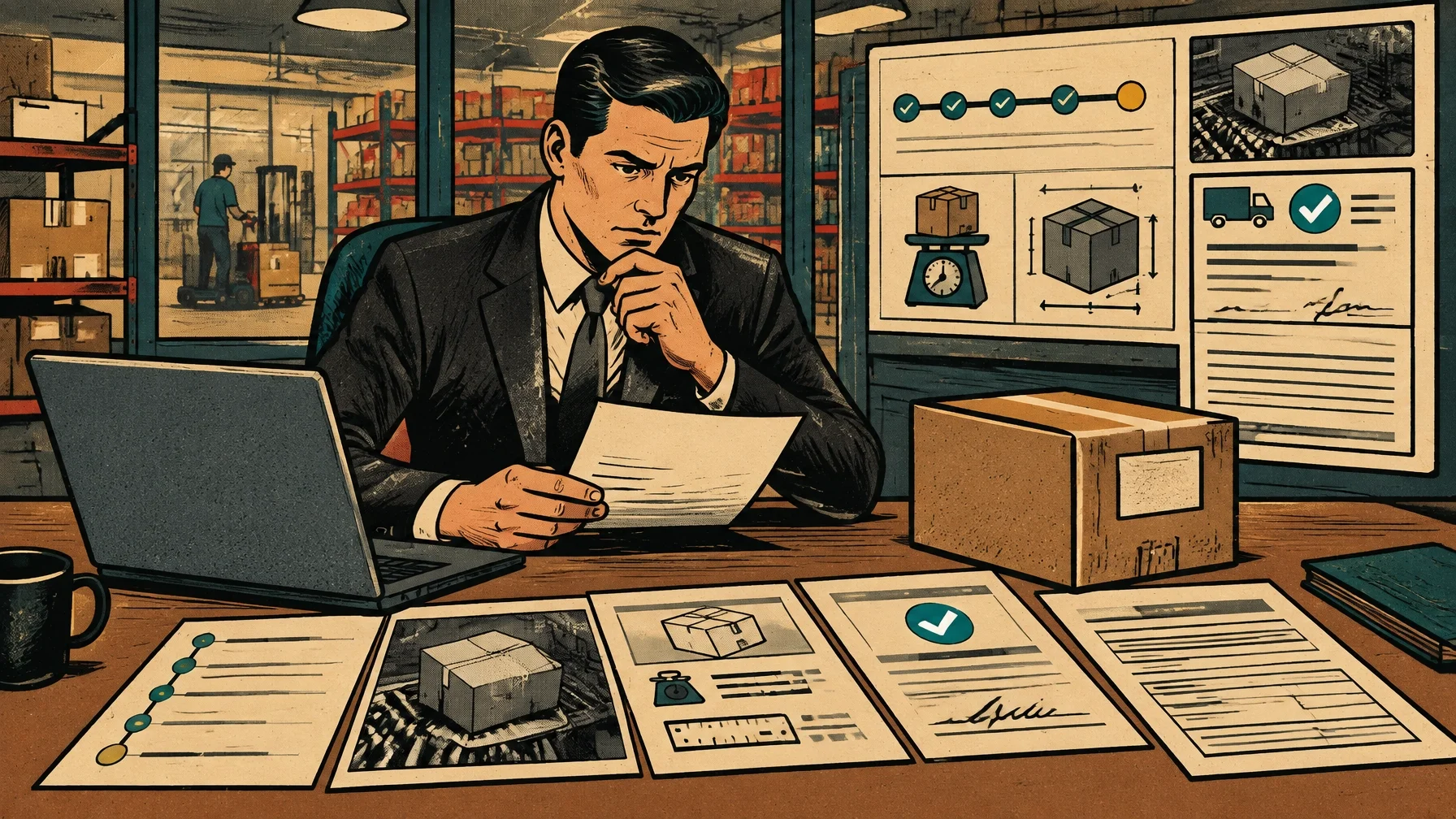
CHECK THE RECORD BEFORE ASSIGNING THE COST.
Start with the shipment record
Before deciding who pays, identify the facts surrounding the order.
Ask these questions:
Who is the shipper of record?
Who purchased and controls the shipping label?
Who selected the carrier and service level?
When did the carrier accept the parcel?
Was the address entered correctly?
Was declared value coverage or parcel insurance purchased?
Does the tracking record show delivery?
Was a signature required?
What does the brand’s customer agreement say?
What does the 3PL contract say about loss, damage, claims, and liability?
The shipper of record is especially important. Carriers often direct claims payments to the shipper or account holder. For example, UPS explains that approved claim payments are sent to the shipper. FedEx also separates responsibilities between recipients, merchants, and the carrier in its claims guidance.
A 3PL may physically pack and hand off the order while the brand owns the carrier account. In another arrangement, the 3PL may purchase labels under its own account and manage the claim process. Your agreement should make that distinction clear.
Common missing-package scenarios
1. The parcel was never tendered to the carrier
If the 3PL cannot show that the order left the facility, the issue may sit between the brand and fulfillment provider.
For example, the warehouse may have created a label but failed to complete the shipment. Or the package may have been packed but missed the scheduled carrier pickup.
If there is no carrier acceptance scan, useful evidence may include:
Pick and pack scans
Warehouse shipment records
Carrier pickup manifests
Package weight
Label creation time
Dock or handoff records
Inventory adjustments
Photos of the completed package
The 3PL may have contractual responsibility in this situation, depending on the agreement. The brand may still need to resolve the customer’s issue first.
2. The carrier accepted the package, then it disappeared in transit
Once the carrier accepts the parcel, the carrier’s rules and the applicable insurance policy often control the claim.
That does not guarantee reimbursement. Coverage may be limited by:
Declared value
Service type
Prohibited goods
Packaging requirements
Address accuracy
Proof-of-value requirements
Filing deadlines
Exclusions in a third-party insurance policy
The brand, 3PL, or shipping account holder may need to file the claim. Confirm who has authority and who receives the payout before a loss occurs.
3. Tracking shows delivery, but the customer says it never arrived
This is more complicated than a package with no delivery scan.
A delivery scan may include a timestamp, delivery location, photo, GPS information, or signature. However, the outcome can still depend on the customer’s agreement, marketplace rules, delivery instructions, signature requirements, theft policy, and applicable law.
Possible explanations include:
Delivery to the wrong address
A package left in an unexpected location
Porch theft after delivery
A household member or neighbor receiving it
Fraudulent non-receipt
An inaccurate or incomplete address
Do not promise the customer that a replacement or claim will definitely be approved. Explain that you are reviewing the delivery record and will follow up with the available options.
4. The package was damaged
Damage claims require more than a statement that the product arrived broken.
The carrier or insurer may ask for photos of:
The item
The inner packaging
The outside of the box
The shipping label
Any visible puncture, crushing, or water damage
Keep the packaging and contents until the claim is resolved. UPS, FedEx, and USPS all emphasize documentation, proof of value, and retaining packaging in their claim instructions.
Packaging quality matters here. Boxes that are too large or too small, insufficient cushioning, inaccurate dimensions, or poorly placed labels can affect both the claim and the original cause of damage.
5. The address was incorrect or the goods were prohibited
If the brand supplied the wrong address, entered incomplete information, or shipped an item restricted by the carrier or insurer, responsibility may shift toward the brand or customer.
That conclusion is not automatic. Review the order record, customer communications, label data, and applicable terms.
6. A return went missing on the way back
Returns create a separate risk question.
The customer may have shipped the return using a label supplied by the brand, a marketplace, or the customer’s own carrier account. The answer may depend on when the return risk transfers, whether the label was purchased by the brand, and what the return policy promises.
Define who is responsible for:
Return label creation
Carrier selection
Package protection
Proof of tender
Return tracking
Lost return claims
Refund timing
A practical shipping-claims workflow
Use a repeatable process instead of handling every missing package from scratch.
1. Preserve the evidence
Save tracking history, order details, label information, pick and pack scans, weight, dimensions, photos, delivery confirmation, and customer communications.
2. Verify the order and address
Confirm the SKU, quantity, destination, apartment or unit number, postal code, and any customer-entered delivery instructions.
3. Check carrier acceptance
Look for the first carrier scan. A label-created status is different from a carrier acceptance scan.
4. Classify the loss
Determine whether the issue is:
Never tendered
Lost in transit
Marked delivered but not received
Damaged
Address-related
Prohibited-goods related
A missing return
5. Notify the correct party quickly
Contact the carrier, insurer, 3PL, package protection provider, or marketplace according to the applicable process.
Carrier deadlines vary. For example, UPS currently states a 60-day window for many lost or damaged package claims. FedEx lists different deadlines for damaged contents and undelivered shipments. USPS uses service-specific filing periods. Verify current rules directly before relying on any deadline.
6. Submit complete documentation
Include the tracking number, proof of value, invoices, shipment details, photos, inspection records, and any other required documents.
7. Communicate carefully with the customer
Acknowledge the issue, explain what you are checking, and provide a realistic next update. Avoid promising that a claim will be approved or that another party will reimburse the brand.
8. Reconcile the outcome
Record the refund, replacement, claim payment, deductible, chargeback, or unrecovered amount. Review whether the loss should be charged to a carrier, insurer, fulfillment provider, or internal operations.
What your 3PL contract should address
Before signing with a 3PL for eCommerce brands, review the claims section carefully.
Your contract checklist should include:
Responsibility for inventory loss while goods are in the warehouse
Responsibility before carrier acceptance
Responsibility after carrier handoff
Who selects and pays the carrier
Who is the shipper of record
Who files carrier and insurance claims
Claim filing deadlines
Who receives claim proceeds
Declared value and parcel insurance terms
Exclusions for theft, concealed damage, prohibited goods, and packaging failure
Address-error responsibility
Signature and delivery requirements
Indemnity obligations
Limitation-of-liability clauses
Service-level commitments
Investigation timelines
Required customer and shipment records
Claims-processing fees
Procedures for lost returns
Also confirm which records the fulfillment provider retains. Useful records include:
Pick and pack scans
Weight and dimensions
Package photos
Tracking events
Delivery confirmation
Carrier handoff records
Inventory adjustments
Customer communications
Clear records do not eliminate disputes, but they make the facts easier to establish.
How to prevent missing-package losses
Prevention starts with consistent fulfillment processes.
Consider these steps:
Use carrier-agnostic shipping and rate shopping rather than relying on one default carrier.
Add signature service or additional coverage for appropriate high-value orders.
Audit packaging by SKU and order combination.
Use accurate weights and dimensions.
Document carrier handoffs.
Set clear customer-facing delivery, theft, and replacement policies.
Review claim rates by carrier, zone, SKU, and fulfillment location.
Train customer service and warehouse teams on the same escalation process.
Review prohibited-goods and coverage exclusions before launching new products.
Accurate packaging data supports both shipping cost control and claim documentation. A right-sized package with reliable measurements is easier to rate, track, audit, and defend in a dispute.

PREVENTION STARTS AT THE PACKING STATION.
How Rogue Fulfillment supports clearer fulfillment accountability
When a missing package requires investigation, access to the right person matters.
Rogue Fulfillment provides a dedicated account manager rather than a ticket queue, transparent real-time data, documented fulfillment processes, same-day inventory processing, and multi-carrier flexibility. Value-added services include custom packaging, kitting, gift wrapping, campaign support, and other brand-specific workflows.
Rogue reports a company-stated 99.84% order accuracy rate and says 99% of orders ship within 24 hours. These are company-stated figures, not guarantees for every account or shipment.
For growing brands, brand-level care can make it easier to identify where a loss occurred, preserve the evidence, and coordinate the next step.
If missing packages or unclear claims responsibility are creating operational friction, request a shipping-claims and fulfillment-process review from Rogue Fulfillment.
The bottom line
The carrier is not automatically responsible when a package goes missing. Neither is the brand or the 3PL.
The answer depends on:
When the loss occurred
Who controlled the shipment
When risk transferred
What the carrier accepted
Whether coverage applies
What the contracts say
What the fulfillment records show
What the customer and marketplace policies require
Build a documented process before the next claim happens. Define responsibility in your 3PL agreement, preserve shipment evidence, verify current carrier deadlines, and communicate with customers without promising an outcome prematurely.
A clear claims process will not prevent every missing package. It can make the financial and operational impact easier to manage.