
Outgrowing Your Garage: 5 Signs It’s Time for a 3PL

THE GARAGE HAS HIT CAPACITY.
There is no specific order count that automatically means your brand needs a third-party logistics provider, or 3PL.
For some businesses, the right time comes at 200 orders per month. For others, it may come at 2,000. The better question is this:
Has fulfillment become difficult to manage, difficult to measure, or difficult to scale?
When packing orders takes over your evenings, inventory counts no longer feel reliable, or a product launch creates operational chaos, your home-based setup may be holding the business back.
That does not mean you need an impersonal enterprise warehouse. The right 3PL for eCommerce brands can give you more capacity while preserving the packaging details, communication, and customer experience that make your business distinct.
1. Fulfillment Is Taking Over Your Evenings and Weekends
At the beginning, handling fulfillment yourself is often practical. You know every product, every packing instruction, and every customer order.
Over time, however, fulfillment can consume the hours you need for higher-value work.
You may be:
Packing orders after dinner
Printing labels on weekends
Answering customer questions about shipment status
Leaving product development or marketing until late at night
Delaying wholesale outreach because the next shipment needs attention
Asking friends or family to help during busy periods
The cost is not only personal time. It is leadership time.
As the founder, you should be focused on decisions that move the brand forward, including:
Improving products
Building customer relationships
Planning promotions
Managing suppliers
Expanding sales channels
Developing your team
If fulfillment routinely interrupts those responsibilities, outsourcing may be a sensible next step.
A 3PL can take over receiving, storage, picking, packing, shipping, and returns while giving you a clearer view of daily operations. That creates capacity without requiring you to lease and staff your own warehouse.
2. Inventory Is Difficult to Count, Locate, or Reconcile
Inventory problems usually start quietly.
A product is listed as available, but you cannot find it. A shipment arrives, but it sits unopened for several days. Your spreadsheet says you have 40 units, while the shelves suggest something else. Then a customer places an order for an item that is already out of stock.
These issues become more common when inventory is spread across a garage, basement, spare bedroom, storage unit, or several locations.
Watch for signs such as:
Stock counts depend on memory or manual spreadsheets
Products do not have consistent SKU or barcode information
Receiving new inventory takes several days
You cannot quickly locate a particular product
Returns are placed in a separate pile without a clear status
Inventory does not sync reliably across Shopify, Amazon, Etsy, WooCommerce, or Squarespace
You discover discrepancies only when an order cannot be fulfilled
A professional fulfillment operation should provide defined receiving procedures, organized storage, cycle counts, and timely inventory updates.
Ask potential providers:
How quickly is received inventory processed?
When do inventory counts update in the system?
How are discrepancies investigated?
Are returns inspected and restocked through a documented process?
Can I see inventory activity in real time?
Rogue Fulfillment provides same-day inventory processing and 24/7 access to real-time operational data. Those capabilities do not eliminate the need for accurate product information, but they can give you a more reliable foundation for planning and selling.
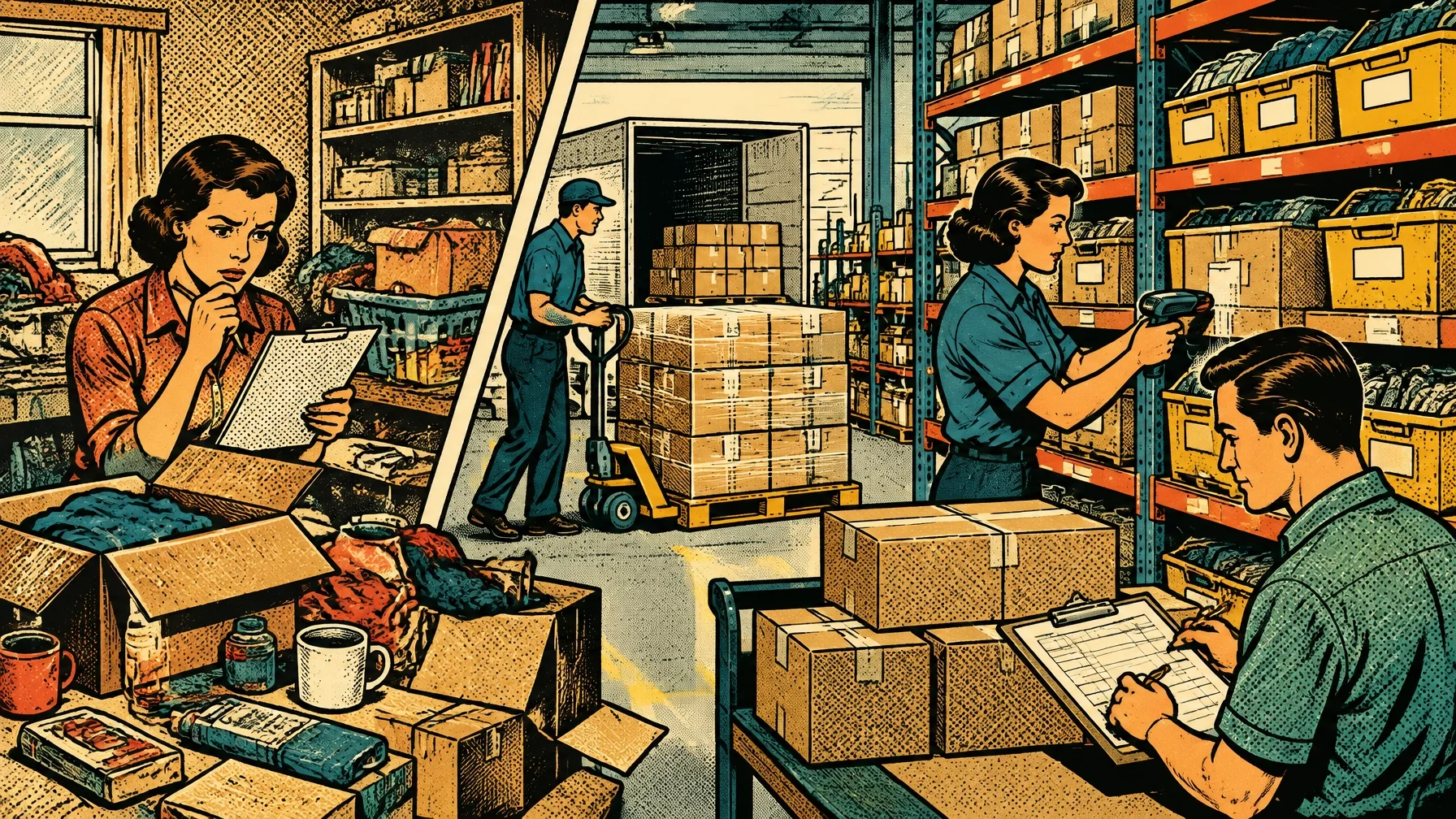
COUNT IT ONCE. TRUST IT AFTERWARD.
3. Launches, Promotions, and Seasonal Spikes Overwhelm Your Setup
A home-based fulfillment process may work well during an average week and fail as soon as demand changes.
You may be preparing for:
A holiday shopping period
A flash sale
An influencer campaign
A product launch
A subscription shipment
A trade show or retail replenishment
A successful social media post
The problem is not simply the number of orders. It is the sudden change in workflow.
A promotion may require new inserts, special packaging, a product bundle, or a different shipping method. If all of those details depend on one person working from home, errors and delays become more likely.
Before moving to a 3PL, document your expected volume and process requirements. Prepare:
Average daily orders
Highest daily order volume
Monthly order totals
SKU counts
Product dimensions and weights
Seasonal patterns
Launch dates
Promotional packaging requirements
Expected growth over the next 12 months
A capable provider should explain how it handles peaks, not simply promise that it can.
Ask about staffing, order cutoffs, receiving capacity, carrier pickups, overflow planning, and service-level agreements, commonly called SLAs. SLAs should define measurable expectations for order processing, accuracy, receiving, returns, support response times, and issue resolution.
4. Brand Details Are Becoming Inconsistent
Your packaging is part of the product experience.
When orders are small, you may personally add tissue paper, inserts, samples, stickers, gift wrapping, or handwritten notes. As volume grows, those details become harder to repeat consistently.
One customer receives the intended presentation. Another receives a plain mailer. A third receives an outdated insert. A bundled order is missing one component.
That inconsistency can weaken the experience you worked to create.
A 3PL should be able to document and repeat your requirements, including:
Kitting and product assembly
Custom packaging
Gift wrapping
Branded inserts
Promotional samples
Product personalization
Subscription box components
Quality checks
Campaign-specific materials
These services support personalized unboxing experiences without requiring you to manage every package yourself.
During an evaluation, ask to see how special instructions are stored and communicated on the warehouse floor. Find out whether value-added services are treated as part of the standard relationship or as difficult exceptions that require separate approvals each time.
Rogue Fulfillment provides kitting, custom packaging, gift wrapping, campaign support, and customizations as part of its boutique service approach. You can learn more about these capabilities through its kitting and assembly services and 3PL services.
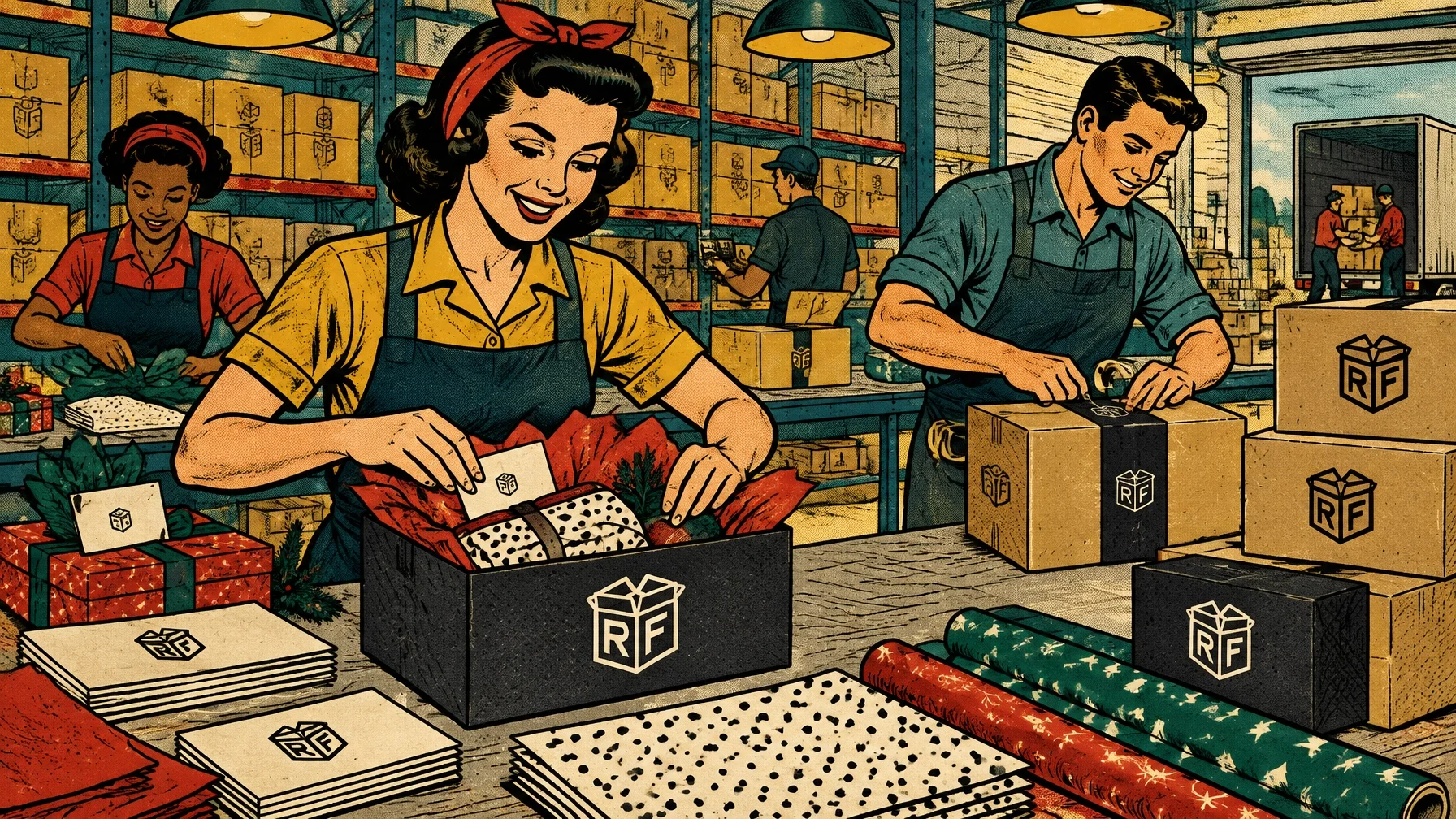
PACK IT LIKE YOUR BRAND DEPENDS ON IT.
5. Shipping, Returns, and Costs Are No Longer Visible Enough
Home-based fulfillment can make costs look deceptively simple. You see postage, packaging, and product costs, but the full picture may be harder to calculate.
You may not know:
Your true fulfillment cost per order
Which carriers are most economical by destination
How much packaging is being wasted
How long returns remain unprocessed
Which products create the most handling work
How much founder time goes into each shipment
Whether expedited or oversized shipments are reducing your margin
A 3PL should improve visibility rather than replace one mystery with another.
Look for:
Real-time order and inventory reporting
Clear, line-item billing
Multi-carrier flexibility
Rate shopping based on destination, weight, dimensions, and delivery requirements
Defined returns handling
Reports for shipping performance and fulfillment costs
A clear process for damaged, refused, or undeliverable packages
Returns deserve particular attention. Ask how returned products are received, inspected, restocked, repaired, repackaged, or written off. A strong process can help recover sellable inventory and give you useful information about product quality and customer behavior.
Rogue’s guide to rate shopping for eCommerce explains how comparing qualified carrier options can help protect shipping margins. Its sustainable packaging guide also covers the connection between packaging choices, cost, and customer experience.
When You May Not Be Ready for a 3PL
Outsourcing is not automatically the right decision.
You may want to wait if:
Your order volume is still very low and predictable
Your products are not yet ready for consistent SKU or barcode management
Your margins cannot support outside fulfillment costs
You are still changing product sizes, packaging, or bundles every week
You have not documented basic packing and returns instructions
Your sales channels and inventory records are not reconciled
A 3PL cannot solve unclear product data or an undefined customer promise by itself. Before starting, make sure you understand your products, packaging requirements, order patterns, and financial limits.
How to Evaluate the Transition
A good onboarding process should include more than sending boxes to a warehouse.
Prepare your:
SKU list and product descriptions
Barcodes and product dimensions
Weight information
Packaging instructions
Kit and bundle specifications
Returns rules
Sales channel credentials
Order history and volume forecasts
Launch and promotion calendar
Confirm that the provider can integrate with the platforms you use, including Shopify, Amazon, Etsy, WooCommerce, and Squarespace. Ask how orders, inventory, tracking information, and returns move between systems.
Before going live, request test orders. Confirm that:
Orders import correctly
Inventory updates across channels
Tracking information returns to the storefront
Kits deduct the right components
Special packaging instructions appear correctly
Returns update inventory as expected
You should also ask:
Who will be my dedicated account manager?
What happens when an order is late or incorrect?
What are the receiving and returns SLAs?
How are carrier rates selected?
Can the operation handle a sudden volume increase?
How are billing questions handled?
What reporting can I access without requesting a spreadsheet?

SEE THE NUMBERS. MAKE THE NEXT MOVE.
Why a Boutique 3PL May Be the Better Fit
Moving out of your garage does not mean giving up personal service.
Rogue Fulfillment works with growing brands that need more structure and capacity while still wanting brand-level care. Customers receive a dedicated account manager, real-time data access, same-day inventory processing, multi-carrier flexibility, and support for value-added services.
Rogue reports a company-stated 99.84% order accuracy rate and says 99% of orders ship within 24 hours. These are company-stated figures, not universal guarantees, so ask every provider how its performance is measured and documented.
Brands also receive free access to The Rogue Cooperative, a network designed to support business growth, shared expertise, and peer connections.
Practical Takeaway Checklist
You may be ready to discuss a 3PL if:
Fulfillment is consuming leadership time
Inventory counts are difficult to trust
Peaks and launches create delays
Packaging details are inconsistent
Shipping and returns costs are unclear
You need better visibility across sales channels
Your brand needs room to grow without losing its identity
The right time to move is not determined by a universal order threshold. It is determined by whether your current operation still supports the business you want to build.
If you are evaluating the next step, contact Rogue Fulfillment for a practical conversation about your order volume, products, packaging, integrations, and growth plans. We can help you determine whether a 3PL is the right fit now or whether a few operational improvements should come first.