
The Real Cost of a Mis-Ship
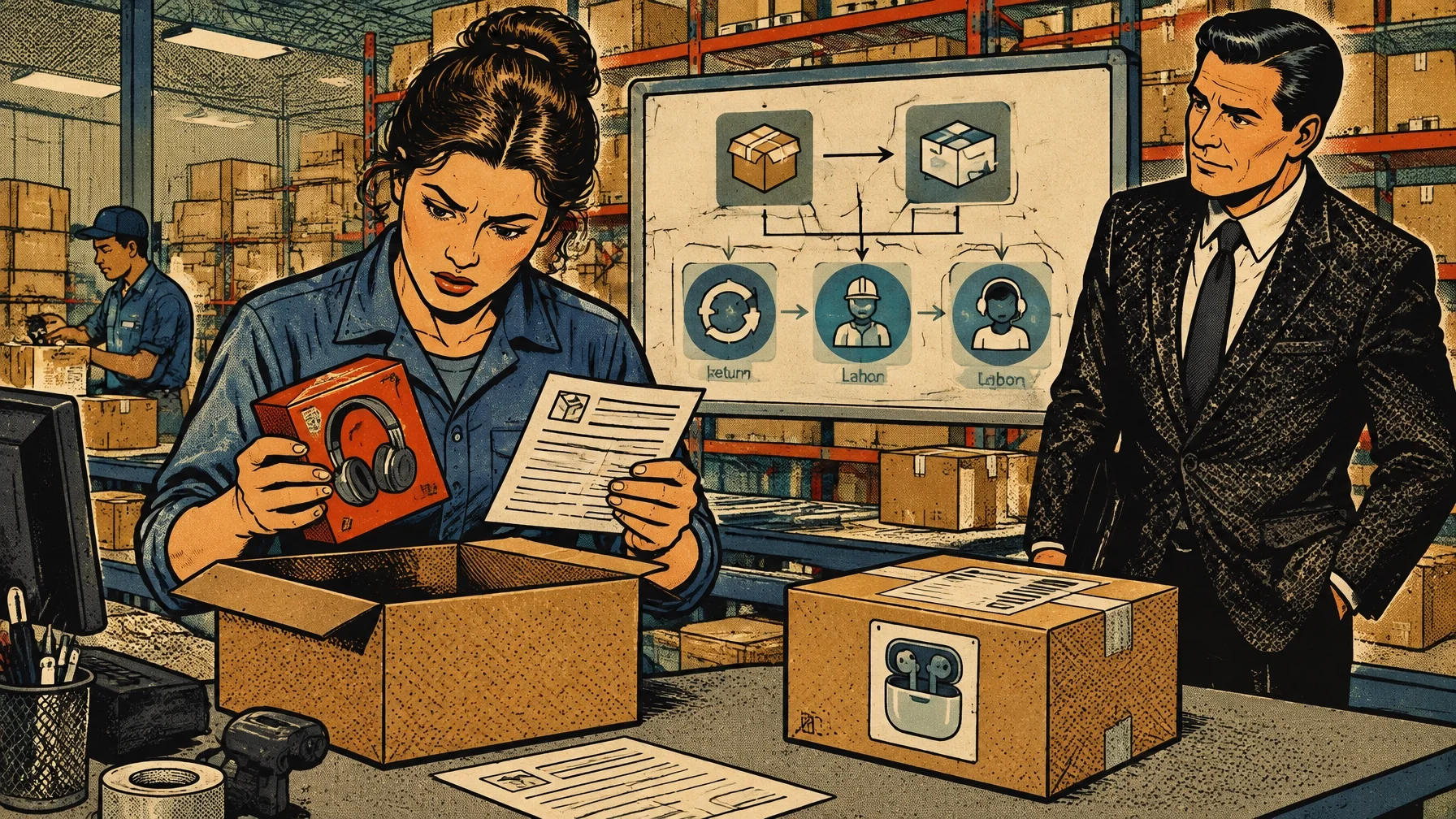
One wrong item can trigger a whole second shipment.
A mis-ship can look simple on a refund report. The customer received the wrong item, so the order was refunded or replaced.
But that refund is only one visible part of the cost.
The real expense can include replacement inventory, duplicate shipping, return handling, packaging materials, customer support, inventory corrections, and the quiet loss of a customer who never orders again.
For a growing brand, pick and pack accuracy is not just a warehouse metric. It affects margin, team capacity, customer experience, and the ability to scale without adding avoidable work.
1. Start With One Mis-Ship and Follow the Money
Imagine a customer orders one product and receives another. The correction may involve every one of these categories:
Replacement product: You may need to send the correct item at no additional charge.
Outbound freight: The replacement order requires a second shipment and a second carrier label.
Return freight: You may pay to bring the incorrect item back, depending on your policy and the situation.
Abandoned wrong item: You may decide that returning a low-cost product is not worth the freight and processing time.
Labor on both orders: Someone must pick, pack, label, and ship the replacement. The original order already consumed those steps once.
Return labor: If the incorrect item comes back, someone must receive, inspect, restock, repackage, and update the inventory record.
Customer support time: A team member handles the original ticket, communicates the solution, and may answer follow-up questions.
Payment and platform fees: Some processing or marketplace fees may not be recovered when an order is refunded or corrected.
Packaging and materials: Boxes, mailers, tape, labels, inserts, and protective materials may be used twice.
The refund line captures only one slice of this chain. To understand the true cost, count every touch, shipment, material, and fee connected to the error.
That is the difference between recording a refund and measuring a fulfillment failure.
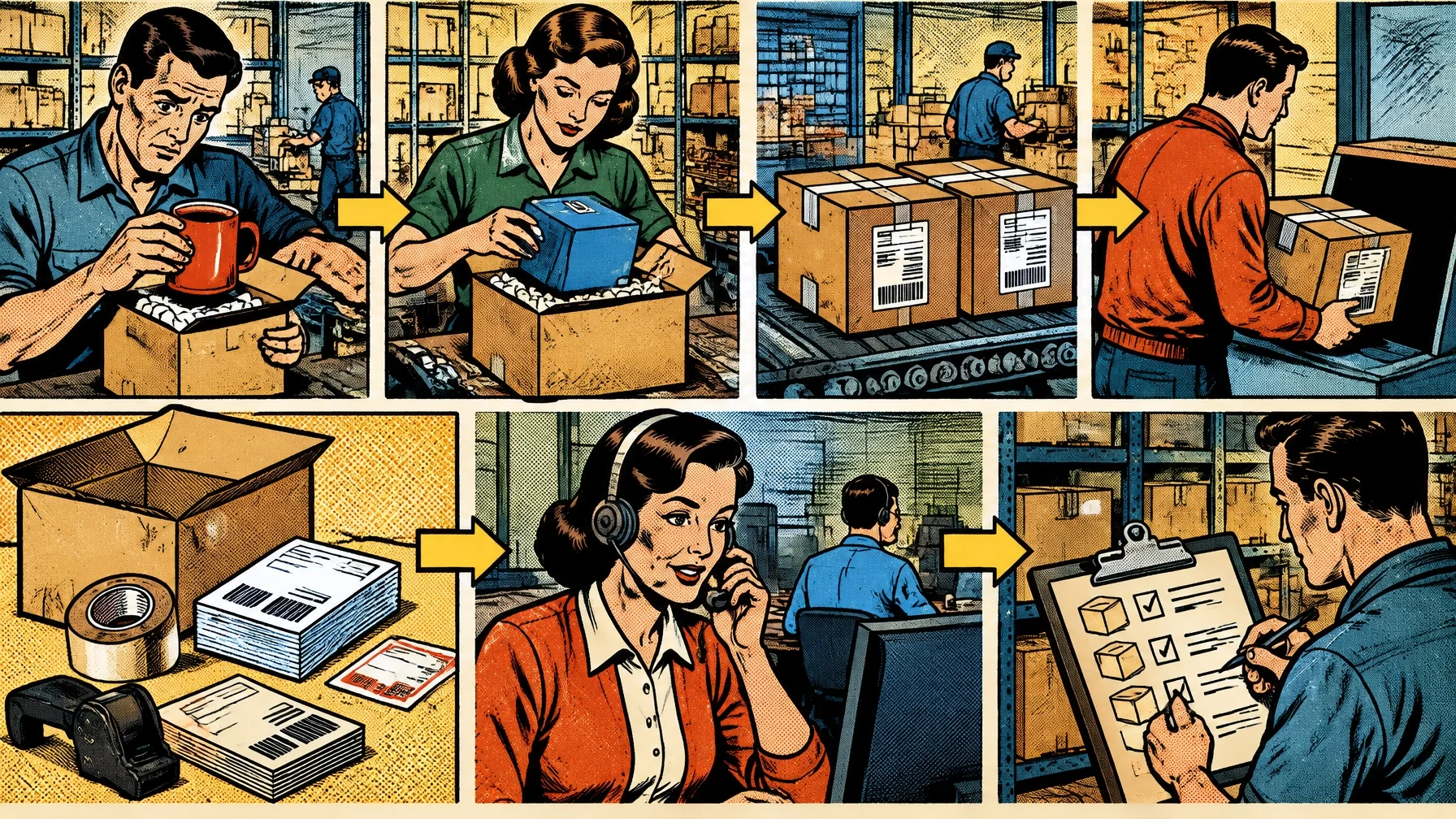
A mis-ship is not one transaction. It is a second workflow created by the first mistake.
2. Why the Visible Refund Is Usually the Smallest Part
Refunds are easy to see because they appear in financial reports. Many other costs are spread across departments and never appear under an “accuracy error” category.
A mis-ship can create:
Duplicate picking and packing labor
Wasted boxes, mailers, tape, labels, and inserts
Expedited shipping paid for out of urgency
Additional receiving and return-handling work
Customer support time that could have served new orders
Inventory corrections after the wrong item leaves the building
Manual reconciliation between the order system and the physical shelf
A second review of the original order and replacement order
There is also an opportunity cost. A corrected order counts as work while producing no new revenue. Your team spends capacity fixing a problem instead of processing a new sale.
That matters as your volume grows. One error may be manageable. A repeated pattern can quietly increase your effective cost per order and consume the operational room you need for growth.
3. The Customer Cost Is Real, but It Is Not Always Loud
Most customers will give a brand an opportunity to fix a mistake. A fast, clear response can prevent one bad shipment from becoming a lasting problem.
Still, the first order carries particular weight. A new customer is deciding whether your brand is reliable, easy to work with, and worth recommending. If the first package is wrong, the customer has to do extra work before receiving what they ordered.
Gifting orders create another layer of risk. The person who placed the order may not be the person who receives it. A wrong item can disappoint a friend, family member, client, or employee who has no context for the mistake.
Customers can also share their experience through:
Product reviews
Public comments
Social posts
Word of mouth
Private feedback to other potential buyers
Not every mis-ship leads to a lost customer. Some customers will accept the correction and continue buying.
The most expensive outcome is often quieter. It is the customer who simply never orders again and never explains why.
4. Make Pick and Pack Accuracy Concrete With Your Own Numbers
An accuracy percentage is useful, but it is not enough on its own. Pair it with volume and cost data.
Build a simple internal model using:
Monthly order count
Count all orders shipped during the period.Number of error orders
Include wrong items, wrong quantities, missing components, and other fulfillment mistakes.Error rate
Divide error orders by total orders, then multiply by 100. Error rate = error orders ÷ total orders × 100Average cost per error
Add the categories from the first section, including labor, freight, materials, fees, and return handling.Monthly accuracy cost
Multiply the number of error orders by the average cost per error.
Illustrative example
This is an illustrative example, not an industry statistic.
Suppose your brand ships:
5,000 orders in one month
25 error orders
An error rate of 0.5 percent
An internally calculated average cost of $40 per error
Your monthly accuracy cost would be:
25 errors × $40 = $1,000
If your average order value is $80, those 25 affected orders represent $2,000 in customer purchases that required corrective work. That does not mean all $2,000 is lost revenue. It shows the revenue connected to orders that did not move cleanly through fulfillment.
Reporting both the percentage and the absolute cost makes the issue easier to discuss internally. “We achieved 99.5 percent accuracy” sounds different from “25 orders required correction and created $1,000 in avoidable operating cost.”
Track the numbers by month and look for patterns rather than reacting to one isolated result.
5. What Actually Causes Pick-and-Pack Errors?
Most errors are process problems, not evidence that one person was careless. Blaming individuals rarely lowers the error rate because the same weak process remains in place.
Common causes include:
Similar SKUs with nearly identical names or packaging
Incorrect or missing product dimensions and weights
Product variants stored directly beside one another
Manual paper-based picking without scan verification
Special instructions that are unclear, outdated, or difficult to find
Packaging that does not match the product or order type
High picker turnover and inconsistent training
Order batching that mixes similar items
Rush periods when volume outpaces process discipline
Bundles or kits that are assembled manually without a clear component list
Review the entire path from order import to final label. An error can begin with inaccurate product data, appear during picking, or go unnoticed at the packing station.
6. A Practical Prevention Playbook for eCommerce Fulfillment
Reducing errors usually requires several small controls working together. Start with the points where the wrong item can be caught most efficiently.
Verify products with scans
Use barcode verification during picking and packing. The scan should confirm that the item selected matches the order before the parcel is sealed.
A weight or scan check before the shipping label is applied can catch missing components, incorrect quantities, and some product substitutions.
Make the warehouse easier to navigate
Separate look-alike SKUs instead of storing them side by side. Use clear locations and consistent labels.
Maintain accurate SKU dimensions and weights. Review those details when products change, packaging is updated, or a new bundle is introduced.
Keep instructions visible and current
Use written, version-controlled packing instructions for:
Inserts
Special packaging
Gift orders
Subscription components
Bundles
Promotional campaigns
Photo references can help teams recognize the correct finished parcel configuration, especially for kits and branded packaging.
Reduce complexity before the order reaches the picker
Pre-kit complex bundles when volume justifies it. A clearly labeled kit reduces the number of decisions required during each order.
Track errors by SKU, picker, and shift. The goal is not punishment. The goal is to find patterns such as one confusing product family, one training gap, or one process that breaks during a rush period.
Review accuracy weekly or monthly with your fulfillment partner. A consistent feedback loop is more useful than a quarterly surprise.
For more on warehouse processes, see Rogue Fulfillment’s warehouse tour for eCommerce brands.
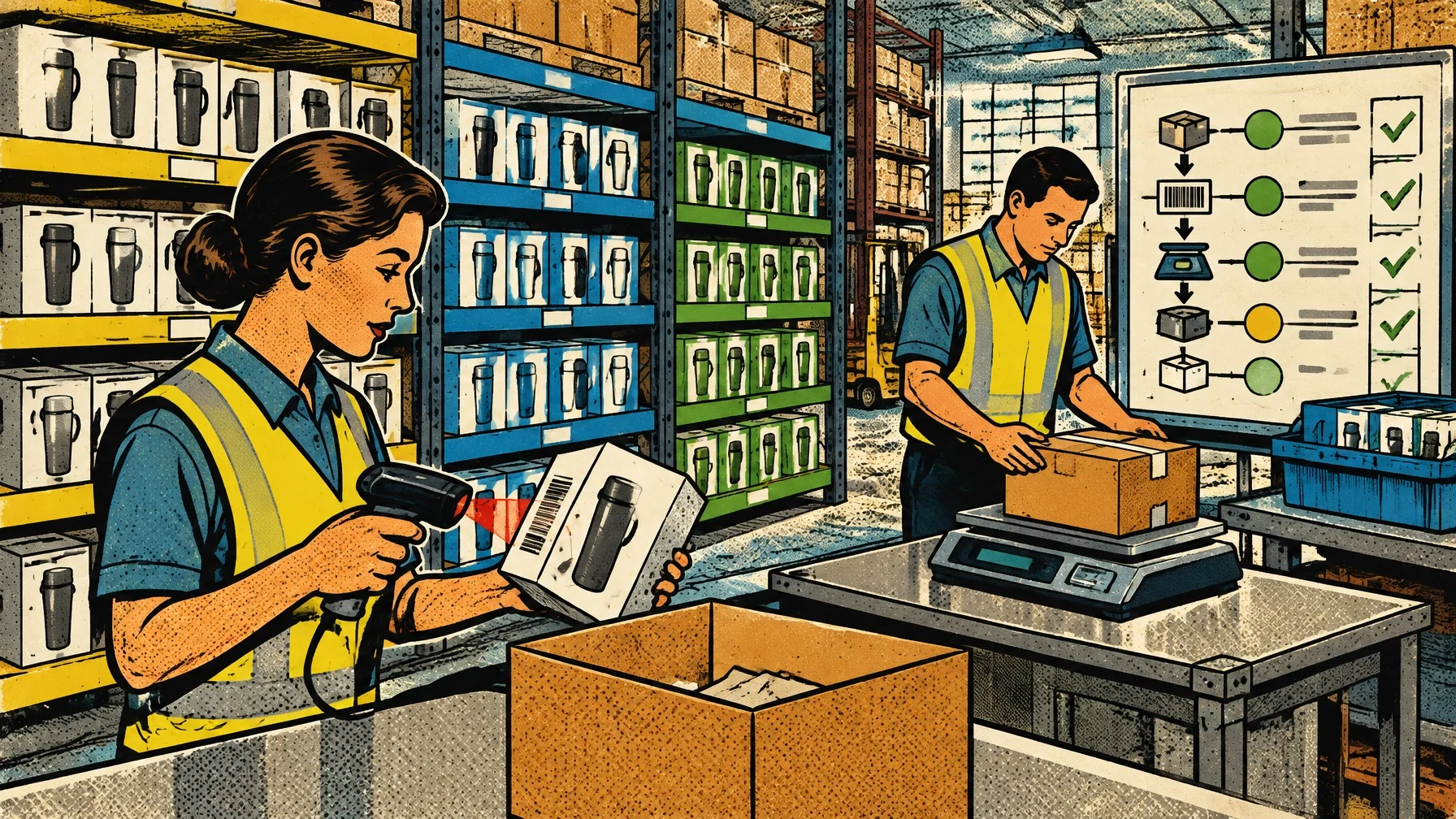
The best error is the one caught before the label is applied.
7. How to Respond When an Error Happens
Even a strong process will eventually encounter an exception. Your response should be quick, clear, and documented.
Acknowledge the issue without making the customer prove the mistake.
Fix the customer’s order first while investigating the cause in parallel.
Reship or refund according to your brand policy.
Capture what happened while the details are still fresh.
Correct the inventory record immediately.
Confirm that the replacement shipped or the refund was completed.
Follow up once the fix is confirmed.
A well-handled error can sometimes improve a customer’s view of your service because the brand demonstrated accountability. Do not treat that as a reason to accept preventable mistakes.
If a situation involves liability, claims, or specific return and refund terms, confirm your own policies and consult qualified support where relevant.
8. Questions to Ask a 3PL About Accuracy
If you are evaluating a 3PL for eCommerce, ask for more than a single accuracy percentage.
Ask:
How are fulfillment errors tracked and reported?
Do you scan-verify at both pick and pack?
What is your root-cause process after an error?
How quickly are reships processed?
Can I see error data by SKU?
How are my special packing instructions stored and updated?
What happens to my inventory record after a correction?
How do you review accuracy with clients?
Can you separate warehouse process errors from customer or system issues?
The answers will show whether accuracy is actively managed or simply reported after the fact.
9. How Rogue Fulfillment Approaches Pick and Pack Accuracy
Rogue Fulfillment is a boutique midwest 3PL built for growing eCommerce brands that need personal attention alongside dependable process.
Rogue uses barcode and scan verification, maintains documented packing instructions, and processes inventory updates the same day. Clients have a dedicated account manager rather than a ticket queue, along with 24/7 access to real-time data and multi-carrier flexibility.
Value-added services are part of the operating model rather than automatic extras. These include:
Custom packaging design
Kitting
Gift wrapping
Campaign support
Project management
Other brand-specific fulfillment needs
Rogue also provides free access to The Rogue Cooperative, a network focused on business growth and peer support.
Rogue’s company-stated figures are a 99.84 percent order accuracy rate and 99 percent of orders shipped within 24 hours. .

Better accuracy comes from better visibility, better questions, and better feedback loops.
The Bottom Line
A pick-and-pack error is not just a refund. It is a chain of replacement inventory, duplicated labor, extra freight, wasted packaging, support time, inventory adjustments, and possible customer loss.
Start by measuring your own numbers. Count errors, calculate the full cost, and review the patterns behind them. Then ask whether your fulfillment process catches mistakes before they reach the customer.
If you are building a more measurable eCommerce fulfillment operation, Rogue Fulfillment can provide a free accuracy and fulfillment-process review. The goal is practical: identify where errors occur, clarify what they cost, and create a process that supports sustainable growth.