
Who Answers Your Inbox? Customer Service for eCommerce Brands, Handled by Rogue Fulfillment
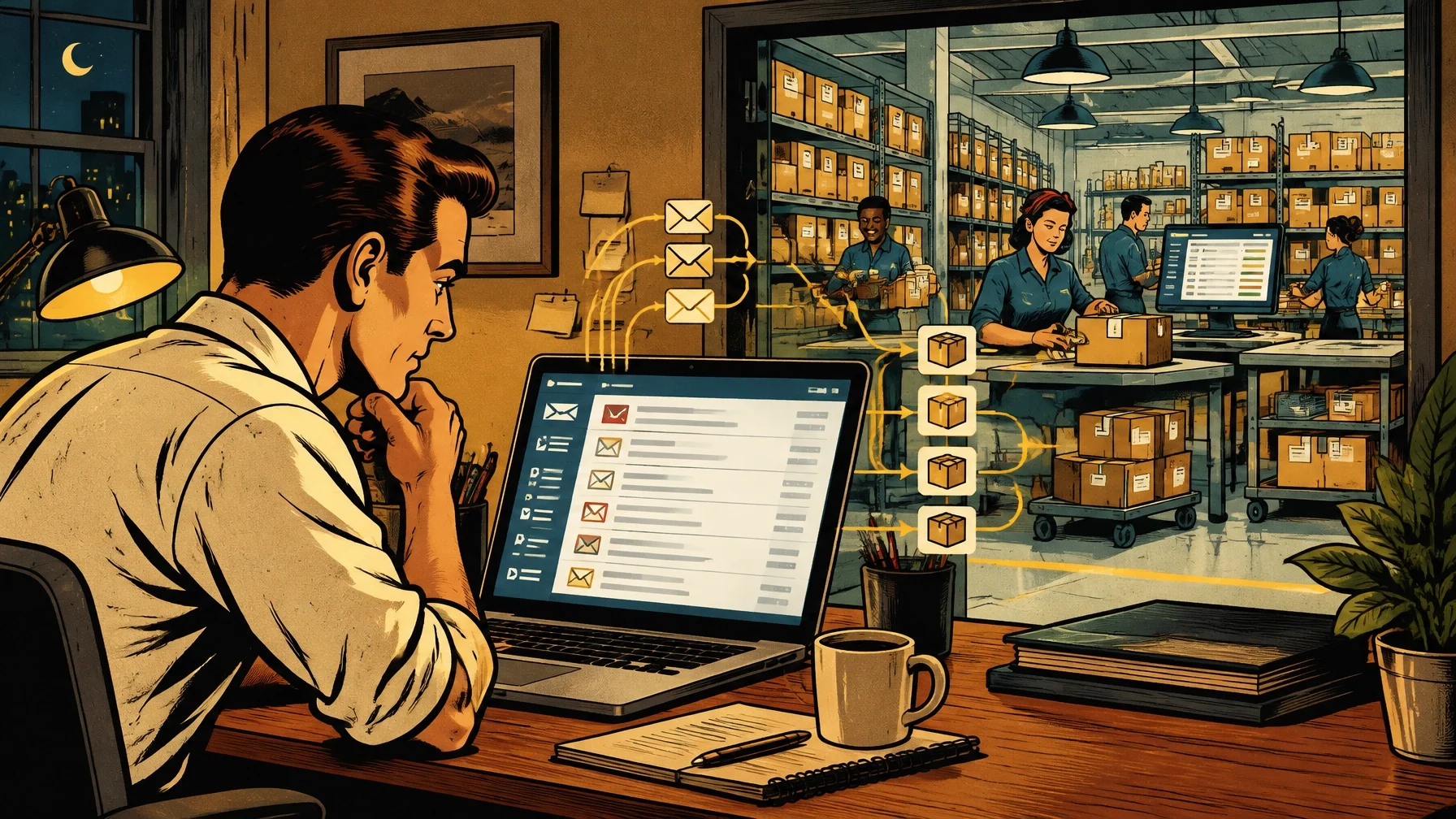
The inbox and the warehouse should tell the same story.
You know the scene. The warehouse is quiet, the rest of the house has gone to bed, and you are still answering customer emails.
At first, handling support yourself makes sense. You know every product, every promotion, and every customer question. But as orders increase, the inbox becomes the last job you are still doing by hand.
Most customer emails are not really questions about your brand. They are questions about an order:
Where is it?
Can I change it?
Can I return it?
Why was the wrong item shipped?
When will my refund arrive?
The person answering those questions needs to see the order. Without that visibility, a simple answer becomes a message to the warehouse, followed by another message to the customer.
That is why customer service and eCommerce fulfillment work better when they are connected.
Why Your Inbox Grows Faster Than Your Order Volume
Every additional order creates another opportunity for a customer question. Even when most orders go smoothly, a growing brand sees more questions:
A missed delivery window
A tracking number that does not update
A package delayed by weather or carrier volume
A return request
A customer who needs to change an address
A first-time buyer who needs more reassurance than a repeat customer
A marketplace or sales channel with different order questions
A promotion that creates a wave of cancellation or order-change requests
A peak season delay that turns into dozens of similar emails
The work also takes more than the time needed to simply type a reply. You have to open the order, check the customer’s history, look up tracking, confirm inventory, contact a warehouse partner, and then respond to the original message.
An inbox answered in fragments throughout the day costs more than the sum of the individual replies. It interrupts product development, marketing, purchasing, and the other work that moves the business forward.
The practical solution is not to stop caring about customer service. It’s to give customer service access to the information needed to answer appropriately.
Why Customers Email a Growing eCommerce Brand
A strong support process starts by understanding the different reasons customers contact you. Each category needs a slightly different response.
A. Questions About Where an Order Is
Order-location questions are often the largest part of an eCommerce inbox. Customers want a clear answer, not a link to a carrier website and a request to check again later.
Tracking shows no movement: Open the order and review the latest fulfillment and carrier scan. Explain whether the package is awaiting pickup, moving between facilities, or truly stalled.
Tracking has not updated in days: Check the fulfillment record before replying. If the package appears stuck, explain what the status means and decide when a carrier trace is appropriate.
Tracking says delivered, but the customer cannot find it: Ask the customer to check common delivery locations, but also review the delivery details and carrier scan. Do not simply repeat that the package is marked delivered.
The package was delivered to the wrong place: Confirm the address on the order and review the delivery information. Escalate to the carrier when the delivery record does not match the order.
The delivery estimate has passed: Check the current tracking status and provide a realistic next step. Avoid promising a delivery date you cannot control.
The order still shows unfulfilled or processing: Check whether the order is awaiting inventory, payment confirmation, an address review, or warehouse action. Do not guess from the storefront status alone.
The customer never received a shipping confirmation: Confirm whether the order shipped and whether the message was sent to the correct email address. Resend the information when appropriate.
The customer ordered a gift and needs it by a certain date: Review the order status immediately and explain what can and cannot be controlled. If the order has not shipped, act quickly. If it has shipped, provide the best available information without guaranteeing a carrier outcome.
The goal is one useful reply based on the actual order and tracking data.
B. Changes to an Order Already Placed
Order changes are time-sensitive. Once an order is picked, packed, or handed to a carrier, some changes may no longer be possible.
Address change: Check whether the order is still editable. If it has not been picked, update it promptly. If it has shipped, explain the available options.
Cancel the order: Confirm the real fulfillment status before promising cancellation. The answer depends on whether warehouse processing has begun.
Remove or add an item: Review the order and available inventory. If the order is still editable, make the change or explain any necessary refund or additional payment.
Change a size or variant: Confirm the requested replacement is in stock and that the order has not been picked.
Change shipping speed: Check whether the order can still be upgraded and explain any additional cost or timing limit.
Combine two orders: Review both orders, their fulfillment status, and whether combined shipping is practical. Do not promise a combination after either order has been processed.
Change the email address: Confirm the customer’s identity and update the order record if permitted by the brand.
The value here is speed. Whoever answers needs to know the real warehouse status and be able to act on it.

When support can see the order, the answer does not need a second trip through the warehouse.
C. Damage, Shortage, and Fulfillment Errors
Customers may contact you because something arrived damaged, incomplete, or different from what they ordered.
Arrived damaged: Ask for a photo when it will help determine the next step, but do not make the customer prove the same issue twice.
Arrived broken: Confirm the product and shipment details, then follow the brand’s reship or refund policy.
Wrong item: Compare the customer’s order with the pick and pack record. Arrange a correction quickly and provide clear return instructions if needed.
Wrong size or color: Confirm what was ordered and what was shipped before deciding whether an exchange or replacement is appropriate.
An item is missing from a multi-item order: Check whether the order shipped in multiple packages and review the fulfillment record before assuming a warehouse shortage.
A component or accessory is missing: Confirm the product configuration and determine whether the missing part can be sent separately.
A product leaked or melted: Record the product, packaging, and shipping details. Escalate safety-related concerns according to the brand’s process.
Packaging arrived crushed: Ask for a photo when useful and review the packaging and carrier handling information.
The quantity is short: Compare the customer’s report with the order and pick record. Correct the shortage and log the issue for review.
A good process does more than fix one order. It records recurring problems so the same product, packaging, or fulfillment issue does not repeat.
D. Returns, Exchanges, and Refunds
Returns are easier for customers when the process is clear and consistent.
How do I return this?: Explain the steps in the reply instead of sending the customer to search through a policy page.
Request for a return label: Confirm whether the order qualifies and provide the next step under the brand’s policy.
Exchange for a different size: Check inventory before promising an exchange. Explain what happens to the original item.
Return status: Confirm whether the return label was used and whether the package has reached the warehouse.
Refund status: Check whether the returned item was received, inspected, and approved for refund.
Refund not showing in the customer’s account: Explain the difference between the brand issuing a refund and the payment provider posting it to the customer’s account.
Restocking fee questions: State the brand’s written policy clearly and consistently.
Final sale items: Explain the applicable policy before offering an exception.
Return window questions: Confirm the purchase date and the brand’s stated return period.
This is general guidance. Return, refund, final sale, privacy, and consumer protection terms should follow the brand’s own written policy.
E. Billing and Payment
Billing questions need careful checking because a customer may describe a payment event differently from how it appears in the store or payment system.
Charged twice: Review the actual transactions before confirming a duplicate charge.
Pending authorization mistaken for a charge: Explain that a pending authorization may not be a settled payment, while still checking the transaction record.
Discount code did not apply: Confirm the code, eligibility rules, and order timing. Do not promise a retroactive adjustment unless the brand allows it.
Price changed after purchase: Follow the brand’s stated price-adjustment policy.
Invoice or receipt request: Send the correct document from the order record.
Sales tax question: Provide the information available in the order and escalate questions about the brand’s tax position.
Gift card balance: Confirm the balance through the approved system and protect the customer’s account information.
Payment method declined: Explain that the payment did not process and direct the customer to an approved payment method or checkout step.
Anything touching accounting, tax, refunds outside policy, or payment disputes should be escalated to the appropriate brand contact.
F. Product Questions Before and After Purchase
Not every customer email is a problem. Some are opportunities to help someone choose the right product.
Customers may ask about:
Sizing and fit
Materials and care
Compatibility with another product
Ingredients
Whether an item is in stock or being restocked
When a sold-out item may return
Whether the product suits a specific use
Warranty coverage
Answers should follow the brand’s own product information and policies. Document common answers so customers receive the same guidance regardless of who replies.
A fast, useful response here is not merely a support cost. It can be the difference between a completed purchase and an abandoned cart.
G. Subscription Requests
Subscription customers often need help before the next billing cycle runs.
Common requests include:
Skip this month
Pause the subscription
Cancel
Change delivery frequency
Update a payment method
Update the shipping address
Swap a product in the subscription
These requests need a defined process and a clear cutoff. A subscription may bill while an email is waiting in the queue. The team handling the inbox should know what can be changed, when it can be changed, and how the customer will be notified.
H. Other Requests That Show Up in a Growing Inbox
Add a gift note or gift receipt: Check whether the order is still editable and whether the brand offers that option before confirming it.
Change the delivery address after a label was created: Review whether the shipment can still be intercepted or corrected before promising a change.
Hold at a carrier location or redirect the package: Confirm whether the carrier and service level allow it, then explain the available next step.
Request for proof of delivery or a signature record: Check the shipment record and provide the delivery information that is available.
Dispute that they ever placed the order: Verify the order details and route the issue according to the brand’s fraud or account-review process.
Email about someone else’s order or a gift recipient contacting the brand directly: Confirm what can be shared and protect customer information before replying.
Ask about wholesale, bulk, or B2B pricing: Route the message to the right contact or explain the brand’s process for larger orders.
Ask whether the brand ships internationally or to a specific country: Check the brand’s current shipping coverage before answering.
Message written in another language: Translate carefully or route it to someone who can reply accurately.
Message sent on social media or through a contact form instead of email: Bring it into the support process so the order can still be checked and tracked properly.
These are the requests that make an inbox unpredictable, which is exactly why the person answering needs to see the order record rather than guess.
I. Escalations the Brand Must Own
Some messages should not receive an improvised answer. They should reach the brand with the relevant context already gathered.
Escalation examples include:
A threat of a chargeback
A legal threat
A safety or allergic reaction concern
A privacy or data deletion request
A press or influencer inquiry
A wholesale or partnership proposal
A VIP customer
A refund above the brand’s approved threshold
The support team should identify the issue, collect the order details, summarize what happened, and route it according to the brand’s escalation rules.
Anything touching liability, claims, privacy, or consumer protection should follow the brand’s own policy and be reviewed with qualified counsel. This is general guidance, not legal advice.
J. Emails That Are Not Really Problems
Some emails are relationship opportunities:
Compliments
Thank-you notes
Review requests
Questions about where to buy
Wholesale or stockist interest
Do not treat these messages as a queue to clear as quickly as possible. A thoughtful response can strengthen the relationship, encourage a review, or open a new sales channel.
Five Rules That Make Customer Support Actually Good
1. Answer With the Order Open, Not From Memory
Check the order, fulfillment status, tracking, inventory, and customer history before replying. Accurate information is more useful than a fast guess.
2. Say What You Can Do
Instead of focusing on what is impossible, explain the available next step. Customers usually need a solution, a timeline, or a clear reason why the situation must be handled differently.
3. Never Make the Customer Contact the Carrier
If the issue requires a carrier trace or claim, the brand or its fulfillment partner should begin that process. The customer should not have to repeat the story to another company.
4. Reply Once With the Full Answer
Three partial replies create more work and less confidence. Gather the information first, then answer the complete question in one message whenever possible.
5. Follow the Brand Voice and Written Policies
Consistency matters more than brilliance. A simple, accurate answer in the brand’s voice is better than an impressive answer that conflicts with the return policy.
Own mistakes plainly. Apologize when appropriate, explain the correction, and avoid making promises the operation cannot keep.
Why This Gets Hard to Run In-House
The problem becomes obvious when customer support and fulfillment are handled by different companies or separate buildings.
A customer asks where an order is. The support person cannot see the warehouse record, so they email the 3PL. The 3PL checks the order and replies later. Support then returns to the customer.
A question that should have taken one minute now takes a day.
The cost is not only response time. It is accuracy. Someone guessing about an order they cannot see will sometimes guess incorrectly. That can lead to unnecessary refunds, missed order changes, duplicated shipments, or an avoidable loss of trust.
Founders also tend to answer messages at night or in fragments between other tasks. Over time, that creates slower responses, inconsistent tone, and no reliable record of recurring issues.
The answer is not always another software tool. Sometimes the better answer is connecting the people answering the inbox with the people handling the order.
How Rogue Fulfillment Handles the Customer Service Mailbox
Rogue Fulfillment can staff the customer service function inside the same operation that ships the orders.
That means the person answering the mailbox can see:
Live order status
Inventory information
Pick and pack records
Tracking details
Return status
Warehouse notes and fulfillment history
Most order-related emails can then be answered in one reply, using real information. Your team does not have to email Rogue to ask what happened to an order because the team answering the customer already has access to the order.

The customer sees the brand. The operation sees the complete order.
Rogue’s customer service process can be scoped around what your brand needs:
Replies are delivered under your brand name and in your brand voice.
Responses follow your written policies, tone, and approved solutions.
Order changes can be acted on while an order is still editable.
Returns and refunds can be checked against what actually arrived at the warehouse.
Refund thresholds, VIP customers, safety concerns, legal messages, and press inquiries can follow escalation rules you define.
Escalations reach your team with the relevant details already gathered.
Recurring questions and problems can be reported back so the inbox becomes useful business information, not just daily work.
Customers see your brand, not Rogue. The experience should feel like a natural extension of your own team.
This works best alongside Rogue’s fulfillment services because the advantage comes from having the customer service function and order data in the same place. It can also be structured around the channels, coverage, policies, and ticket volume your brand actually needs.
What Handing Over the Inbox Actually Changes
No more night-time reply marathons after the rest of the work is done.
No more emailing the warehouse to ask what happened to an order.
No more waiting a day for an answer the brand already knows.
Fewer repeated questions because recurring issues get reported back to the brand.
A reply arrives in the brand voice whether or not the founder is at a desk.
Learn more about Rogue’s 3PL fulfillment services or explore why a boutique 3PL can be a strong fit for growing eCommerce brands.
Questions to Ask Before Handing Over Your Inbox
Before choosing a partner for customer service, eCommerce brands, should ask:
Will customers know a third party is involved?
Who writes the replies?
How is my brand voice learned and checked?
What response-time expectations apply?
What coverage hours are included?
How do urgent escalations reach me?
Who can issue refunds or reships, and up to what amount?
How are order changes handled once an order is picked?
What happens to my helpdesk and other support channels?
How is customer data handled, and who can access it?
What reporting will I receive?
How is the work scoped and priced?
The right answers should be specific. You should understand who is responsible, what happens next, and how the process will be reviewed.
A Better Home for the Customer Inbox
Your inbox is part of the customer experience, but it is also part of the fulfillment operation.
When the team answering a question can see the order, support becomes faster and more accurate. Customers receive complete answers instead of being passed between the brand, the warehouse, and the carrier. Your team gets fewer interruptions. Recurring problems become easier to identify.
Rogue Fulfillment offers a boutique approach to eCommerce fulfillment, with personal attention and brand-level care for growing businesses.
Our standard capabilities include:
A dedicated account manager rather than a ticket queue
Same-day inventory processing
24/7 access to real-time data
Multi-carrier rate shopping
Value-added services as standard, including kitting, custom packaging design, gift wrapping, and campaign support
Sustainable fulfillment practices
Free access to The Rogue Cooperative network
A company-stated 99.84% order accuracy rate
A company-stated rate of 99% of orders shipped within 24 hours
Start with a short conversation about your ticket volume, the questions you are tired of answering, and what your inbox would look like if it were handled alongside your fulfillment operation.
Contact Rogue Fulfillment to discuss a practical next step.