
Where Does Your Postage Money Actually Go? A Beginner's Breakdown of Shipping Rates

THE QUOTE IS NOT THE BILL.
The number you show a customer at checkout and the number your carrier bills you can be two very different figures.
That gap is where margin quietly goes.
You may quote a flat shipping fee, offer free shipping, or show a live rate from your store platform. Later, the carrier invoice arrives with a base charge, fuel adjustment, residential fee, address correction, and several other line items you did not expect.
Postage is not one number. It is a base rate modified by the details of each shipment.
Once you understand those details, your shipping costs become easier to explain, audit, and manage.
The anatomy of a shipping rate
A parcel rate usually starts with a base rate. That base rate is then adjusted according to four primary variables:
The service level
The weight
The shipping zone
The package dimensions
Surcharges and optional services are layered on top.
Service level
Service level is the delivery speed and service type you choose. Economy, ground, and expedited options cost different amounts because they involve different transit plans and delivery commitments.
Choose the service based on the promise you need to keep, not on habit.
Weight
Actual package weight matters because heavier parcels require more transportation capacity and handling. But the scale weight is not always the billed weight, because package size can also affect the charge.
Dimensions
Carriers measure the finished package length, width, and height. Those measurements can create a separate billable weight called dimensional weight, which is why a light parcel can still be expensive to ship.
Shipping zones explained simply
A shipping zone is a distance band between your ship-from location and the delivery address.
Carriers publish zone charts that organize destinations by distance. As the zone number climbs, the destination is generally farther from the warehouse.
A parcel shipped from St. Paul to a neighboring state may travel through a nearby zone. The same parcel sent to the far side of the country will usually be assigned a more distant zone and a higher base rate.
This is why your average shipping cost changes as your customer base spreads out.
Your products may not change. Your packaging may not change. But if more orders are going to distant destinations, your cost per order can drift upward.
A second fulfillment location may reduce zone distance for some orders, but it should only be considered as part of a broader network analysis.

MEASURE THE BOX. UNDERSTAND THE ROUTE.
Actual weight versus dimensional weight
Actual weight is what the package weighs on a scale.
Dimensional weight estimates how much transportation space the package uses. It is calculated from the package’s length, width, and height, divided by a divisor set by the carrier.
Carriers generally bill using whichever is greater, actual weight or dimensional weight.
The divisor varies by carrier and service. It can also change over time. Confirm the current divisor with your carrier or provider rather than assuming an old formula still applies.
Why large, light boxes create problems
A box filled with pillows, clothing, or other lightweight products may weigh very little while taking up substantial room in a truck or aircraft.
That is the classic dimensional-weight trap.
Use a carton or mailer that protects the product without leaving unnecessary space around it. Rogue’s guide to right-sized packaging and 3PL shipping costs explains how package volume can affect both material usage and transportation costs.
Right-sizing does not mean using the smallest possible box. The goal is the smallest practical package that still protects the order reliably.
The surcharges layered onto your base rate
Surcharges are additional charges tied to specific shipment conditions or optional services. Names, amounts, triggers, and thresholds change. They differ by carrier and service, so confirm current terms with your own carrier or fulfillment provider.
Fuel surcharge
A fuel surcharge is added on top of the base rate and can change as fuel conditions change.
Residential delivery surcharge
A residential surcharge applies when the destination is a home rather than a commercial address.
Delivery area or remote surcharge
A delivery area surcharge applies to destinations that are more expensive or less efficient for the carrier to serve.
Additional handling surcharge
Additional handling can apply to irregular, poorly packaged, or non-conveyable parcels that need manual handling.
Large package or oversize surcharge
Large package charges apply when a parcel exceeds current carrier size rules and takes up more space in the network.
Address correction surcharge
An address correction charge can result from incomplete or inaccurate shipping details such as a missing unit number or incorrect ZIP code.
Signature confirmation
Signature confirmation is an optional service that requires a signature at delivery and should be used intentionally.
Saturday delivery or residential Saturday service
Saturday delivery charges may apply when weekend delivery is selected or performed.
Oversize and unauthorized package charges
Oversize charges apply when a shipment exceeds stated size limits, while unauthorized package charges can appear when it falls outside approved service requirements.
Declared value or parcel protection
If you declare a higher shipment value or add parcel protection, the carrier may apply an additional charge for that coverage.
Return shipping labels
A return label creates its own transportation cost, whether it is charged at creation, scan, or use.
Peak season surcharges
Peak season surcharges apply during high-volume periods and may vary by service, destination, package type, or season.
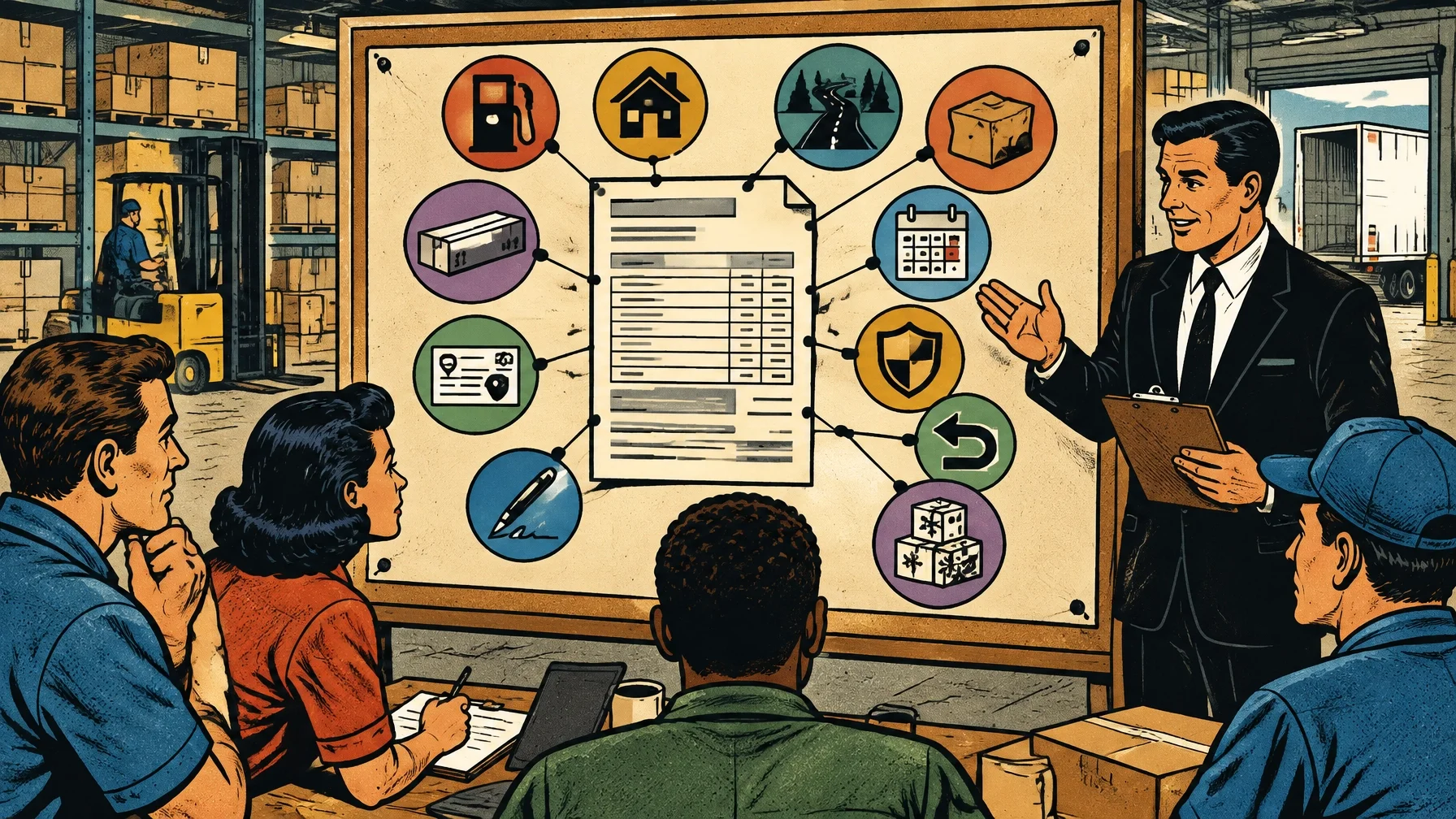
EVERY LINE ITEM HAS A TRIGGER.
Why the same order costs different amounts on different days
A shipment can cost more on one day than another even when the product and destination are identical.
Several factors may be involved:
Peak surcharges may start or stop.
Fuel adjustments may change.
Holiday volume may affect service availability.
Carriers may update rates.
Contract terms may shift.
A carrier audit may remeasure the package.
Last year’s shipping model can become stale without anyone changing the checkout settings.
Review shipping costs as an operating system, not a one-time setup task.
Where eCommerce brands actually lose money
The biggest losses are often process problems rather than one dramatic invoice error.
Watch for these patterns:
You never audit the carrier invoice.
Your shipping system stores incorrect weights or dimensions.
Your packaging inflates the package cube.
You default to one carrier instead of rate shopping.
You choose a faster service than the customer needs.
You ship a multi-item order in several boxes when one would work.
You do not know the total landed cost per order.
Total landed cost includes more than postage. It may include packaging, fulfillment labor, storage allocation, returns, protection, and other order-related expenses.
If you only track the checkout shipping charge, you may not know whether the order is profitable.
How to start auditing your postage
You do not need a complicated project to begin. Follow a practical sequence:
Pull one month of invoices.
Group line items by category.
Separate base rates from surcharges.
Calculate average cost per order.
Calculate average cost by zone.
Identify the largest surcharge categories.
Compare actual parcels to checkout quotes.
Correct top-SKU dimensions and weights.
Review the results monthly.
Use the findings to improve packaging, service selection, carrier mix, and checkout pricing.
The brand that understands its own cost drivers negotiates from data instead of assumptions.
Questions to ask your carrier or 3PL
Bring specific questions to your next carrier review:
What is my average cost per order by zone?
Which surcharges affect my account most often?
What divisor are you using for dimensional weight?
How are surcharges passed through to me?
Do you rate shop across carriers and services?
Can I see the cost breakdown for each shipment?
Which package dimensions are creating the most dimensional charges?
How often are my rates and surcharge terms reviewed?
A useful provider should be able to explain the invoice in plain English.

BETTER DATA MAKES BETTER SHIPPING DECISIONS.
How Rogue Fulfillment helps growing brands
Rogue Fulfillment is a boutique 3PL for eCommerce brands operating from St. Paul, Minnesota.
Because Rogue operates the warehouse, the team can connect packaging, inventory, order processing, and shipping decisions in one workflow. Rogue also performs multi-carrier rate shopping behind the scenes and provides 24/7 access to real-time order and shipping data.
Clients also receive:
A dedicated account manager instead of a ticket queue
Same-day inventory processing
Custom packaging design
Kitting and assembly
Gift wrapping
Marketing campaign support
Value-added services as part of the relationship rather than automatic extras
Free access to The Rogue Cooperative network
You can also review Rogue’s 3PL fulfillment services and rate-shopping guidance for more context.
If your carrier invoice is difficult to explain, a free postage and cost-per-order review can show where the main drivers are. Contact Rogue Fulfillment to request a review.
The bottom line
Your postage bill is a combination of service level, weight, zone, dimensions, and surcharges.
The most useful next step is not guessing which carrier is cheapest. It is learning which factors are driving your own costs.
Audit your invoices. Correct your package data. Right-size your packaging. Compare qualified carrier services. Review the model as rates, fuel, volume, and destinations change.
For a growing brand, better shipping visibility can support healthier margins and more confident decisions. You do not need to understand every carrier term at once. Start by understanding the line items that appear on your own invoice.