
Embedded 3PL Operations: How Onsite Fulfillment Teams Improve Control, Compliance, and Throughput
IN THE BUILDING, IN CONTROL!
When your inventory is high-value, time-sensitive, regulated, or closely tied to production, moving it to an offsite warehouse may create more problems than it solves.
You may need fulfillment support, but you may also need to keep products inside your own facility. That is where embedded 3PL operations can help.
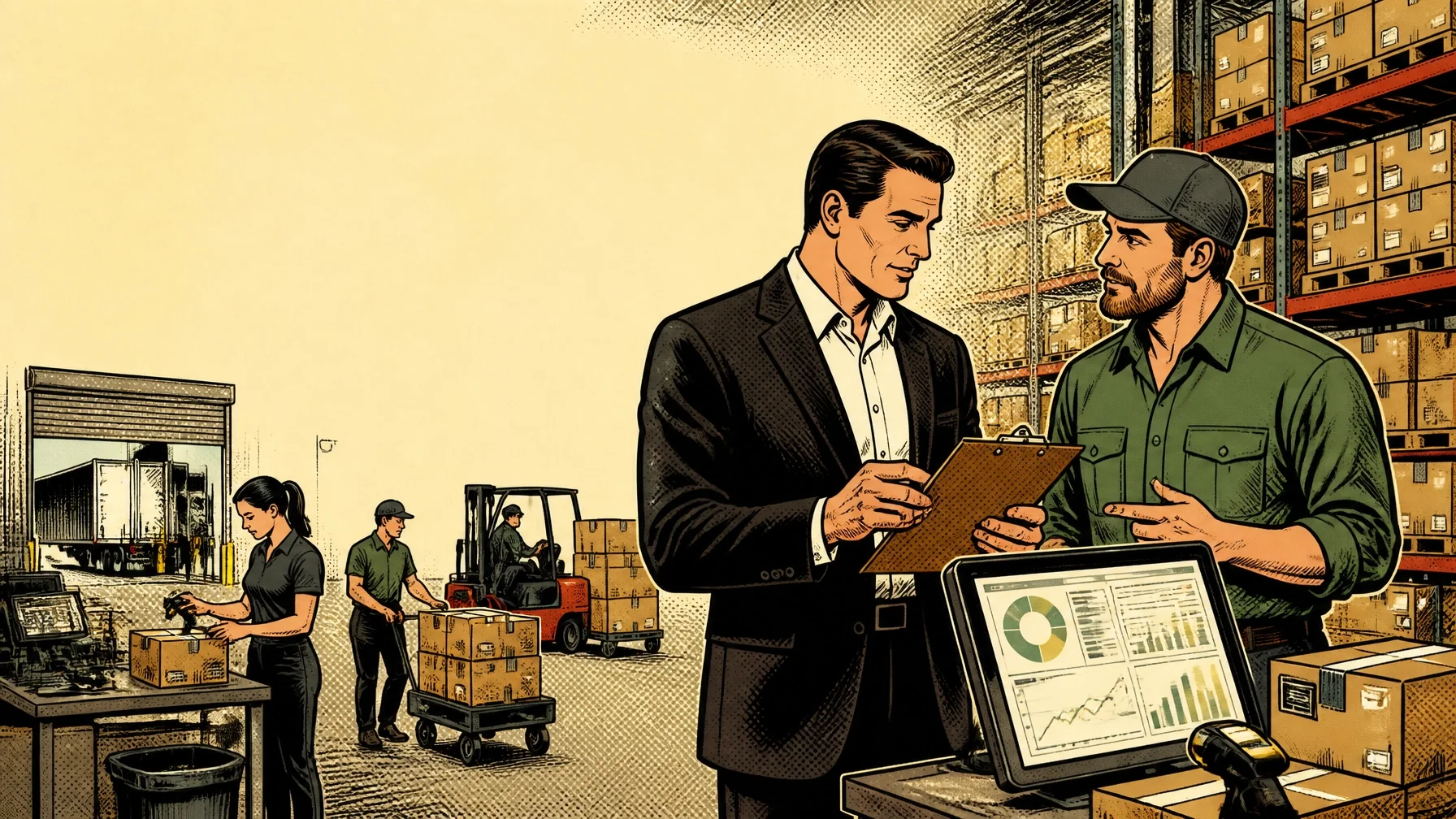
An embedded 3PL places its own trained team inside your facility to manage activities such as picking, packing, kitting, inventory handling, and shipping. Instead of sending inventory to the provider’s warehouse, you keep control of the physical operation while outsourcing day-to-day execution and performance management.
The model sits between fully in-house fulfillment and traditional 3PL outsourcing. It can give you more operational control without requiring you to recruit, train, schedule, and manage every warehouse employee yourself.
What Are Embedded 3PL Operations?
Embedded or onsite 3PL operations involve a logistics provider placing its own team inside a customer’s warehouse, manufacturing plant, or distribution facility.
The provider may manage:
Picking and packing
Kitting and light assembly
Finished-goods handling
Inventory movement
Line-side delivery
Packaging and labeling
Order fulfillment and shipping
Training and cross-training
Floor supervision
Productivity reporting
Process improvement and standard work
The important distinction is operational ownership. An embedded 3PL is not simply supplying workers. It is responsible for helping the operation meet agreed-upon throughput, accuracy, quality, and service-level targets.
In a traditional 3PL arrangement, your inventory moves to the provider’s warehouse. The 3PL then receives, stores, picks, packs, and ships your orders from that facility. This can be highly effective for many eCommerce brands.
In an embedded arrangement, the provider’s team comes to your inventory instead.
Embedded 3PL vs. Traditional 3PL vs. Temp Staffing
These three models can appear similar because all of them involve outside support. Their responsibilities are different.
Traditional 3PL fulfillment
A traditional 3PL:
Stores your inventory in its own facility
Receives orders through connected systems
Picks, packs, and ships products
May manage returns, kitting, and special projects
Usually controls the warehouse environment
This model works well when you want to transfer fulfillment out of your building and benefit from shared warehouse space, carrier volume, and established systems.
Temp staffing agencies
A temp staffing agency generally:
Recruits and supplies hourly workers
Bills based on labor hours
May help fill shifts quickly
Leaves daily workflow design and productivity management to you
Does not usually own your fulfillment SLAs or throughput
Temp labor can address a headcount shortage. It does not automatically solve inefficient layouts, inconsistent training, poor inventory flow, or missed shipping cutoffs.
Embedded 3PL providers
An embedded 3PL typically:
Recruits, trains, and manages the onsite team
Runs picking, packing, kitting, or shipping processes
Establishes performance expectations
Tracks throughput, accuracy, quality, and SLAs
Improves workflows while the operation continues
Scales staffing with demand
Provides management accountability beyond hours worked
The difference is straightforward: a staffing agency provides hourly bodies, while an embedded 3PL provides accountable operations ownership.
Why Companies Use Onsite Fulfillment Teams
CERTIFIED INSIDE, COMPLIANT OUT!
Companies usually consider embedded fulfillment when keeping operations onsite provides a practical advantage.
1. Eliminate freight between facilities
If products are manufactured or received at your facility, moving them to an outside warehouse adds another transportation leg.
That can create:
Additional freight expense
Handling and loading labor
Longer lead times
More opportunities for damage
Extra inventory reconciliation
Less flexibility when production changes
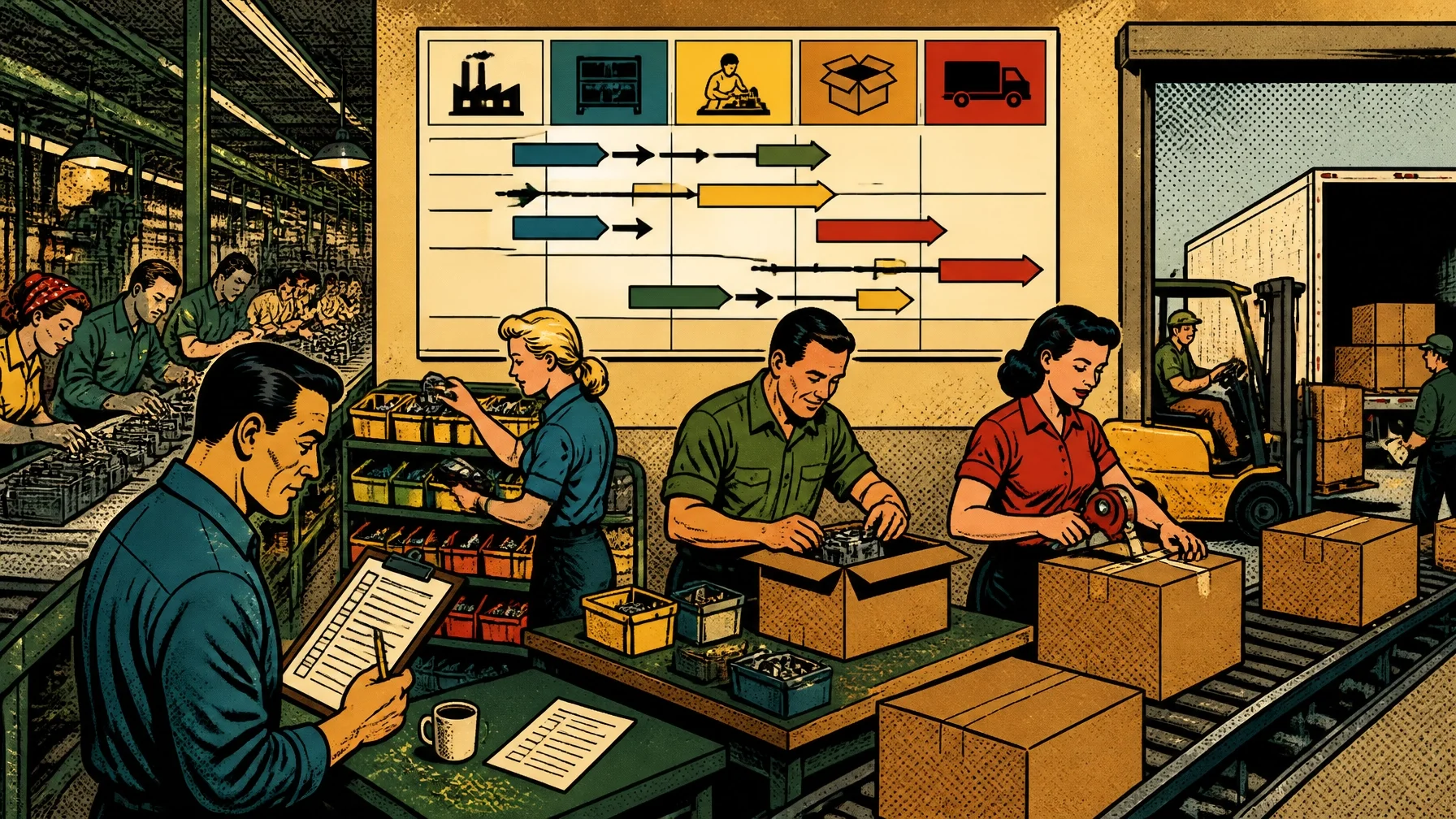
An embedded team can move products directly from production, receiving, or storage into fulfillment. This shortens the internal supply chain and reduces double handling.
2. Retain control of sensitive inventory
Some inventory should remain close to your production team or under your direct supervision.
Examples may include:
High-value components
Just-in-time materials
Temperature-sensitive products
Medical or industrial goods
Products with strict traceability requirements
Limited-release or confidential inventory
Items needed immediately for production
Keeping these products onsite can make it easier to control access, monitor movement, and respond to changing priorities.
3. Respond to production schedules in real time
Production plans change. A manufacturing line may finish early, experience a delay, or prioritize a different SKU.
An onsite 3PL team can adjust fulfillment activity as production changes. Instead of waiting for inventory to be transferred, received, and put away at a separate warehouse, the team can coordinate directly with production and shipping staff.
That visibility can improve:
Order release timing
Finished-goods movement
Same-day shipment potential
Packaging coordination
Labor scheduling
Communication between departments
4. Scale labor without owning all the headcount
Demand may rise during product launches, seasonal peaks, promotions, or new account wins. Maintaining a large permanent warehouse workforce year-round may not make financial sense.
An embedded provider can help you scale labor up or down while managing recruiting, training, supervision, and workforce planning.
The goal is not simply to add more people. It is to align the right number of trained people with the work required.
5. Support compliance and specialized handling
Some operations have requirements that make offsite fulfillment difficult or inappropriate.
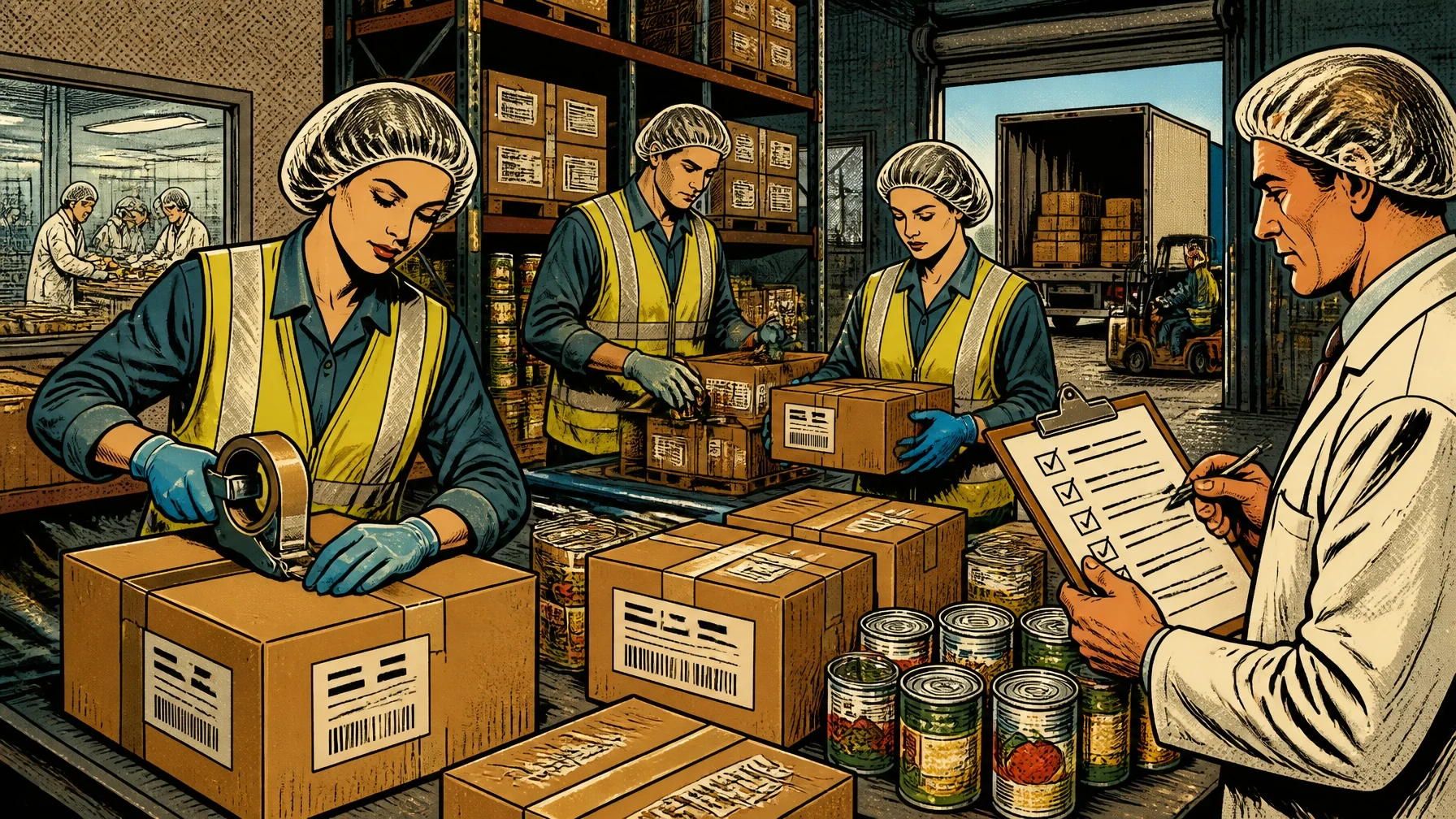
For example, a USDA-certified food facility may not be able to ship certain products to a warehouse that does not meet the required certification or handling conditions. In that situation, fulfillment may need to occur inside the certified facility or through a properly qualified location.
Regulatory requirements vary by product, facility, jurisdiction, and process. Verify your obligations with the relevant authorities and qualified compliance professionals before selecting an operating model.
An embedded 3PL can still support compliance through:
Documented standard operating procedures
Training and onboarding
Lot or batch handling
Traceability processes
Sanitation and safety practices
Access controls
Quality checks
Performance documentation
What the Results Can Look Like
Published case studies suggest that embedded operations can improve throughput and reduce costs, but results depend on the facility, product mix, systems, labor market, and starting conditions.
For example, Productiv case-study materials report that its partnership with Safeguard Medical produced approximately:
100% higher output
20% lower costs
35% annual labor-cost savings
More than 3 million cases processed per year
Approximately 300 SKUs supported
A seven-year partnership duration
Productiv also reports a Fareva example in which changes to team structure, floor discipline, and job understanding were associated with an approximately 10-point improvement in efficiency.
A separate reported example involving Glanbia Performance Nutrition and Transplace focused on embedded transportation management rather than onsite pick-and-pack fulfillment. The case study reported an approximately 34% reduction in the freight bill and about $100,000 in transportation savings during the first year.
These are reported case-study examples, not guarantees. Ask any provider to explain how its results were measured, what baseline was used, and which conditions made the improvement possible.
How Embedded 3PL Pricing Works
FROM PRODUCTION LINE TO SHIPPING BAY!
Pricing is one of the clearest differences between hourly staffing and outcome-based operations.
With hourly staffing, you pay for labor time. If workers are present for eight hours but throughput is low, your cost may remain the same.
With unit-based or outcome-based pricing, the provider may be paid according to the number of units or orders processed. This gives the provider a direct incentive to improve workflow, training, layout, scheduling, and productivity.
As an indicative benchmark, FreightWaves-style pricing guidance places base pick-and-pack fulfillment at approximately:
$2.50–$3.50 per base order
$0.20–$0.50 per additional item
These are approximate industry benchmarks: not Rogue Fulfillment pricing, quotes, or guarantees. Actual pricing varies based on:
SKU complexity
Units per order
Volume and seasonality
Service-level requirements
Facility conditions
WMS, ERP, or eCommerce integrations
Compliance and safety requirements
Packaging specifications
Geography
Kitting and value-added work
Compare the total cost per order or unit, not just the hourly rate or base pick fee.
Providers to Consider
The embedded operations market includes providers with different backgrounds and areas of specialization. Offerings and industry focus should be verified directly.
Potential providers to research include:
Productiv: Focuses on embedded operations, omnichannel fulfillment, kitting, assembly, and performance improvement.
Derby LLC Onsite Integration: Provides onsite staffing, oversight, warehousing, packaging, assembly, and logistics support.
Gilmer Warehouse & Logistics: Offers warehousing, fulfillment, custom packaging, transportation, and supply chain support, often positioned as an extension of a customer’s team.
Canon Business Process Services: Provides onsite logistics management and internal materials-handling support, particularly for manufacturing environments.
These providers commonly serve manufacturing, medical-device, industrial, consumer goods, and related operations. A growing eCommerce brand should confirm whether a prospective partner understands direct-to-consumer order profiles, branded packaging, returns, marketplace requirements, and customer experience.
How to Evaluate an Embedded 3PL Partner

KNOW YOUR SLAs, OWN YOUR RESULTS!
Use this checklist when comparing providers:
Accountability: Does the provider own throughput, accuracy, quality, and SLAs?
Management structure: Who supervises the onsite team each shift?
Training: How are employees trained, certified, and cross-trained?
Continuous improvement: Does the provider improve processes after launch?
Measurement: Which metrics are reported daily, weekly, and monthly?
Pricing alignment: Are you paying for hours, units, orders, or outcomes?
Systems: Can the provider work with your WMS, ERP, shipping, and inventory systems?
Compliance: Does it understand your food-safety, product-handling, or regulatory environment?
Scalability: Can labor flex with launches, peaks, and production changes?
Communication: Will you have a dedicated account manager and clear escalation path?
Brand care: Can the team support branded packaging, inserts, gift wrapping, and special handling?
Transition plan: What happens during onboarding, training, and the first performance review?
The Rogue Fulfillment Perspective
Rogue Fulfillment does not claim to operate a large network of embedded sites. We do, however, understand the operating principles that make an embedded model effective.
Whether fulfillment occurs onsite or in a dedicated 3PL warehouse, the right partner should provide more than labor. It should provide accountability, visibility, and practical problem-solving.
That means looking for:
Boutique personal attention
Dedicated account management
Clear communication
Transparent operational data
Brand-level care
Flexible kitting and packaging support
Awareness of food-safety and regulated-handling considerations
Ownership of accuracy, throughput, SLAs, and customer experience
For growing eCommerce brands, an embedded model may be appropriate when inventory must stay close to production or under tighter control. A traditional 3PL may be the better choice when you want to move fulfillment entirely offsite.
The important question is not simply, “How many workers can you provide?” Ask instead, “Who will own the operation and improve the results?”
If you are evaluating a 3PL for eCommerce brands, Rogue Fulfillment can help you compare the practical tradeoffs between onsite, offsite, and hybrid fulfillment. Contact Rogue Fulfillment to discuss your inventory, order profile, packaging needs, and growth plans.
Bottom Line
Embedded 3PL operations keep inventory inside your facility while placing fulfillment execution in the hands of an accountable logistics team.
The model can help you:
Eliminate unnecessary facility-to-facility freight
Retain control of sensitive or regulated inventory
Respond to production schedules faster
Scale labor more flexibly
Improve compliance and process consistency
Tie provider pricing to measurable output
It is not the same as hiring temporary workers. It is an operating partnership designed to own throughput, training, SLAs, process improvement, and day-to-day fulfillment performance.
Start with your facility constraints, compliance requirements, order profile, and service goals. Then choose the model: and the partner: that gives you the right balance of control, flexibility, and operational ownership.