
Why Boutique 3PLs Are Winning the Amazon Fee Shakeup : and How Regional Fulfillment Beats Zone-Skipping Chaos
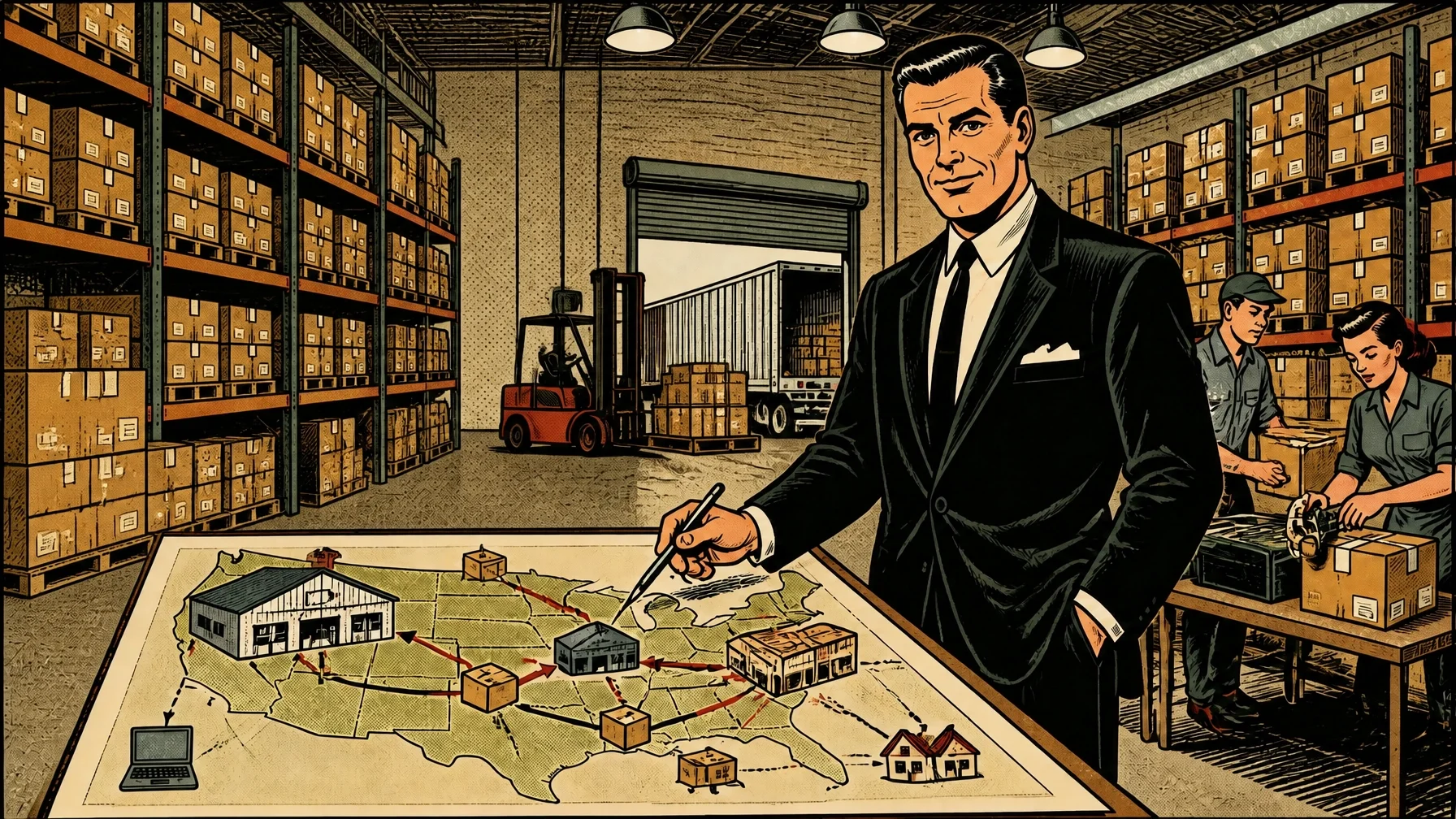
POW! Turn logistics chaos into a smarter fulfillment strategy!
If you sell on Amazon: or ship to customers across the United States: you have probably noticed that the fulfillment equation keeps changing.
Amazon’s inbound placement and inventory-related fees have made it more important to think carefully about where your products enter the network. Carrier pricing and programs such as zone skipping can create savings, but they can also add new handoffs, schedules, and decisions to your operation.
For growing brands, the question is no longer simply, “How do I get products into Amazon?”
It is:
How should inventory move across Amazon, your website, marketplaces, wholesale accounts, and the customer’s doorstep?
That is where boutique and regional 3PLs can offer an important advantage. Instead of forcing every product through one fulfillment model, they help you build a flexible strategy around your products, customers, margins, and growth plans.
What Amazon’s Inbound Placement Fees Mean for Growing Brands
Amazon’s inbound placement fee structure has increased the importance of inventory distribution. Depending on the products, shipment configuration, and inbound options selected, sellers may face different costs when sending inventory into Amazon’s fulfillment network.
In general, sellers have a choice:
Send inventory to multiple Amazon fulfillment centers and take on more preparation and transportation work.
Send inventory to fewer locations and potentially pay Amazon to distribute it.
Use other Amazon warehousing or replenishment programs where they make financial and operational sense.
Keep more inventory outside Amazon and replenish FBA based on demand.
None of these options is automatically right for every brand. The best choice depends on factors such as:
Product size and weight
Sales velocity
Inventory turnover
Demand by region
Replenishment lead times
Storage costs
Other sales channels
Cash-flow requirements
For a large enterprise with dedicated logistics staff, splitting inventory across multiple locations may be manageable. For a growing eCommerce brand, it can create significant work.
You may need to:
Prepare multiple shipments
Coordinate different delivery appointments
Track inventory across several destinations
Monitor stock levels at each Amazon node
Forecast replenishment needs more frequently
Prevent one location from running out while another holds excess stock
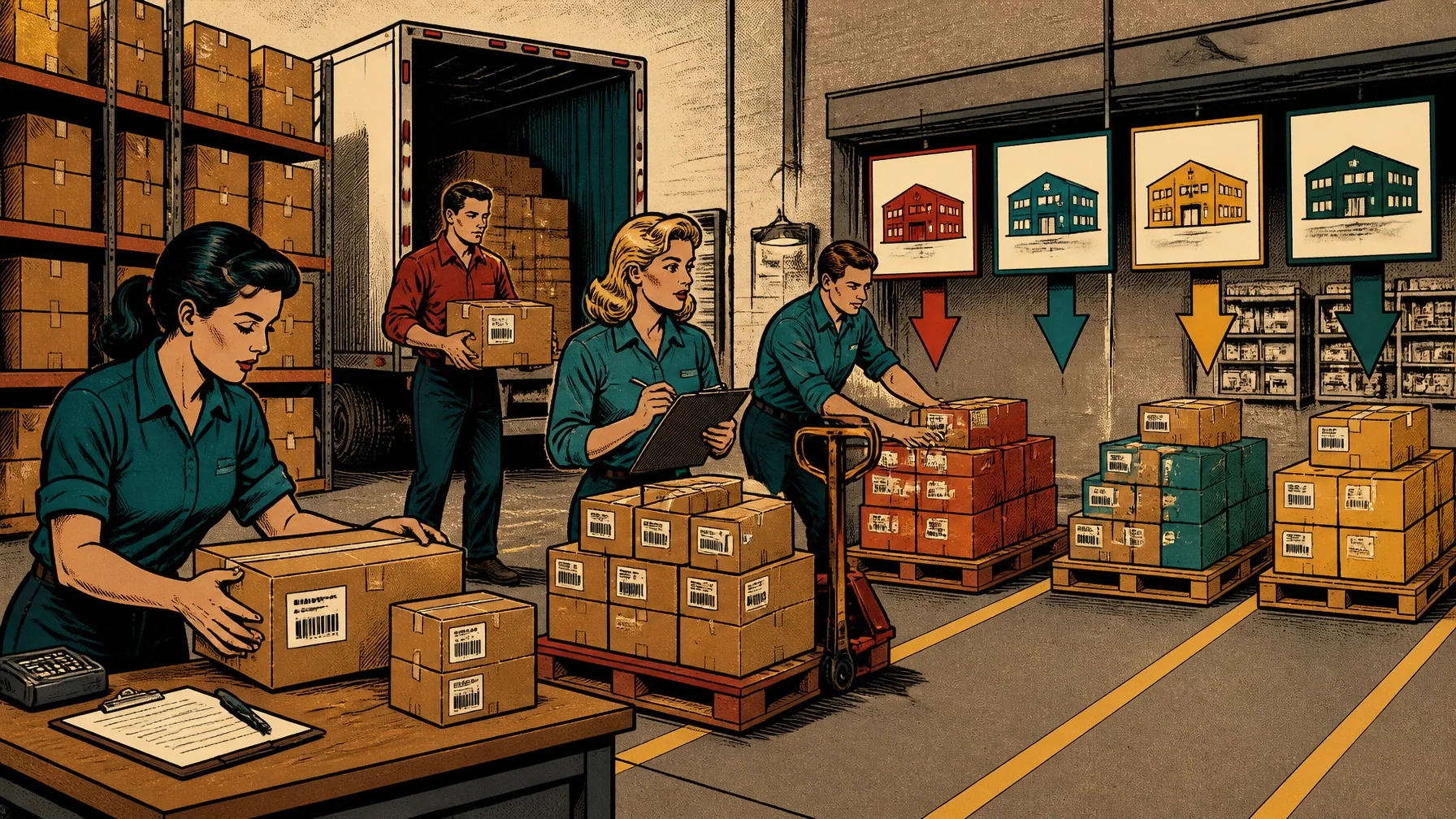
SPLIT! SORT! SHIP!
The fee itself is only part of the calculation. The larger issue is the operational complexity surrounding it.
A boutique 3PL can help you compare those options before you commit inventory to a particular path. That allows you to evaluate the total cost of fulfillment, not just one fee line on an Amazon statement.
For current details, sellers should review Amazon’s official 2026 U.S. referral and FBA fee update and the latest information in Seller Central.
Why Amazon Should Not Be Your Entire Inventory Strategy
Amazon can be a powerful sales channel, but relying on it as your only inventory hub can reduce your flexibility.
Your brand may also sell through:
Shopify or another direct-to-consumer website
Etsy
Wholesale accounts
Social commerce platforms
Subscription programs
Seasonal marketplaces
Retail or pop-up events
When all inventory is committed to one channel, every policy or fee change has a larger impact on your business.
A multi-channel 3PL strategy gives you another option. You can keep the inventory needed for fast-moving FBA products in Amazon while holding additional inventory at a 3PL for:
Direct-to-consumer orders
Wholesale fulfillment
Product bundles
Kitting and assembly
Marketing campaigns
Returns and quality checks
Replenishment into Amazon
This approach does not mean abandoning FBA. It means using FBA more selectively.
Think of your 3PL as the operational hub and Amazon as one important fulfillment node within a broader network.
What Is Zone Skipping: and Why Can It Become Complicated?
Zone skipping is a shipping strategy in which packages are consolidated and transported in bulk closer to their final destination before entering a carrier’s local delivery network.
The concept can reduce the number of long-distance parcel movements and may lower transportation costs when order volume, lane density, and timing align.
However, zone skipping is not a universal solution. It can introduce additional variables, including:
Consolidation schedules
Trailer or linehaul availability
Additional handoffs
Regional carrier dependencies
Cutoff-time coordination
Volume requirements
Delays that affect many packages at once
A low per-package rate may look attractive, but it does not tell you the full story. You also need to consider processing time, reliability, tracking quality, exception management, and customer delivery expectations.
Zone skipping may work well for certain order patterns. It may be less useful for smaller brands with inconsistent volume or highly dispersed customers.
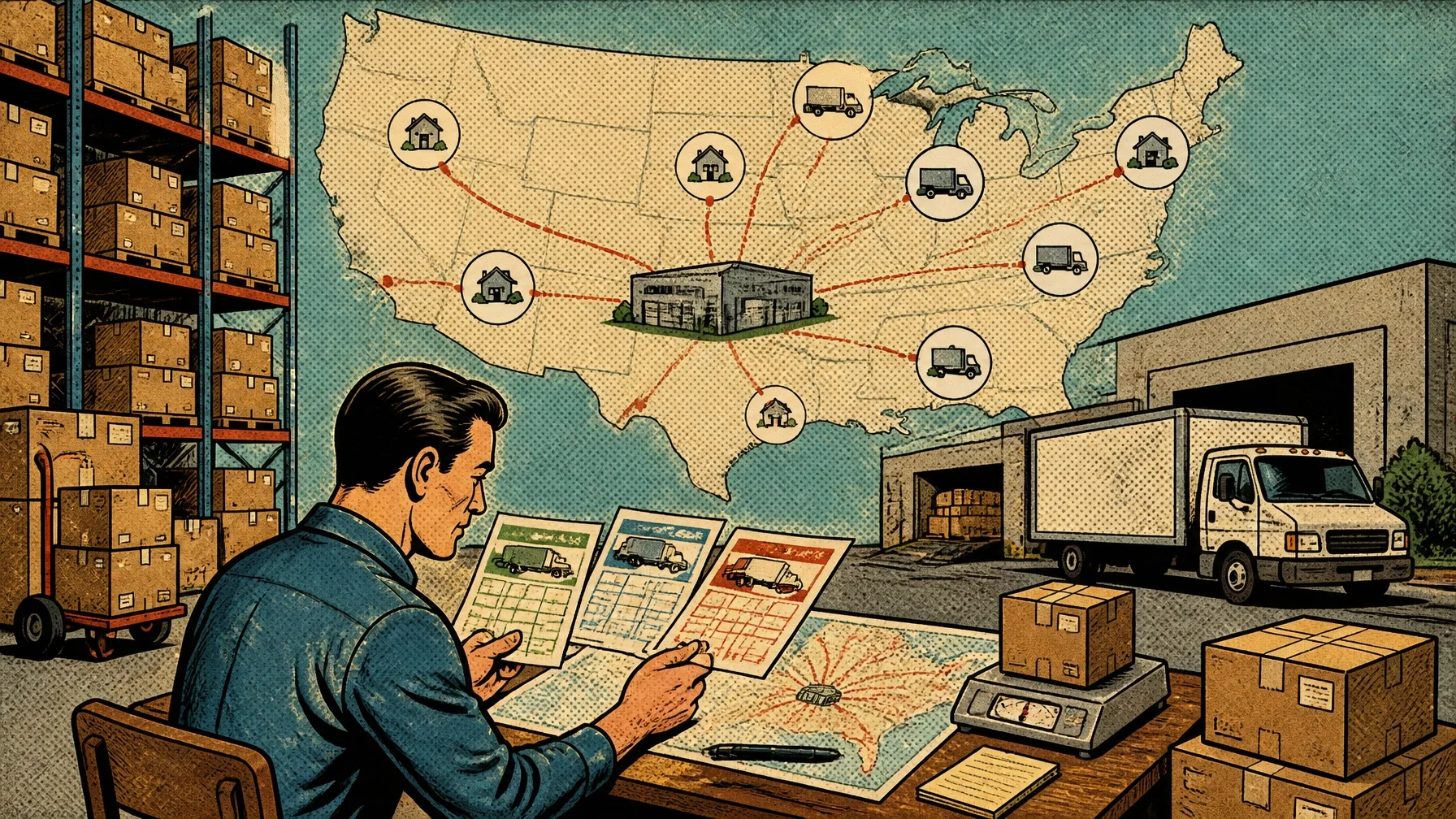
CLOSER MEANS FASTER!
How Regional Fulfillment Can Simplify the Shipping Strategy
Regional fulfillment uses one or a small number of strategically located warehouses to serve concentrated customer demand.
For many growing brands, a regional model can be easier to manage than immediately adopting a complex national network or a large-scale zone-skipping program.
1. Shorter shipping distances
When inventory is positioned near a meaningful share of your customers, you may be able to ship through fewer parcel zones using standard carrier services.
That can help reduce:
Transit distance
Delivery variability
Long-haul exposure
Packaging and handling movements
Dependence on complex consolidation schedules
Regional proximity is not a guarantee of the lowest possible rate. But it creates a simpler starting point for comparing carriers and service levels.
2. More practical Amazon replenishment
A regional 3PL can also prepare and route inventory to Amazon based on current requirements.
Depending on the product and shipment configuration, your partner may help with:
FBA prep and labeling
Carton organization
Shipment planning
Inventory allocation
Replenishment scheduling
Comparing direct-to-Amazon and 3PL-managed options
This gives you a place to make decisions before inventory enters Amazon’s network.
3. Fewer moving parts
A regional model may reduce the number of facilities, handoffs, and systems you need to manage.
Instead of coordinating a complicated network independently, you may be able to:
Receive inventory at one primary location.
Allocate stock across sales channels.
Replenish Amazon as needed.
Ship direct orders from the same inventory pool.
Track performance through one operational partner.
That simplicity can be valuable when your internal team is focused on product development, marketing, sales, and customer relationships.
Why Boutique 3PLs Are Well Positioned for the Fee Shakeup
The biggest advantage of a boutique 3PL is not simply warehouse space. It is the ability to adapt the operation around your brand.
Flexibility instead of a one-size-fits-all process
Large providers often build their operations around standardization and volume. That can be efficient, but it may leave less room for unusual products, changing sales channels, or custom programs.
A boutique partner can help you adjust as your needs change, whether you are:
Launching a new product
Testing Amazon alongside DTC sales
Building a wholesale program
Creating a subscription box
Preparing a seasonal campaign
Adding custom packaging or gift wrapping
Rogue Fulfillment provides 3PL fulfillment for Amazon, Shopify, Squarespace, WooCommerce, Etsy, and other channels, helping brands keep their operations connected as they grow.
Personal attention when the rules change
When a fee or carrier program changes, you need more than a general announcement.
You need someone to help answer practical questions:
Which products should remain in FBA?
Which products should stay at the 3PL?
Should inventory be split across multiple inbound shipments?
Does zone skipping make sense at your current volume?
Are storage and transportation costs still aligned with your margins?
What happens if demand changes unexpectedly?
A dedicated account manager can help you work through those questions with the information available at the time.
Real-time visibility
Fulfillment decisions are difficult when you cannot see your inventory clearly.
Look for a partner that provides visibility into:
Inventory by SKU
Orders by channel
Receiving status
Replenishment needs
Shipment tracking
Returns
Storage utilization
Fulfillment performance
Rogue Fulfillment emphasizes transparent warehouse and fulfillment support, so growing brands can make decisions with current information rather than waiting for a monthly report.

KNOW YOUR NUMBERS!
Value-added services built into the relationship
Shipping strategy is not only about transportation. The way an order is assembled and presented can affect customer retention and operational efficiency.
A boutique 3PL may support services such as:
Kitting and assembly
Custom packaging
Gift wrapping
Marketing campaign fulfillment
Influencer and PR shipments
Repackaging
Returns processing
Light product rework
Those capabilities allow you to keep more work with one trusted partner instead of sending each special project to a separate vendor.
A Practical Checklist for Evaluating Your Fulfillment Strategy
Before changing your fulfillment model, review these questions:
Measure the full cost
Compare more than the headline FBA or parcel rate. Include:
Inbound placement fees
Storage
Pick and pack
Packaging materials
Transportation
Returns
Aged or slow-moving inventory
Labor and internal management time
Separate products by role
Not every SKU needs the same fulfillment path. Consider whether each product is:
Fast-moving
Seasonal
Oversized
Margin-sensitive
Return-heavy
Amazon-exclusive
Multi-channel
New and difficult to forecast
Test carrier assumptions
Ask potential partners:
Which carriers do you work with?
How do you compare service and cost?
When does zone skipping make sense?
What happens when a consolidation schedule is missed?
How are delivery exceptions communicated?
Can you support both Amazon replenishment and DTC orders?
Demand clear communication
You should know who to contact when inventory, shipping, or receiving issues arise. A partner’s technology matters, but so does the human support behind it.
The Bottom Line
Amazon fee changes and evolving carrier programs are making fulfillment strategy more important for growing brands.
You do not need to choose between Amazon and a 3PL. In many cases, the more resilient approach is to use each for what it does best:
Use Amazon where FBA improves marketplace performance.
Use a boutique 3PL as your flexible inventory and fulfillment hub.
Use regional proximity to simplify outbound shipping.
Compare zone skipping based on total cost and operational effort.
Keep enough visibility and control to adjust as conditions change.
Rogue Fulfillment is a boutique 3PL for eCommerce brands that want personal attention, brand-level care, and flexible support across fulfillment, warehousing, packaging, and special projects. Our fulfillment services are designed to help growing brands scale without losing control of the customer experience.
If your current Amazon and shipping strategy feels more complicated than it should, contact Rogue Fulfillment to discuss a more practical path forward.