
How to Build a Carrier-Agnostic Shipping Strategy for Your eCommerce Brand

ROUTE SMART! SHIP FAST!
When you rely on one shipping carrier, your operations depend on one set of rates, service levels, delivery routes, and disruption risks.
That may work when your order volume is small. As your eCommerce brand grows, however, a single-carrier strategy can limit flexibility and reduce your margins.
A carrier-agnostic shipping strategy gives you another option. Instead of automatically sending every order through the same provider, you choose the best carrier for each shipment based on:
Destination
Package weight and dimensions
Delivery promise
Customer location
Total shipping cost
Carrier performance
That could mean UPS for one order, FedEx for another, USPS for a lightweight residential package, or a regional carrier for a dense service area.
The customer still receives a consistent experience. Your fulfillment operation simply has more ways to deliver it.
1. Start with Your Shipping Data
Before adding carriers, understand how your current shipping operation performs.
Review at least six to twelve months of order data, if available. Group shipments by:
Carrier and service
Destination state or ZIP code
Shipping zone
Package weight and dimensions
Residential or commercial address
Delivery speed
Shipping cost and surcharges
Late deliveries, claims, and address corrections
A shipping zone is a distance band used to calculate many domestic parcel rates. The farther a package travels from its shipping origin, the higher the zone is generally likely to be.
Your data may reveal that:
Lightweight packages are costing too much with a parcel carrier
One carrier performs better in certain regions
Larger boxes are being charged by dimensional weight
Free shipping is reducing margin on specific products
Some delivery promises are difficult to meet consistently
Set a few practical goals before changing your carrier mix. For example:
Reduce average cost per shipment
Improve on-time delivery
Lower surcharge exposure
Protect margins on free-shipping orders
Maintain or improve customer delivery promises
Create a backup option for peak periods and disruptions
Do not optimize for the lowest label price alone. A cheap shipment that arrives late, gets damaged, or creates a customer service issue may be more expensive overall.
2. Define Each Carrier’s Best Use
Every carrier has strengths. The right approach is not to decide which carrier is “best” in general. It is to determine which carrier is best for a specific type of shipment.
USPS
USPS may be a strong option for:
Lightweight parcels
Residential deliveries
PO Boxes
Rural addresses
Small products shipped in mailers
It can be especially useful when your products are compact and your customers are distributed across the country.
UPS and FedEx
UPS and FedEx are often useful for:
Heavier parcels
Larger packages
Commercial deliveries
Time-sensitive shipments
Ground and expedited services
Orders requiring detailed tracking and predictable scans
Compare both carriers rather than assuming one should receive all of your volume. Contract rates, fuel charges, residential fees, and delivery zones can change the result from one order to the next.
Regional Carriers
Regional carriers can be effective when you have a concentrated customer base in a particular geographic area.
They may offer:
Competitive pricing within their service footprint
Faster delivery in select markets
Strong coverage across specific states or metro areas
An alternative when national carrier capacity is constrained
Regional carriers are not a universal replacement. Their value depends on your order density and whether their coverage aligns with your customers.
Your 3PL Partner
A capable 3PL fulfillment partner can connect your inventory, order systems, warehouse workflows, and shipping options into one operating model.
This can make it easier to use multiple carriers without managing every label, rate table, and tracking process manually.
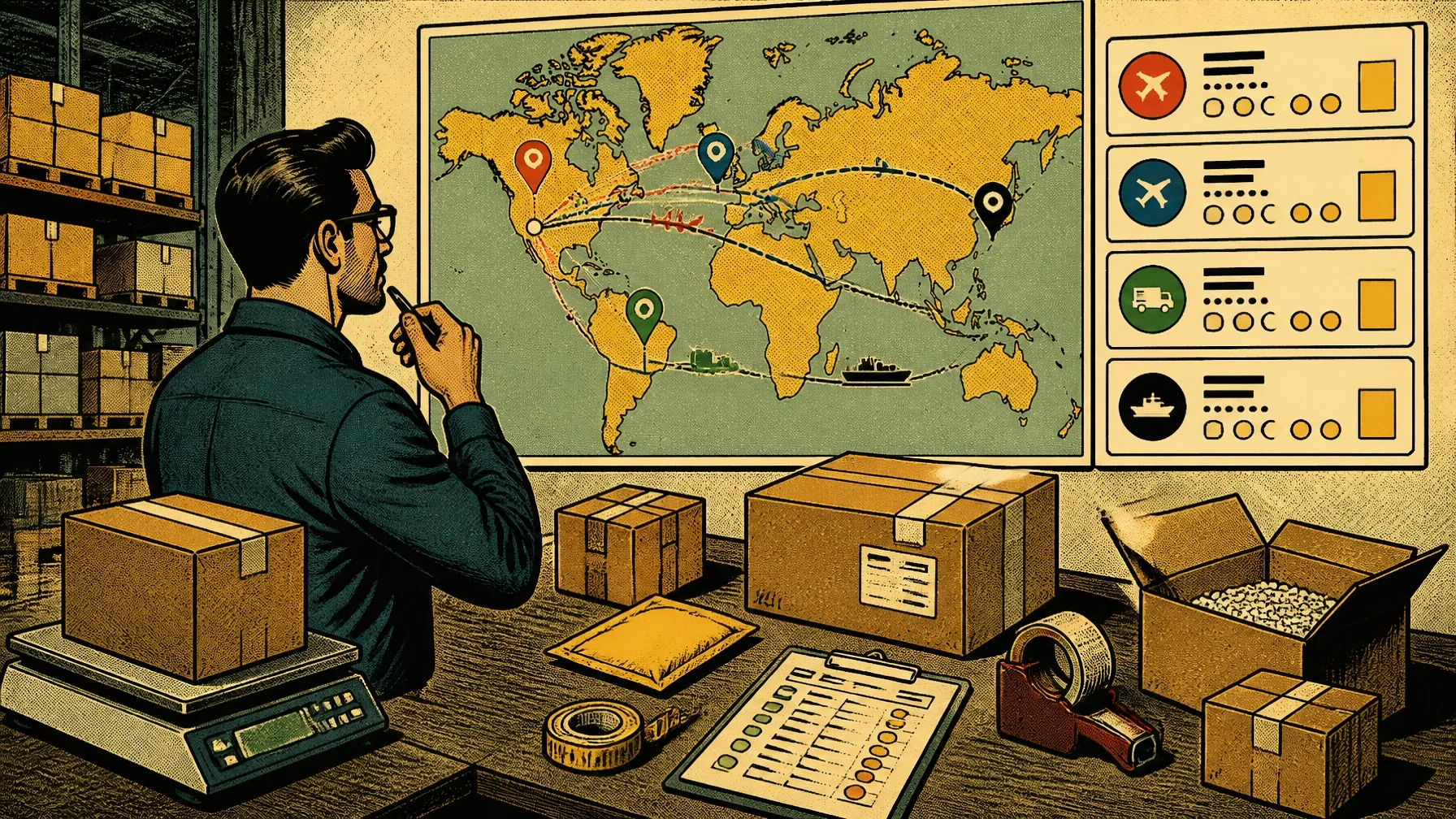
CHOOSE YOUR CHAMPION!
3. Build Routing Rules Around the Customer Promise
The core of a carrier-agnostic shipping strategy is rule-based routing.
Your system or fulfillment team should select an eligible carrier based on the service the customer purchased or was promised. The lowest-cost option is useful only if it meets that delivery window.
A basic routing framework might look like this:
Economy: Choose the lowest-cost eligible service that meets the promised delivery range.
Standard: Compare ground and regional options based on destination, weight, and transit time.
Expedited: Select the carrier with the most reliable service for the required delivery window.
Oversized: Use the carrier or service designed for the package’s dimensions and handling needs.
Remote or rural: Compare USPS, UPS, and FedEx based on total cost and delivery performance.
Regional destination: Consider a regional carrier when it offers strong coverage and better economics.
Your rules can also account for:
Residential versus commercial addresses
PO Boxes
Product category
Fragile or high-value items
International destinations
Delivery appointment requirements
Customer-selected shipping methods
At checkout, keep the experience simple. Customers usually do not need to choose between four carrier names. They need clear options such as:
Economy
Standard
Express
Behind the scenes, the fulfillment operation can select the carrier that best matches the service level.
4. Use Zones and Inventory Placement to Lower Costs
Carrier selection is only part of the equation. The distance your package travels matters just as much.
Shipping a product from a warehouse near your customer can reduce transit time and may move the shipment into a lower-cost zone. This is why inventory placement should be part of your carrier strategy.
Start by mapping where your orders are going. Look for clusters in:
Major cities
High-volume states
Regional markets
Areas with frequent expedited orders
Zones where shipping costs are consistently high
You do not necessarily need multiple warehouses immediately. A growing brand can begin by:
Identifying its top customer regions
Measuring the cost of serving those regions from the current warehouse
Modeling the impact of another fulfillment location
Reviewing whether inventory should be split by SKU or product velocity
Testing the change before committing to a larger network
A multi-node strategy can add complexity, so it should be supported by accurate inventory data and clear replenishment rules.
Rogue’s warehouse services include storage, inventory handling, and flexible operational support for growing brands that need more than a basic pick-and-pack arrangement.
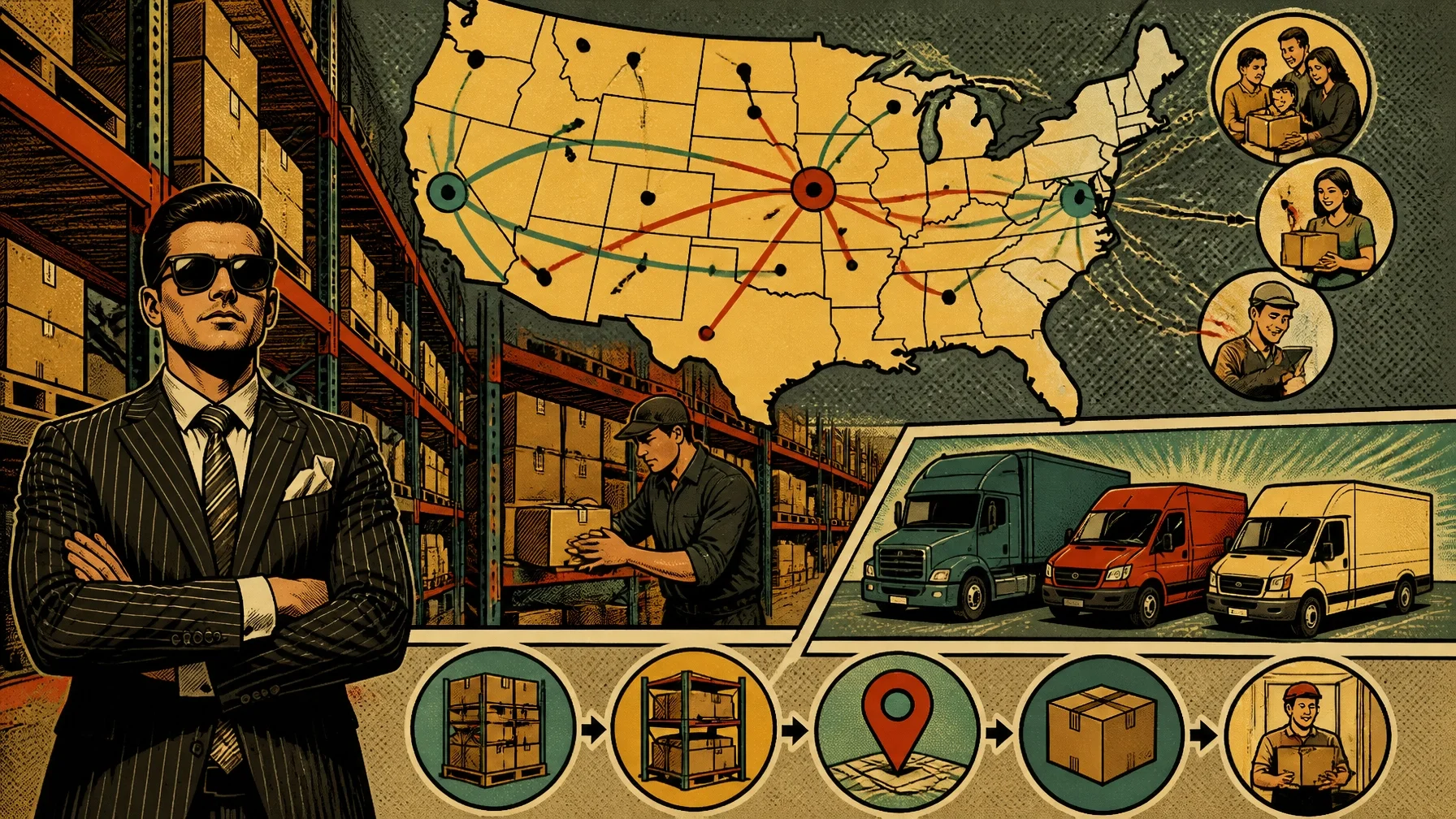
CLOSER MEANS FASTER!
5. Right-Size Your Packaging
Packaging affects shipping cost, product protection, and the customer experience.
Many carriers calculate charges using dimensional weight when a package takes up more space than its scale weight would suggest. That means an oversized box can cost more even when the product inside is light.
Review your packaging program with these questions:
Are boxes appropriately sized for the products inside?
Are mailers suitable for durable, lightweight items?
Are fragile products receiving enough protection?
Are packaging materials creating unnecessary volume?
Do different product groups need different packaging profiles?
Can you reduce void fill without increasing damage?
Create a small set of packaging profiles, such as:
Small mailer
Medium box
Large box
Fragile-product box
Subscription or kit packaging
Then connect those profiles to your products and fulfillment instructions.
This is also an opportunity to protect your brand. A carrier-agnostic strategy should not mean a generic customer experience. Through custom packaging and sourcing support, you can balance right-sized materials with branded presentation.
Rogue also supports kitting and assembly, which can help you prepare bundles or campaign-specific packages without adding more work to your internal team.
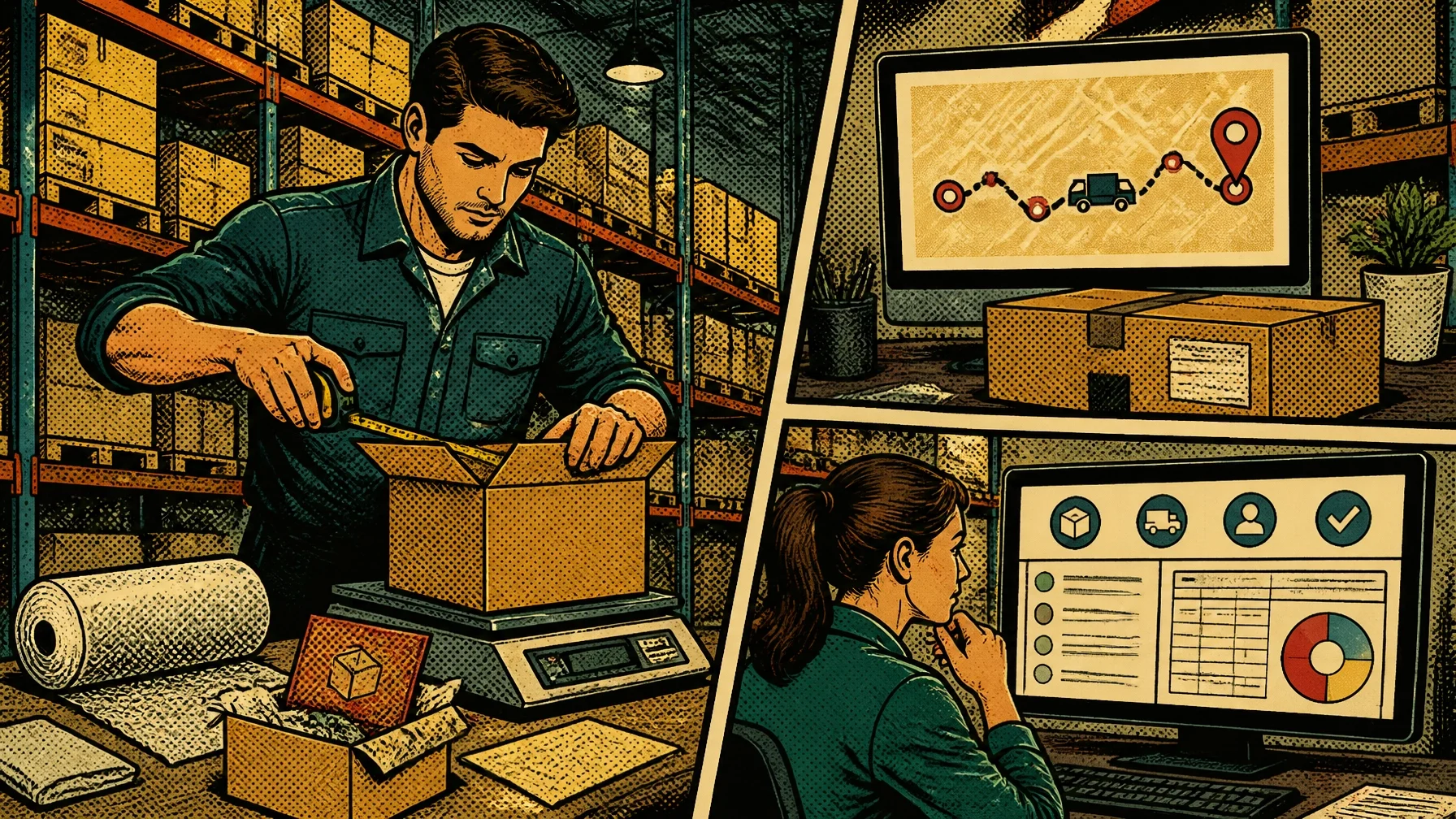
NO ROOM TO WASTE!
6. Make Tracking Consistent
Customers should not feel the difference when you switch from one carrier to another.
Your tracking process should standardize the customer-facing experience across UPS, FedEx, USPS, and regional providers. Aim to provide:
Automatic tracking number updates
A clear expected delivery date
Consistent order-status language
Branded tracking pages where possible
Email or SMS notifications
Proactive communication when a shipment is delayed
Your team should also be able to see performance across carriers. Useful reporting includes:
Cost per shipment
On-time delivery rate
Average transit time
Claims and damage rate
Delivery exceptions
Performance by zone
Performance by package type
Real-time visibility makes it easier to adjust routing rules before a small problem becomes a customer-facing pattern.
7. Implement the Strategy in Stages
You do not need to change every shipment at once.
A practical rollout can follow this sequence:
Audit current performance. Establish your baseline for cost, speed, and accuracy.
Choose one backup carrier. Start with a carrier that addresses a known weakness.
Create eligibility rules. Define which destinations, package types, and service levels can use it.
Test a controlled percentage of orders. Monitor cost and delivery performance.
Review the results. Include customer service issues, not just label costs.
Expand gradually. Add regional options or additional services when the data supports them.
Document exceptions. Make sure your warehouse team knows when manual review is required.
A boutique 3PL can make this process more manageable by providing dedicated account support and coordinating the operational details with your team.
At Rogue Fulfillment, orders are processed with a focus on speed and accuracy, including same-day inventory processing, 99% of orders shipping within 24 hours, and a reported 99.84% order accuracy rate. You also receive 24/7 access to real-time data and a dedicated account manager who understands your brand’s specific requirements.
8. Review the Mix Regularly
Carrier performance and pricing are not fixed. Review your strategy at least quarterly, and after major changes such as:
A new product launch
A significant volume increase
A new warehouse location
A carrier rate update
A peak-season disruption
A change in customer geography
Keep backup carriers active enough to validate their service. A carrier that looks good on paper but has never handled your packages is not a fully tested contingency plan.
The Bottom Line
A carrier-agnostic shipping strategy gives your eCommerce brand more control.
You can:
Compare carriers by shipment instead of defaulting to one
Reduce expensive zone exposure
Match service levels to realistic delivery promises
Use packaging that supports both cost and brand presentation
Maintain consistent tracking
Create backup options for disruptions and peak periods
Make better decisions with real-time performance data
The goal is not to use every carrier available. The goal is to build a flexible fulfillment system that can choose the right option for your products and customers.
As your brand grows, partnering with a 3PL that combines multi-carrier flexibility with personal account support can help you scale without losing visibility or control. Contact Rogue Fulfillment to discuss a shipping strategy built around your business rather than a one-size-fits-all model.