
The 8 Questions New eCommerce Brands Ask About Fulfillment, Answered Honestly
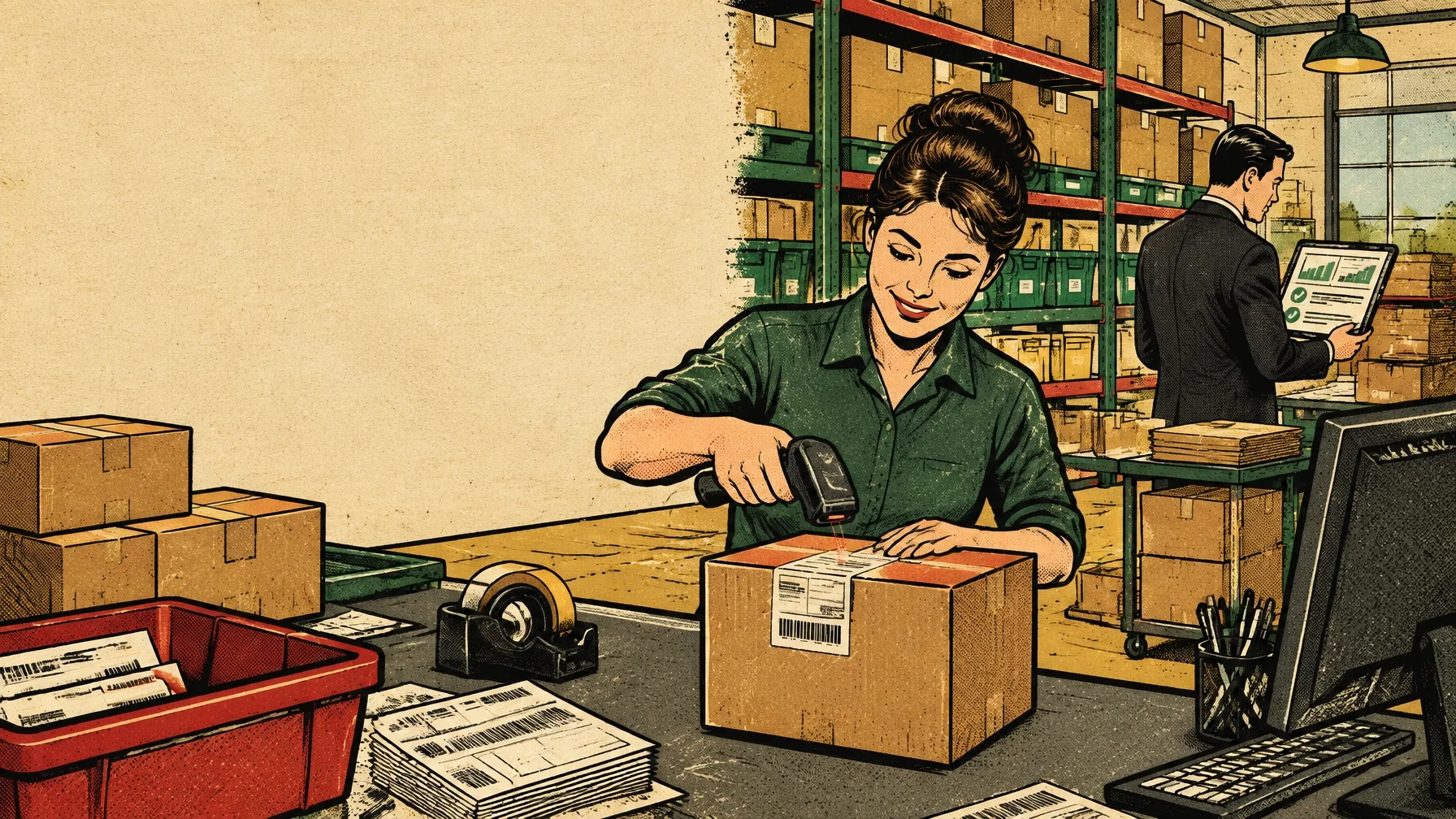
Every order starts with a clear plan.
If you are running a new eCommerce brand, fulfillment can feel like a collection of unanswered questions.
When should you stop packing orders yourself? What does a 3PL actually need from you? Who pays for boxes? What happens when inventory runs out?
The answers depend on your products, order volume, sales channels, and growth plans. Still, there are practical questions every new brand should ask before choosing a fulfillment partner.
1. When do I actually need a 3PL?
You do not need a 3PL simply because you have an online store. In the early stages, fulfilling orders yourself can be a reasonable way to learn your customers, packaging preferences, and daily order patterns.
The challenge is knowing when the work stops being useful and starts limiting growth.
Consider a 3PL for your eCommerce brand when:
Packing orders regularly takes time away from sales, product development, or customer service.
Your order volume is becoming difficult to manage consistently.
You are storing inventory in your home, office, or another space not designed for warehouse work.
You are seeing more picking, packing, or shipping errors.
You need to sell across Shopify, Amazon, Etsy, WooCommerce, or Squarespace.
You are preparing for a launch, promotion, or seasonal increase.
You need better inventory visibility than a spreadsheet can provide.
There is no universal order threshold. One brand may need help at a few hundred orders per month, while another may manage more for a while if its products are simple and easy to pack.
The better question is: What is fulfillment costing you in time, mistakes, and missed growth opportunities?
Doing it yourself saves money only if your time, storage, materials, and error costs remain manageable. Once fulfillment becomes a daily bottleneck, outsourcing may help you grow rather than simply add another expense.
2. What do I need to have ready before I start?
The quality of your information affects the quality of your onboarding. Clean data makes it easier for a fulfillment partner to receive, store, pick, pack, and ship your products correctly.
Prepare:
SKU names and product descriptions
Product dimensions and weights for every SKU
Accurate inventory counts
Barcodes, if applicable
Packaging, inserts, labels, and gift materials
Brand guidelines for packaging and customer experience
Channel and store connection details
Special handling instructions
Clear expectations for order cutoffs, returns, and reporting
Dimensions and weights deserve special attention. An incorrect measurement can affect storage charges, packaging decisions, and postage. It can also make shipping estimates less reliable.
You should also explain what your customers expect. Do orders require tissue paper, a handwritten note, a product insert, gift wrapping, or a specific arrangement inside the box?
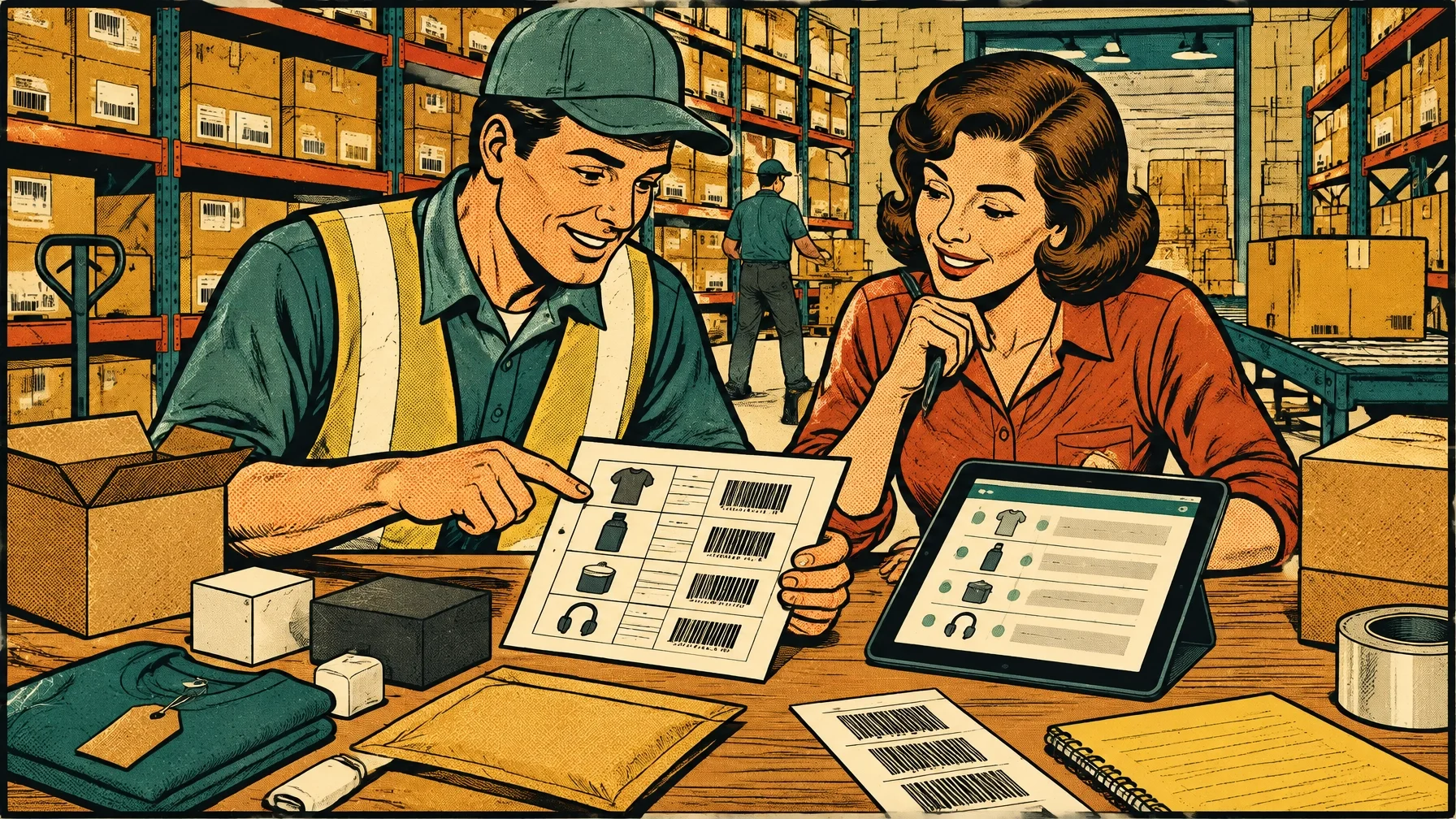
Clean data keeps the launch moving.
A good fulfillment partner should help identify missing information. However, your team remains responsible for supplying accurate product details and making final decisions about brand presentation.
3. What happens if I sell out or a launch goes bigger than expected?
Selling out can be a good business problem, but only if you can respond clearly.
Start with inventory visibility. You should be able to see available, reserved, damaged, and incoming inventory without waiting for a manual update. Real-time or near-real-time data helps you make decisions before customers place orders you cannot fulfill.
If demand exceeds supply, your options may include:
Temporarily pausing sales
Accepting backorders with a clear expected ship date
Offering a substitute product with customer approval
Shipping available items first and following with the remaining items
Prioritizing certain orders based on a published policy
Adjusting advertising and promotions
Communicating delays before customers have to ask
Partial shipments can help in some situations, but they may create additional postage and customer service costs. Substitutions also require care. Do not replace a product without the customer’s permission unless your published terms clearly address that situation.
Reorder timing matters too. You need to account for supplier lead time, production, freight, receiving, quality checks, and the time required to make inventory available for sale.
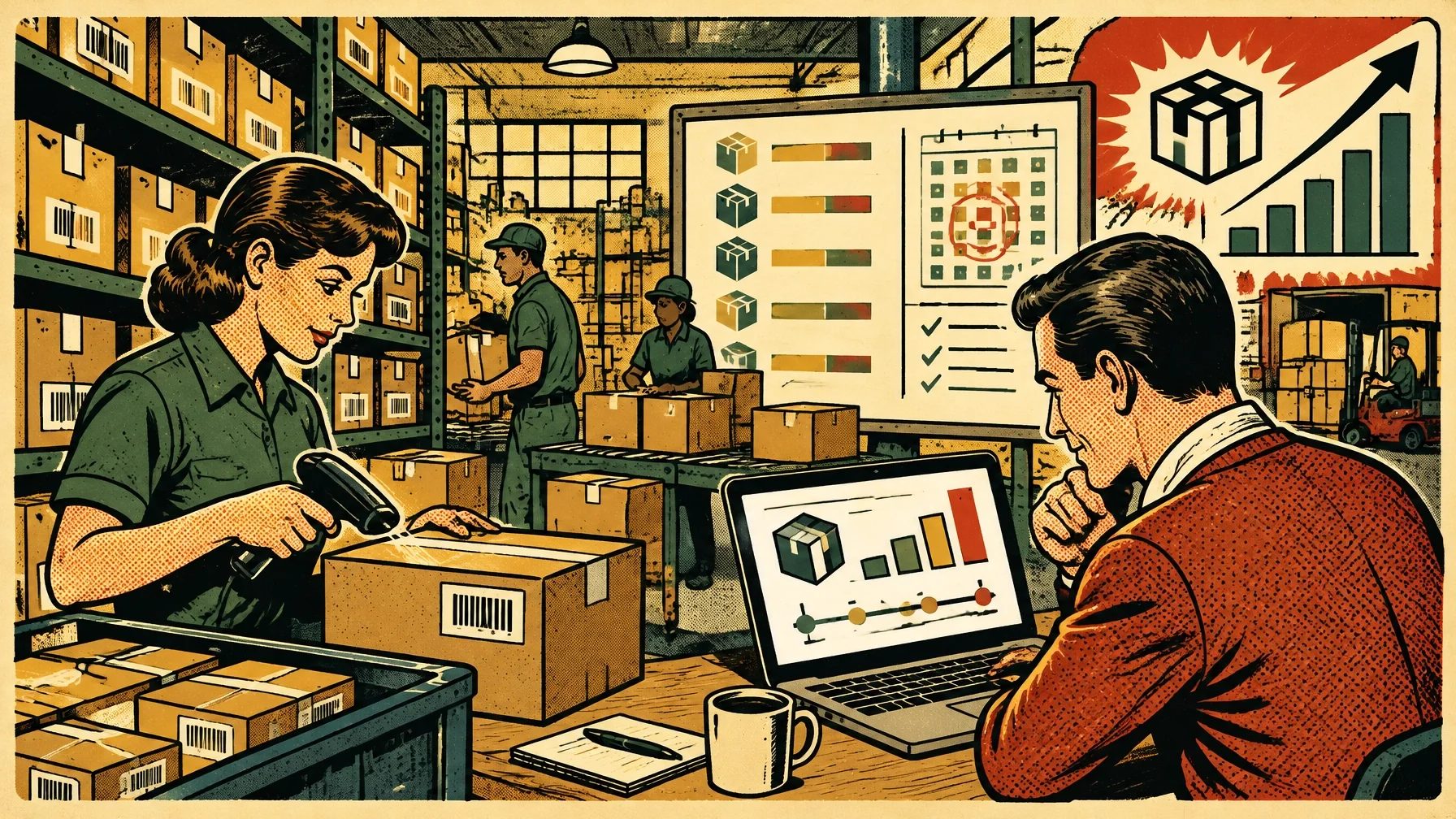
Good inventory visibility turns surprises into decisions.
The practical rule is simple: communicate early, show realistic dates, and make sure your fulfillment system reflects what is actually available.
4. Who buys the packaging, boxes, and shipping labels?
This varies by provider, so ask directly. Do not assume that packaging, postage, and labels are handled the same way by every 3PL.
Clarify:
Who purchases standard boxes, mailers, tissue, tape, and inserts
Who designs and sources custom packaging
Whether packaging materials are stored at the warehouse
Whether you pay for packaging as used or purchase materials in advance
Whether packaging materials incur storage charges
Who creates shipping labels
Who purchases postage
How carrier charges and postage are billed
Whether the provider uses multiple carriers or shops rates
Some fulfillment partners purchase standard materials and include certain costs in their rates. Others bill packaging separately. Custom boxes, branded mailers, gift wrapping, and complex inserts may have separate design, sourcing, storage, or handling charges.
The same applies to shipping labels. A provider may purchase postage through its carrier accounts and pass the cost through to you. Another arrangement may require your account or a separate shipping account.

Packaging should protect the product and the margin.
Ask for these terms in writing. Packaging choices can affect both your unboxing experience and sustainability goals, as well as your shipping cost.
5. How long does onboarding take, and what does it involve?
Onboarding is a project, not a single setup step. The timing depends on your catalog, sales channels, packaging requirements, integrations, inventory readiness, and the responsiveness of everyone involved.
A realistic sequence often includes:
Discovery: Review your products, channels, order profile, packaging, and operating needs.
Contract and pricing: Confirm services, rates, responsibilities, billing, and service expectations.
Integration setup: Connect your store, marketplace, order system, and tracking workflows.
SKU and packaging configuration: Load product details, barcodes, dimensions, weights, and packing rules.
Inventory receiving: Ship inventory to the warehouse for counting, inspection, and putaway.
Order testing: Run test orders, tracking updates, cancellations, and other important scenarios.
Ramp: Begin live fulfillment, monitor results, and adjust processes as needed.
There is no responsible one-size-fits-all timeline. A small catalog with accurate data may move quickly. A large catalog with bundles, multiple channels, and custom packaging requires more coordination.
The biggest lever you control is preparation. Send clean data, confirm dimensions and weights, label inventory correctly, and make decisions promptly.
6. Which integrations and channels actually matter?
Choose integrations based on where you sell now and where you realistically expect to sell next.
Common channels include:
Shopify
Amazon
Etsy
WooCommerce
Squarespace
A useful integration should do more than send orders to a warehouse. Test whether it supports:
Order routing
Inventory updates
Shipment tracking
Order cancellations
Partial shipments
Product and SKU matching
Returns information
Exception reporting
Before going live, test a complete order cycle. Place an order, confirm it reaches the fulfillment system, verify the correct item is picked, check that tracking returns to the sales channel, and confirm inventory decreases correctly.
Also test:
A return
A cancellation
A split or partial shipment
A high-volume order batch
An out-of-stock product
A peak volume scenario
Native integrations can still have edge cases. Ask who monitors the connection, who fixes sync issues, and what happens if an order or inventory update fails.
7. What if something ships wrong?
Mistakes can happen in any fulfillment operation. What matters is how quickly the issue is identified, resolved, and prevented from happening again.
A good process should include:
Rapid response: Confirm what happened and what the customer needs.
Root cause review: Determine whether the issue came from inventory, picking, packing, labeling, data, or an integration.
Customer resolution: Coordinate a replacement, refund, return label, or other remedy based on your approved policy.
Process correction: Update the workflow, instructions, training, or system settings.
Tracking: Record the error so patterns can be identified over time.
Ask a provider how it tracks errors and whether you can review reports. Accuracy is a system outcome. It depends on product data, warehouse layout, barcode controls, staff training, technology, and communication.
You should also confirm who is responsible for replacement costs, reshipments, damaged goods, and claims. These terms vary and should be included in your agreement.

Accuracy is a process, not a promise.
Rogue Fulfillment states a 99.84% order accuracy rate and that 99% of orders ship within 24 hours. These are company-stated figures, not guarantees. Ask any provider how its figures are calculated and what happens when performance falls short.
8. What does fulfillment actually cost?
A headline pick-and-pack rate is not the same as your true cost per order.
Your fulfillment costs may include:
Pick and pack
Storage
Receiving
Returns processing
Kitting
Packaging materials
Postage
Additional handling
Custom packaging
Gift wrapping
Peak surcharges
Platform or account fees
Minimum monthly charges
Special projects
The useful number is a modeled cost per order based on your real volume and order profile.
For example, a brand shipping one lightweight item in a mailer has a different cost structure from a brand shipping multiple products in a box with inserts, gift wrapping, and special handling.
Ask for a model using:
Your average monthly order volume
Average items per order
Product dimensions and weights
Typical shipping destinations
Packaging requirements
Return volume
Seasonal peaks
Expected growth
An itemized quote and a blended quote are not automatically comparable. One may separate every cost, while the other combines several services into one rate. Compare both using the same order profile and assumptions.
For more context, see Rogue’s guide to rate shopping for eCommerce brands.
What new brands commonly get wrong
Most early fulfillment problems are preventable. Common mistakes include:
Sending inaccurate SKU dimensions and weights
Choosing packaging that creates unnecessary dimensional weight charges
Selecting a provider based only on a headline rate
Underestimating return volume and return handling
Failing to review invoices against the agreed pricing
Operating without real-time inventory and order visibility
Assuming a sales channel integration will handle every edge case automatically
The solution is not to make fulfillment more complicated. It is to ask specific questions early and document the answers.
Practical checklist before you sign
Before choosing a fulfillment partner, confirm:
Your SKU data is accurate and complete.
Product dimensions and weights have been verified.
Packaging responsibilities are defined.
Label and postage billing is clear.
Receiving, storage, pick-and-pack, returns, and special project fees are listed.
Integration responsibilities are documented.
Inventory and order reporting has been demonstrated.
Error resolution and claims processes are explained.
Peak volume plans have been discussed.
Minimums, surcharges, and termination terms are in writing.
Service expectations match your actual business needs.
This is general guidance, not legal advice. Specific arrangements, pricing, service terms, claims, liability, and legal obligations should be confirmed in writing with your provider. If you are reviewing liability terms, return policies, or claims responsibilities, consult qualified counsel.
A fulfillment partner should make growth easier to manage
The right 3PL should give you more than a place to store products. It should help you operate with clearer data, fewer manual tasks, and a customer experience that still feels like your brand.
Rogue Fulfillment takes a boutique approach to 3PL for eCommerce brands, with dedicated account managers instead of a ticket queue, same-day inventory processing, 24/7 access to real-time data, and multi-carrier flexibility with rate shopping.
Value-added services are part of the operating conversation, not an afterthought. That includes custom packaging design, kitting, gift wrapping, and campaign support for personalized unboxing experiences.
Clients also receive free access to The Rogue Cooperative network for business growth and peer support.
If you are comparing fulfillment options, ask Rogue for a straight answer about your products, volume, packaging, integrations, and expected costs. The goal is not to make every brand fit one model. It is to find a practical fulfillment plan that supports where your business is now and where it is going next.